More Specific · Tags

23 articles

Long runs before a marathon: what to aim for and which mistakes to avoid
Intensity & Race Strategy

Long runs before a marathon: what to aim for and which mistakes to avoid

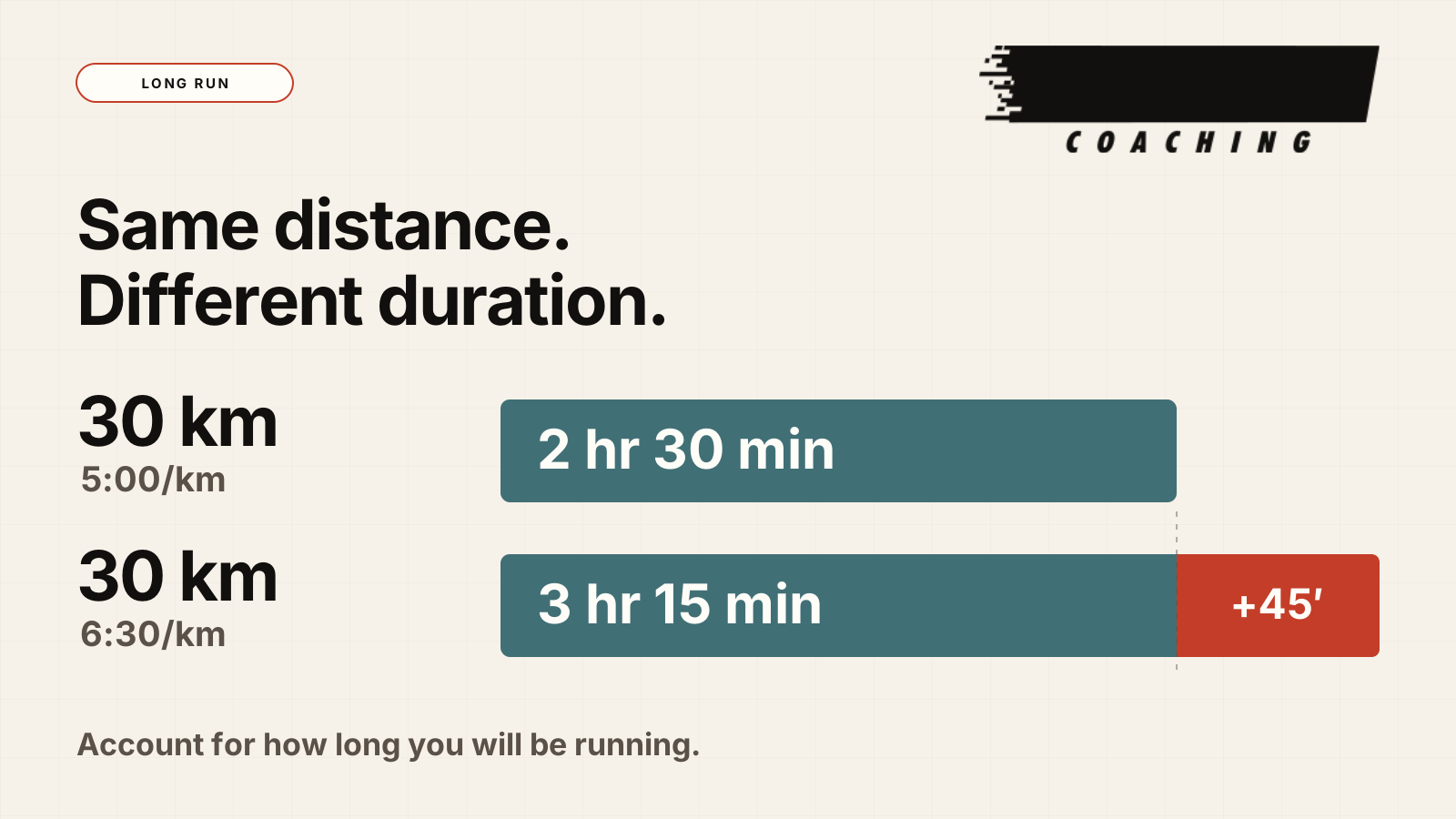
How do you choose the duration and intensity of a long run? What should you test for race day, and how do you judge whether the session achieved its purpose? Practical examples to help you fit your long runs into your overall training plan.

11 min read
Athens Marathon: how to plan your splits and use the Athens Splits Calculator effectively
Intensity & Race Strategy

Athens Marathon: how to plan your splits and use the Athens Splits Calculator effectively

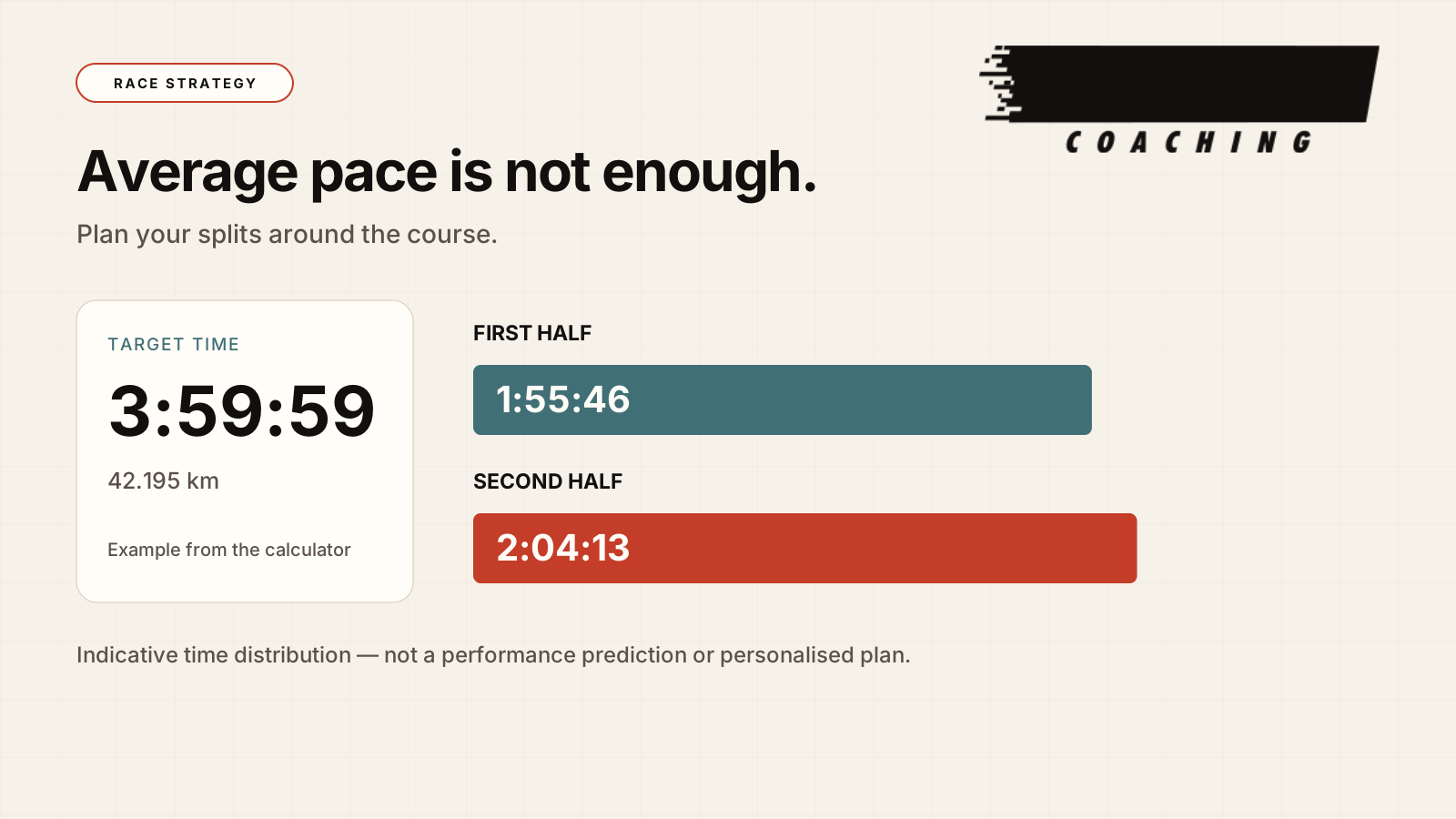
To finish the Athens Marathon in 3:30, you need an average pace of around 4:59/km. But that pace does not tell you how to start, how much to slow down uphill or what to expect when the course begins to descend.

16 min read
Threshold Pace and Critical Velocity: what they are and how to use them
Zones & Physiology

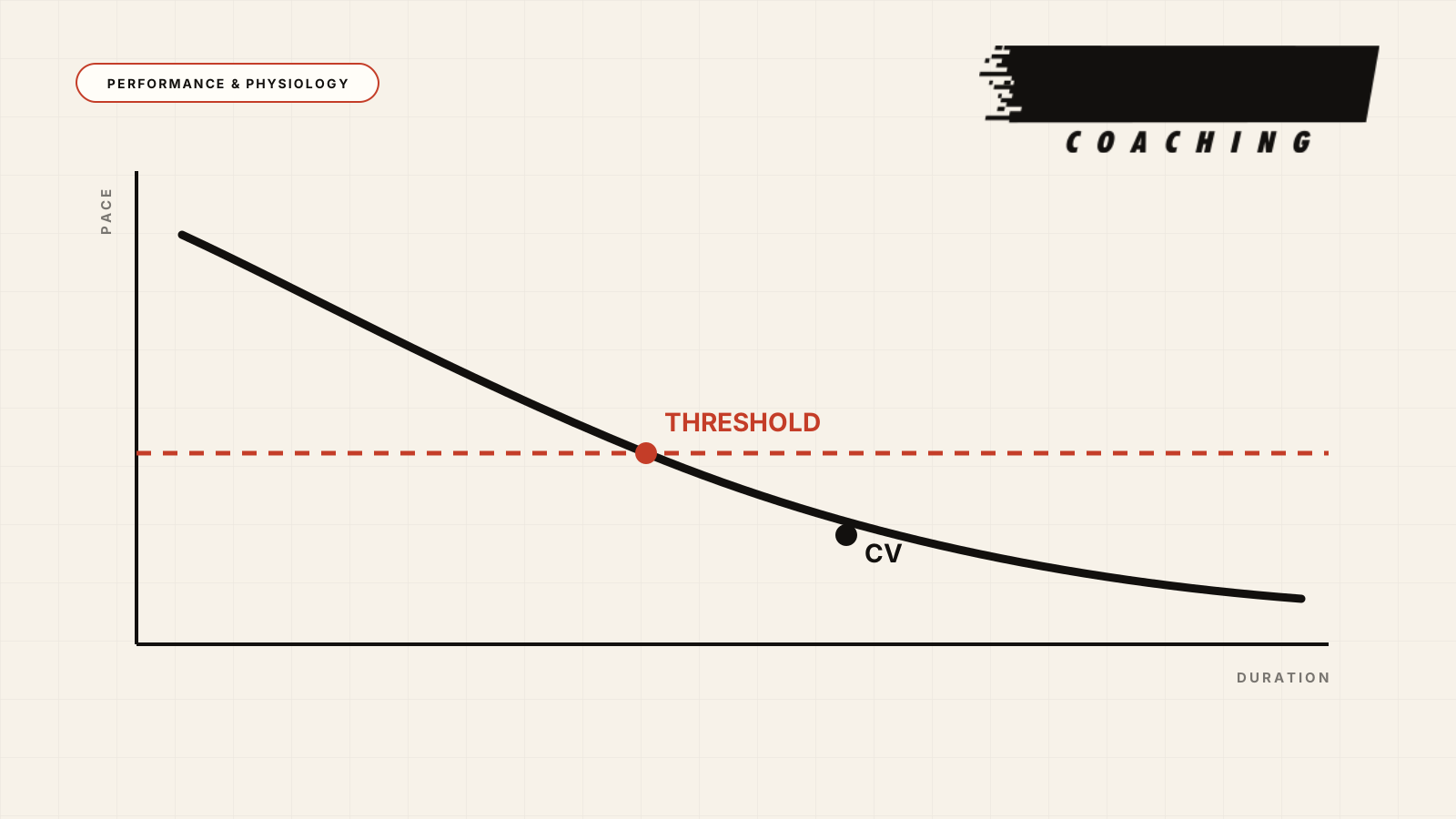
Threshold Pace and Critical Velocity: what they are and how to use them

A recent race result can help estimate Threshold pace, Critical Velocity and VO₂max pace. Turning these numbers into suitable pace-based training zones requires understanding what you are calculating, its uncertainty and why results are not guaranteed to be correct.

10 min read
Heat-Adjusted Pace: how to adapt your pace to the heat
Conditions & Courses

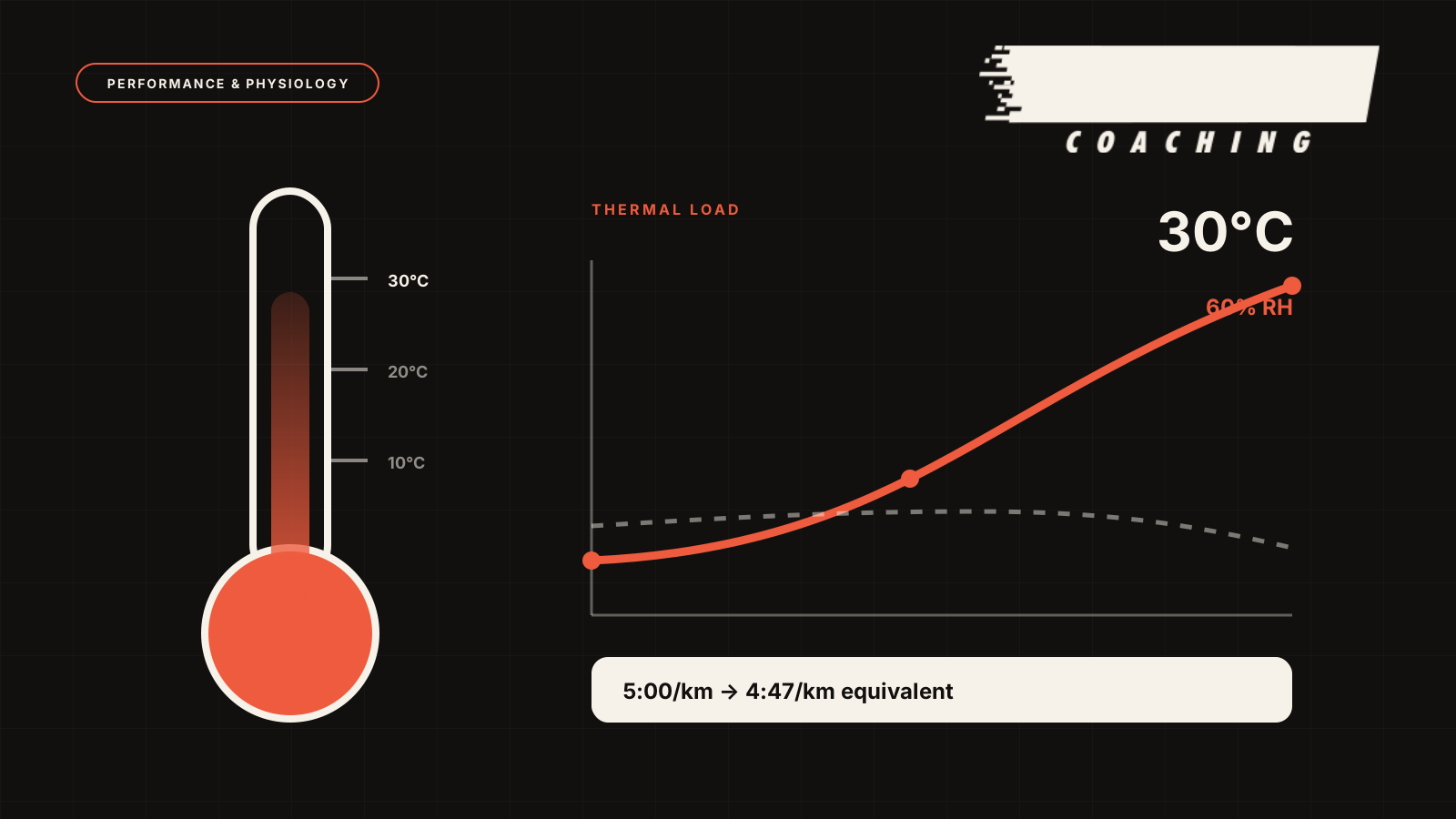
Heat-Adjusted Pace: how to adapt your pace to the heat

The same pace requires greater effort as temperature and humidity rise. Learn how the Heat-Adjusted Pace Calculator works and how to turn its estimate into a realistic training or race plan.

7 min read
Cycling gearing: how to choose chainrings, cassette and cadence for your race
Equipment & Setup

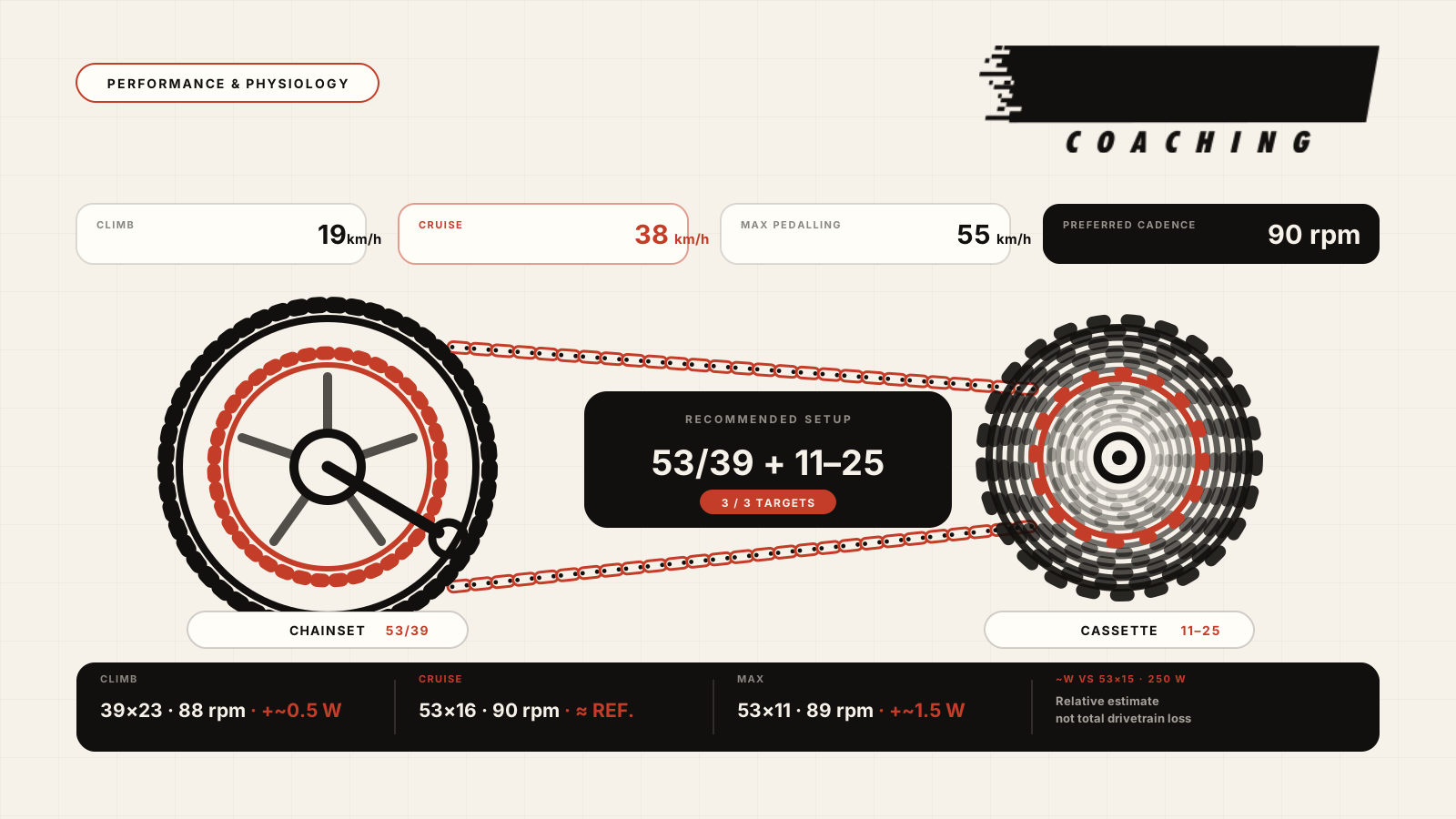
Cycling gearing: how to choose chainrings, cassette and cadence for your race

Your gearing should cover climbing speed, main race speed and maximum pedalling speed at your preferred cadence. Learn how to use the Race Gearing Calculator and interpret relative losses from chainline, cross-chaining and sprocket size.

6 min read
Treadmill speed vs outdoor pace: why 12 km/h does not always mean 5:00/km
Equipment & Setup

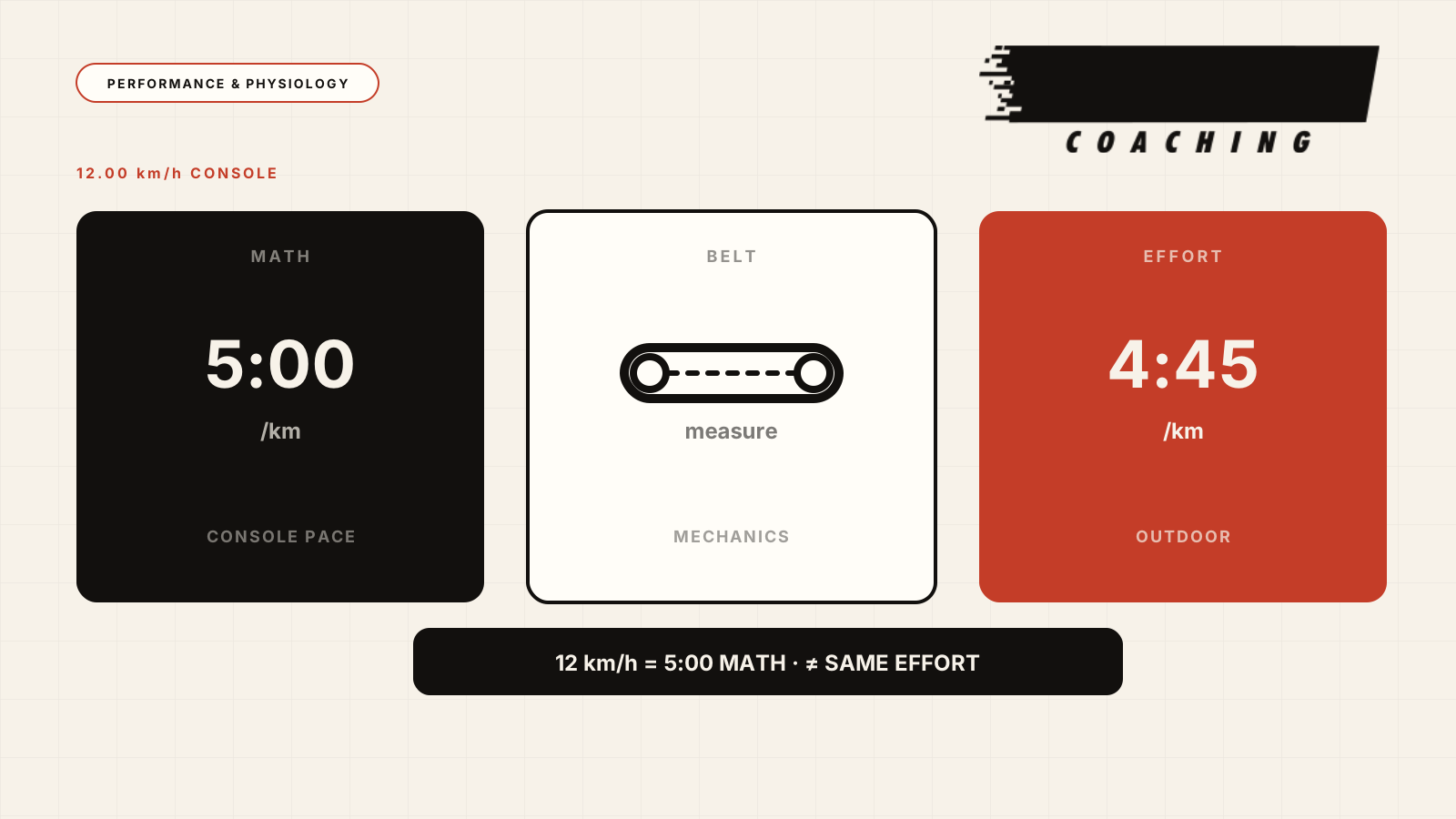
Treadmill speed vs outdoor pace: why 12 km/h does not always mean 5:00/km

12 km/h converts mathematically to 5:00/km. That does not mean the belt is actually moving at the displayed speed, or that the same pace requires the same effort indoors and outdoors. Learn what changes, when an incline is useful and how to set your training paces.

8 min read
Pace Chart and running splits: how to calculate your checkpoints correctly
Intensity & Race Strategy

Pace Chart and running splits: how to calculate your checkpoints correctly

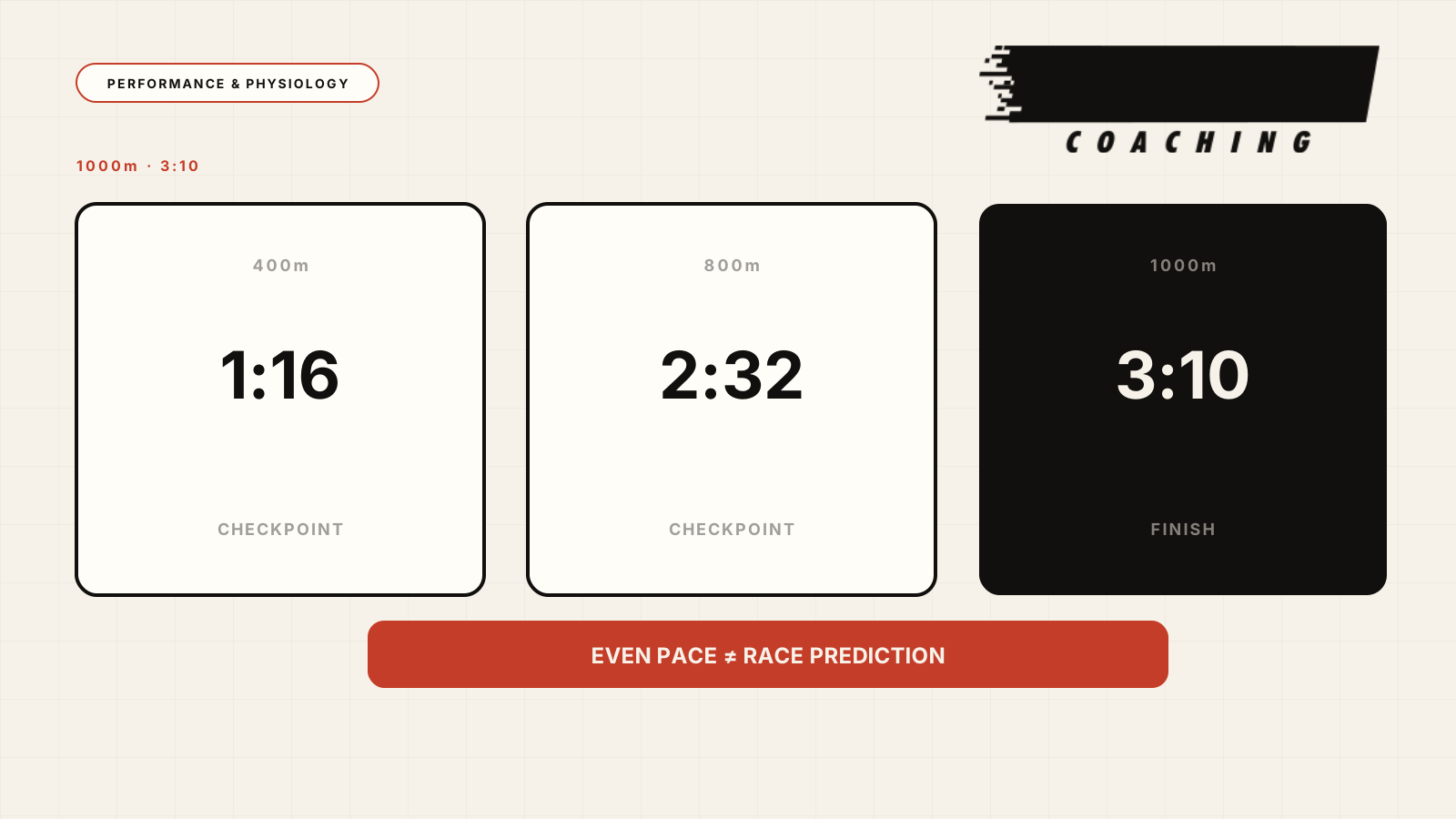
Convert a finish time or pace into running splits from 400 m to the marathon. Learn how to use intermediate checkpoints in training and racing, and why a pace chart's equivalent times are not performance predictions.

6 min read
Running Pace Zones: how they are defined, what they describe and how to use them
Zones & Physiology

Running Pace Zones: how they are defined, what they describe and how to use them

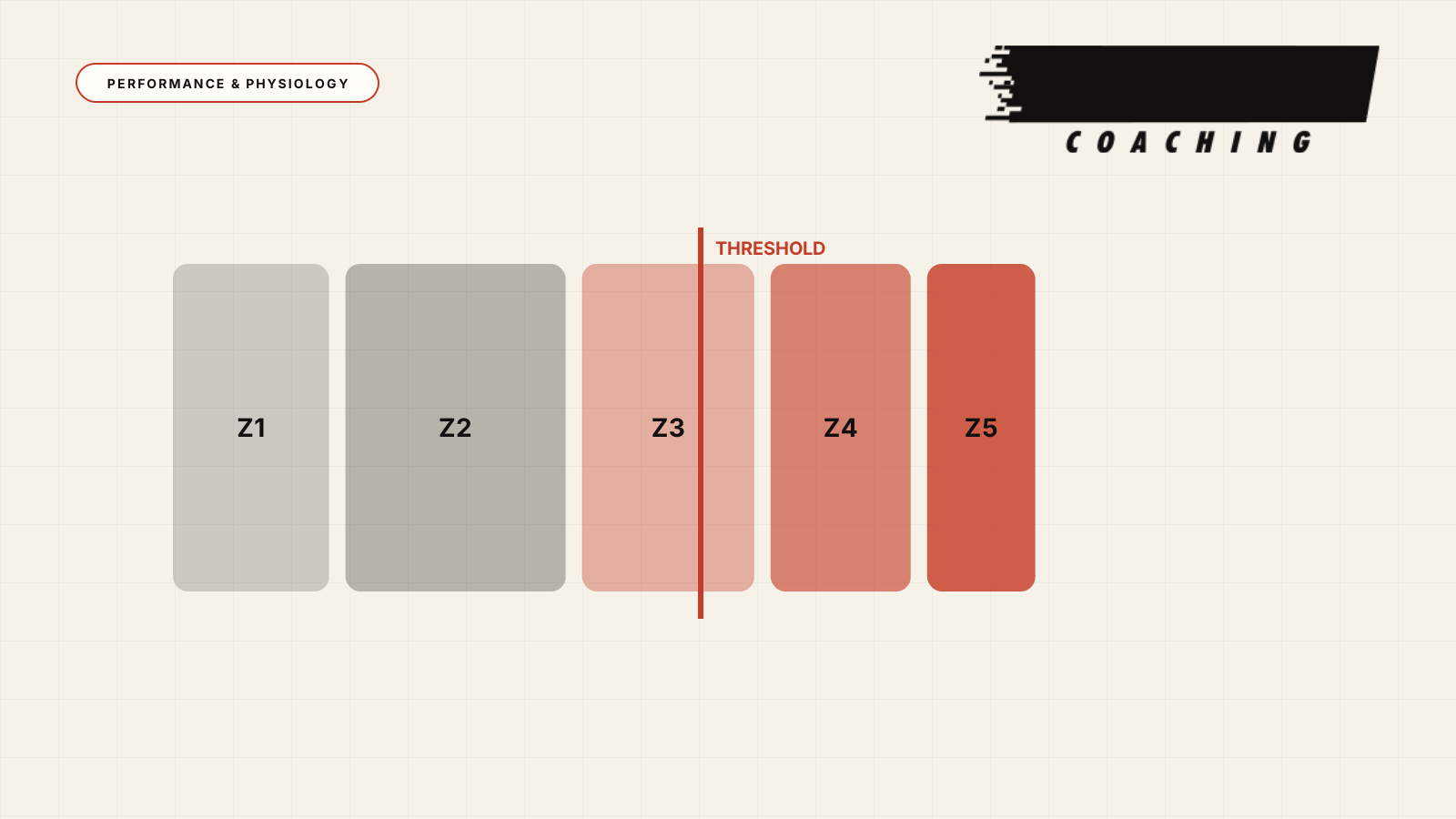
A few seconds of pace do not change the energy system your body uses. Pace zones turn threshold pace into practical ranges, but their value depends on the model, threshold accuracy and how you use them.

9 min read
Critical Power and W′: what they are, how they are calculated and how to use them
Zones & Physiology

Critical Power and W′: what they are, how they are calculated and how to use them

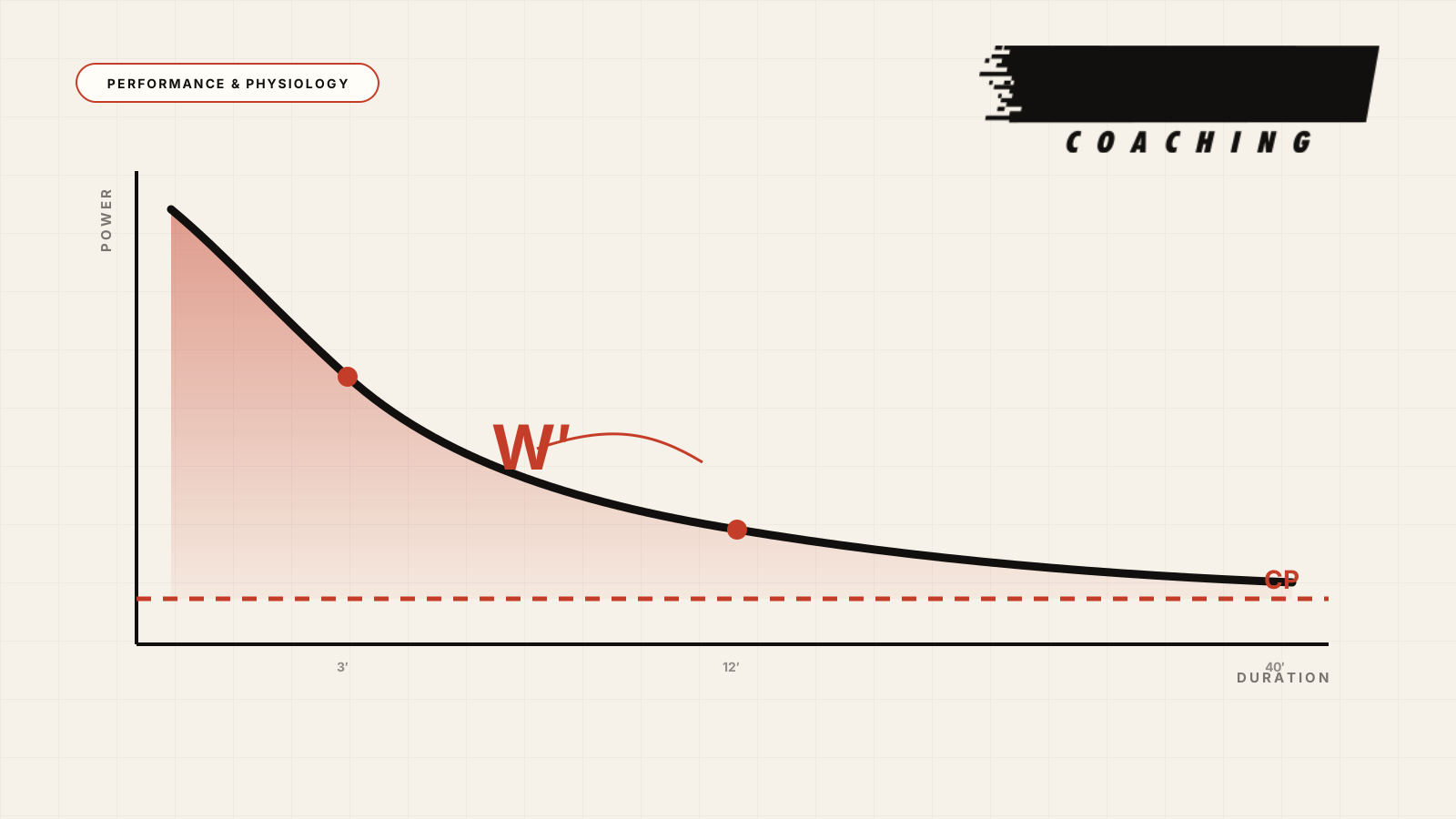
Critical Power and W′ describe two different aspects of the power–duration curve. Learn how they are calculated from 2–4 maximal efforts, why CP differs from FTP and how to use the model effectively in training and racing.

8 min read
Grade-Adjusted Pace (GAP): how pace changes on climbs and descents
Conditions & Courses

Grade-Adjusted Pace (GAP): how pace changes on climbs and descents

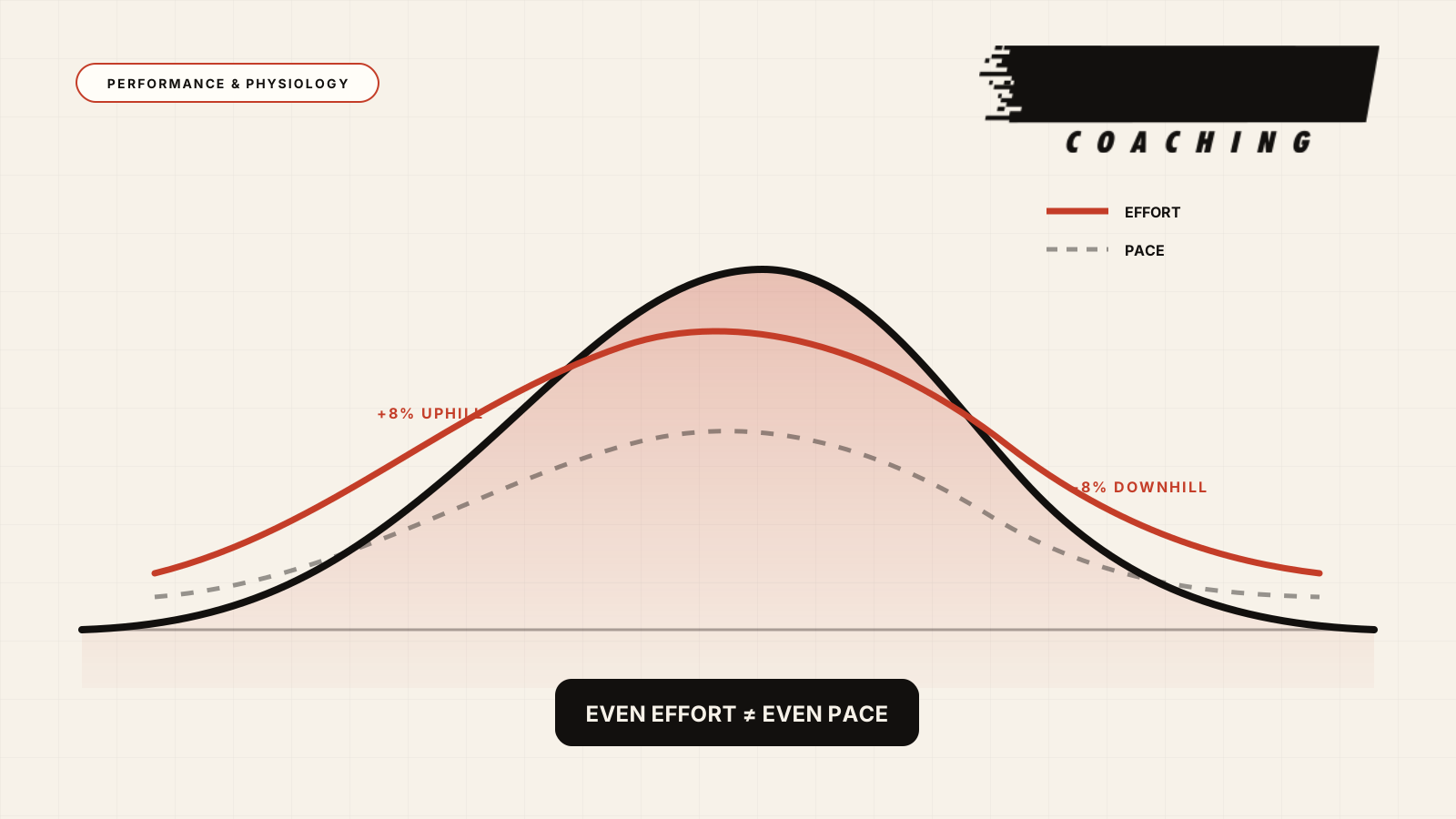
Grade-Adjusted Pace converts uphill or downhill pace into an estimated flat-ground pace at equivalent effort. Learn how GAP works, how to use the calculator and why the result does not capture a course's full mechanical and technical demands.

7 min read
Realistic race pace: how to choose your race pace
Intensity & Race Strategy

Realistic race pace: how to choose your race pace

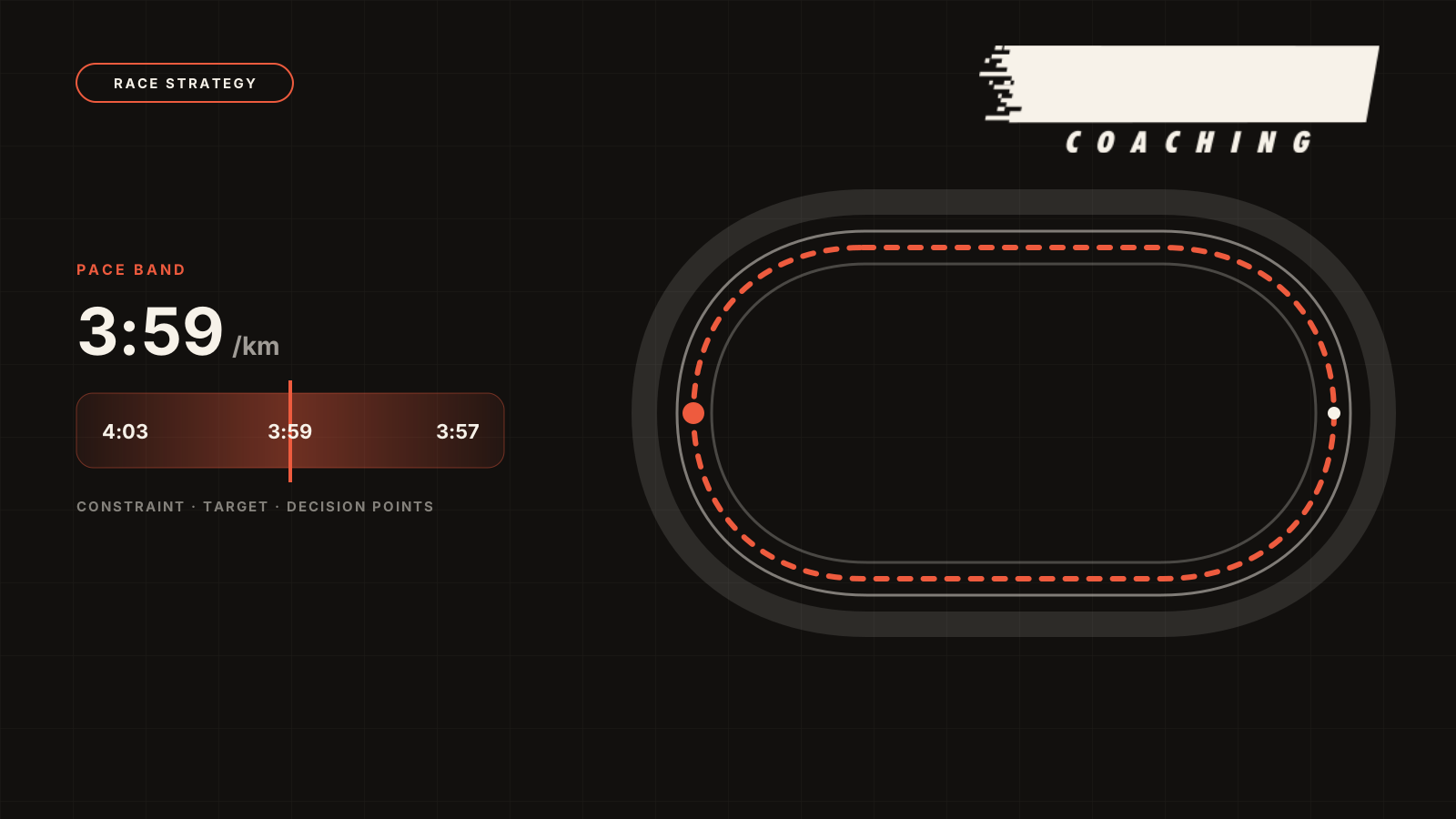
A calculator can convert a target finish time into minutes per kilometre. Turning that number into a realistic race plan requires recent data, sufficient testing in training and adjustments for the course, weather and other factors that may affect the day's result.

9 min read
Wind and pace: how to adjust your running on the road and track
Conditions & Courses

Wind and pace: how to adjust your running on the road and track

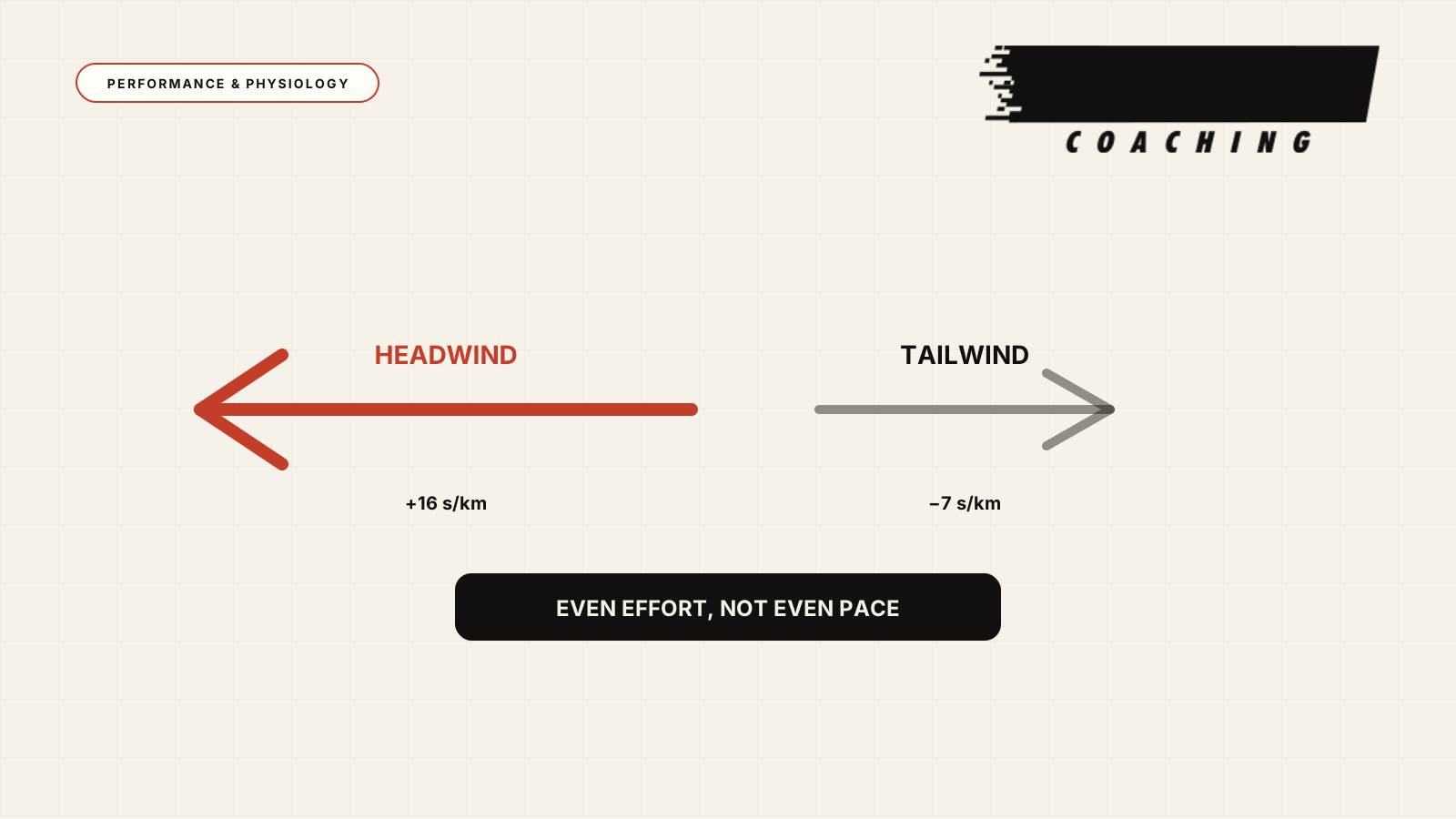
The same pace does not require the same effort when wind strength and direction change. Learn why a headwind costs more than a tailwind gives back, how to adapt your race plan and how to use the Wind Pace and Track Wind Calculators correctly.

8 min read
Cycling tyre pressure: why more PSI does not always mean more speed
Equipment & Setup

Cycling tyre pressure: why more PSI does not always mean more speed

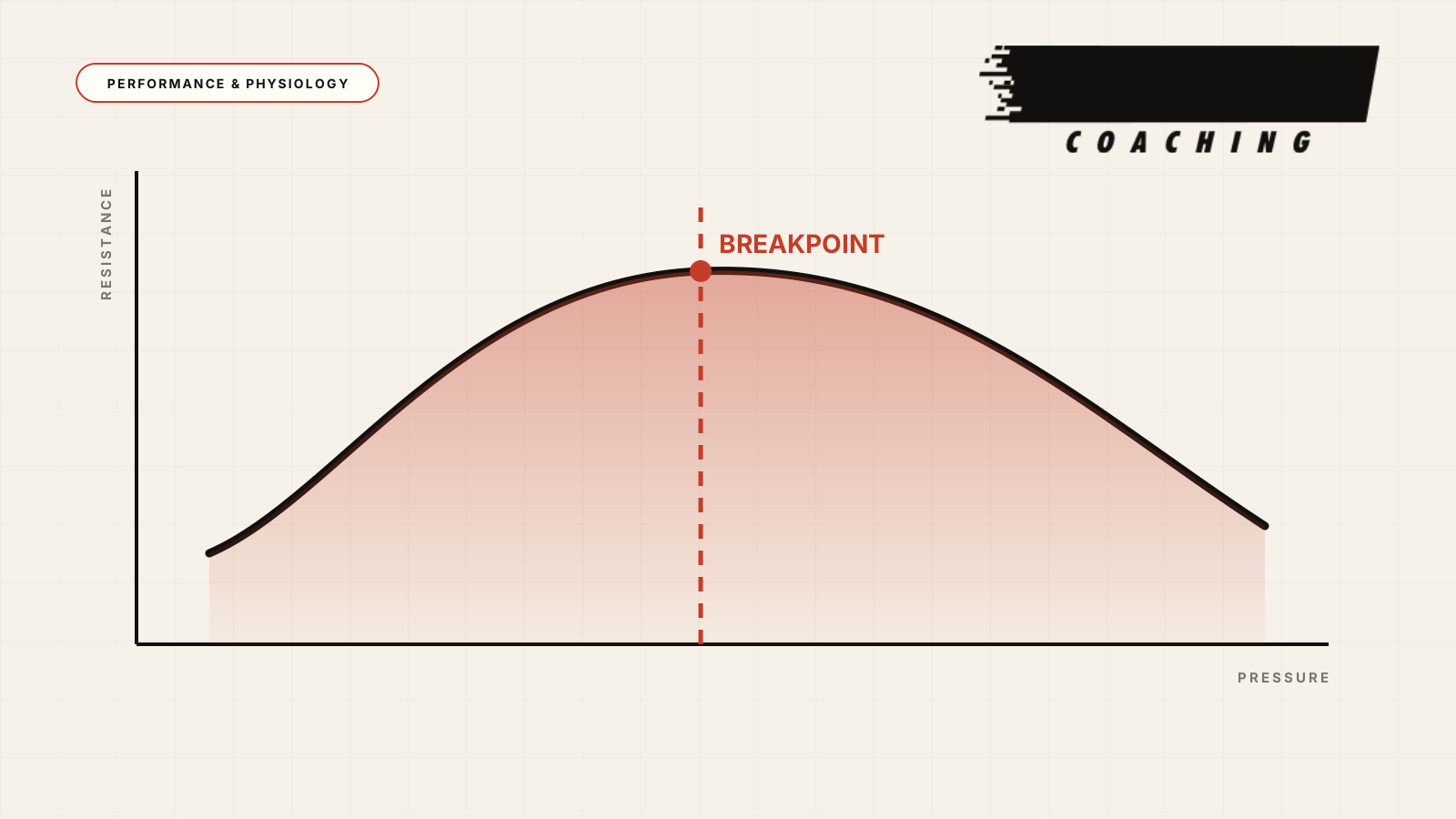
Higher pressure can reduce tyre deformation on a smooth surface, but on real roads it can increase vibration and total energy loss. Learn what breakpoint pressure means and how total weight, measured tyre width, road surface and system limits determine a fast, safe tyre setup.

7 min read
Cycling Power Zones from an FTP test: how they are defined and how to use them effectively
Zones & Physiology

Cycling Power Zones from an FTP test: how they are defined and how to use them effectively

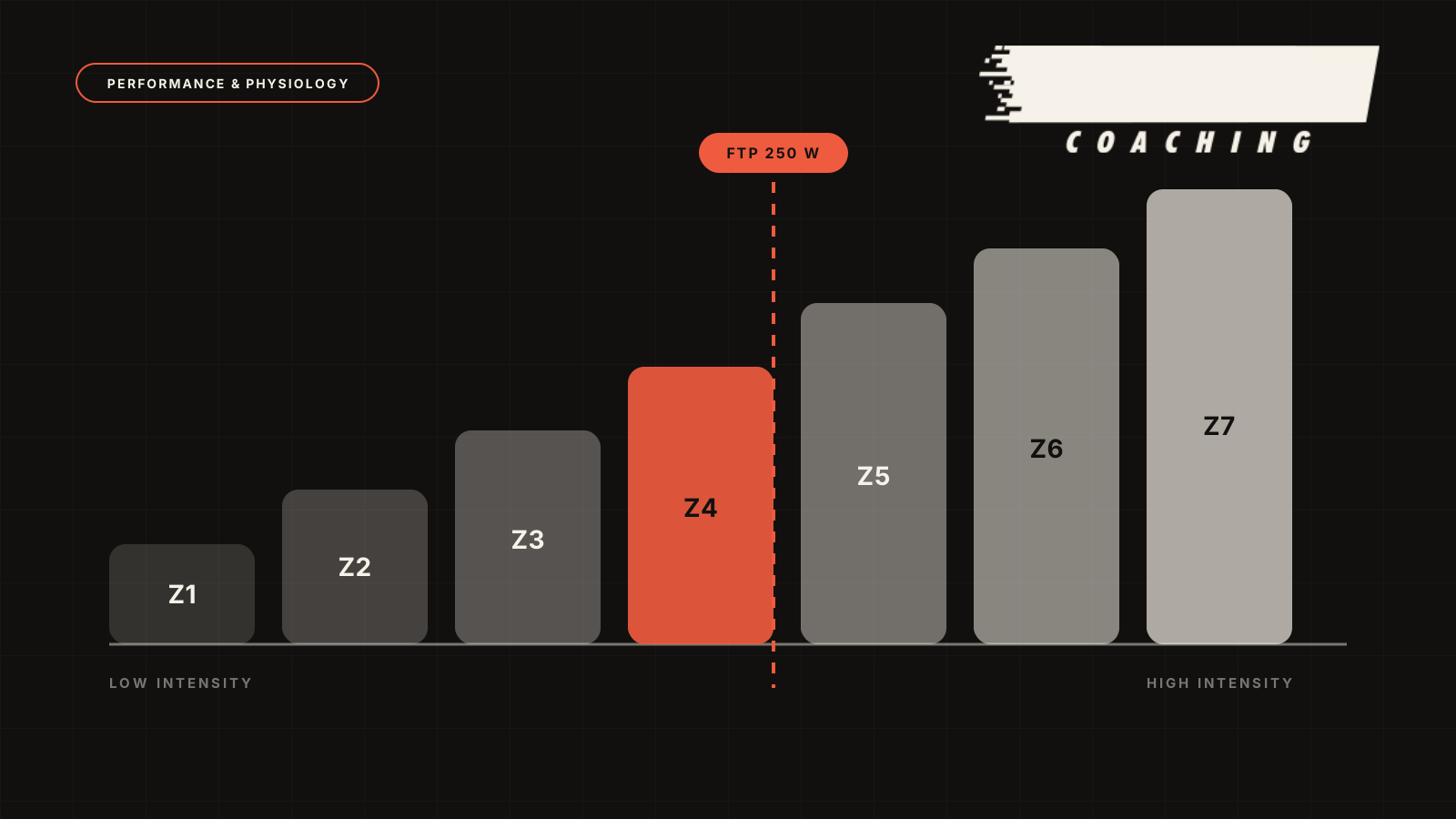
FTP and a calculator can provide training zones in watts. These boundaries offer a practical way to organise training intensity, rather than an exact measurement of your physiology. Learn how FTP is estimated, what 3-, 5- and 7-zone systems mean and how to use power zones effectively.

7 min read
Cycling VO₂max from 5-minute power: how to estimate it and what it really means
Zones & Physiology

Cycling VO₂max from 5-minute power: how to estimate it and what it really means

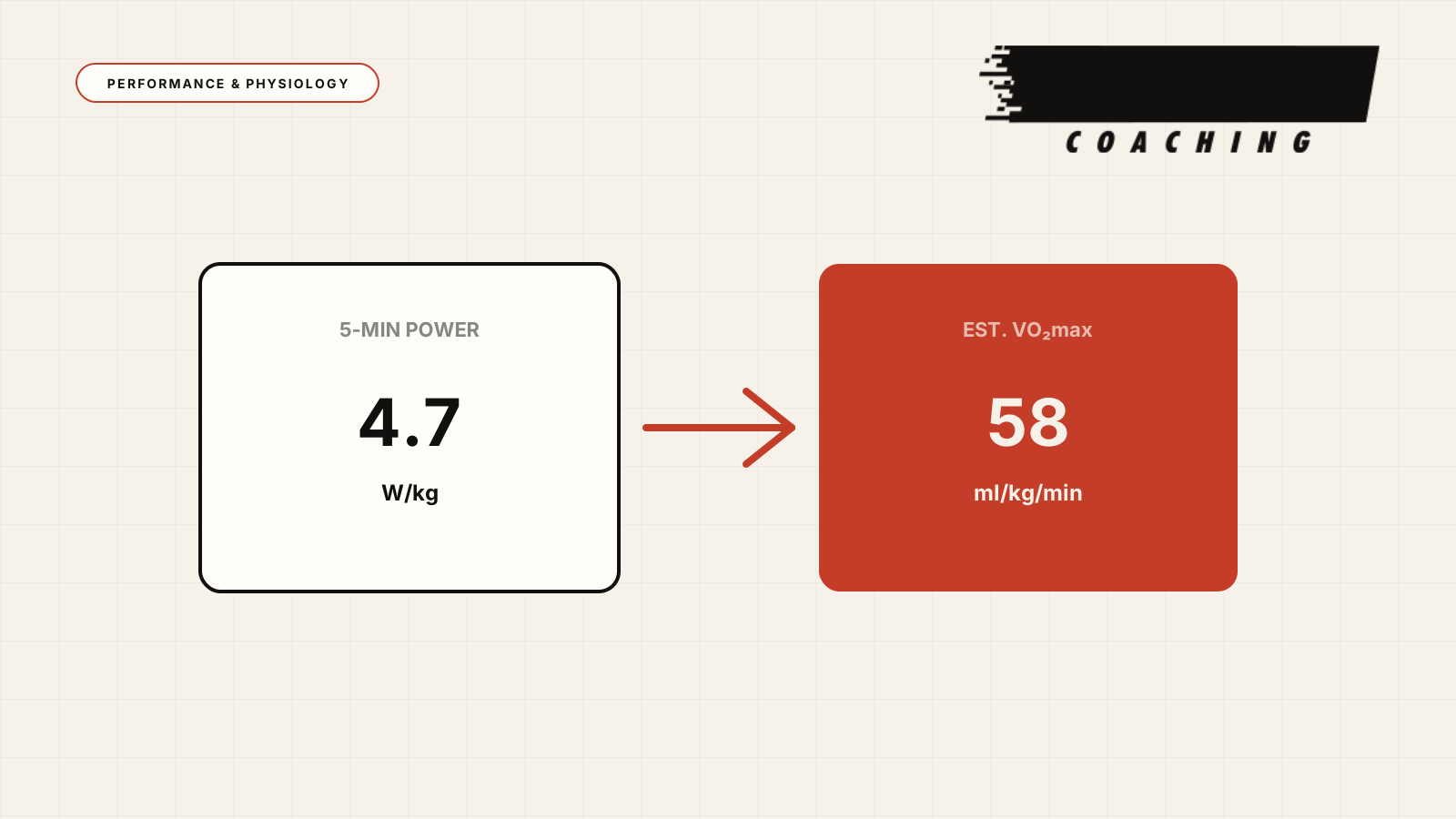
A maximal 5-minute effort can provide a useful VO₂max estimate from W/kg. Learn how the model works, how to perform the test correctly and why the result differs from a respiratory gas analysis test.

7 min read
Race Predictor: how the Riegel equation works and why it struggles with the marathon
Intensity & Race Strategy

Race Predictor: how the Riegel equation works and why it struggles with the marathon

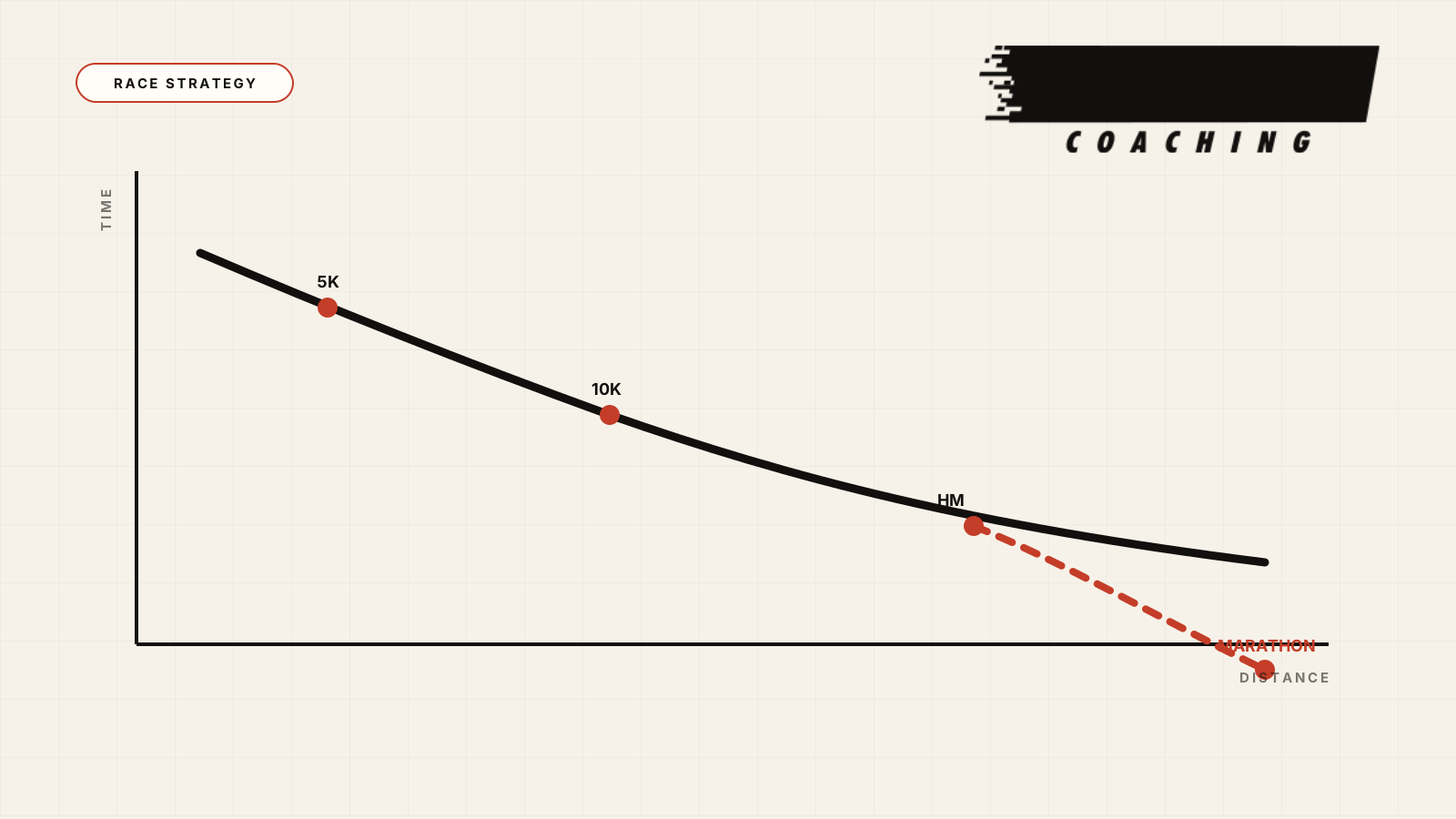
A race predictor can convert a recent race performance into equivalent finish times at other distances. The prediction is a mathematical estimate, not a guarantee—especially when estimating a marathon or half marathon from a much shorter 5K.

7 min read
Heart Rate Zones from LTHR: how to set your running and cycling zones
Zones & Physiology

Heart Rate Zones from LTHR: how to set your running and cycling zones

LTHR (Lactate Threshold Heart Rate) from a field test is neither maximum heart rate nor a laboratory lactate measurement. Learn how to estimate zones using a 30-minute time trial and why running and cycling need different zones.

8 min read
25 m and 50 m pools: why your pace changes and how to estimate it
Conditions & Courses

25 m and 50 m pools: why your pace changes and how to estimate it

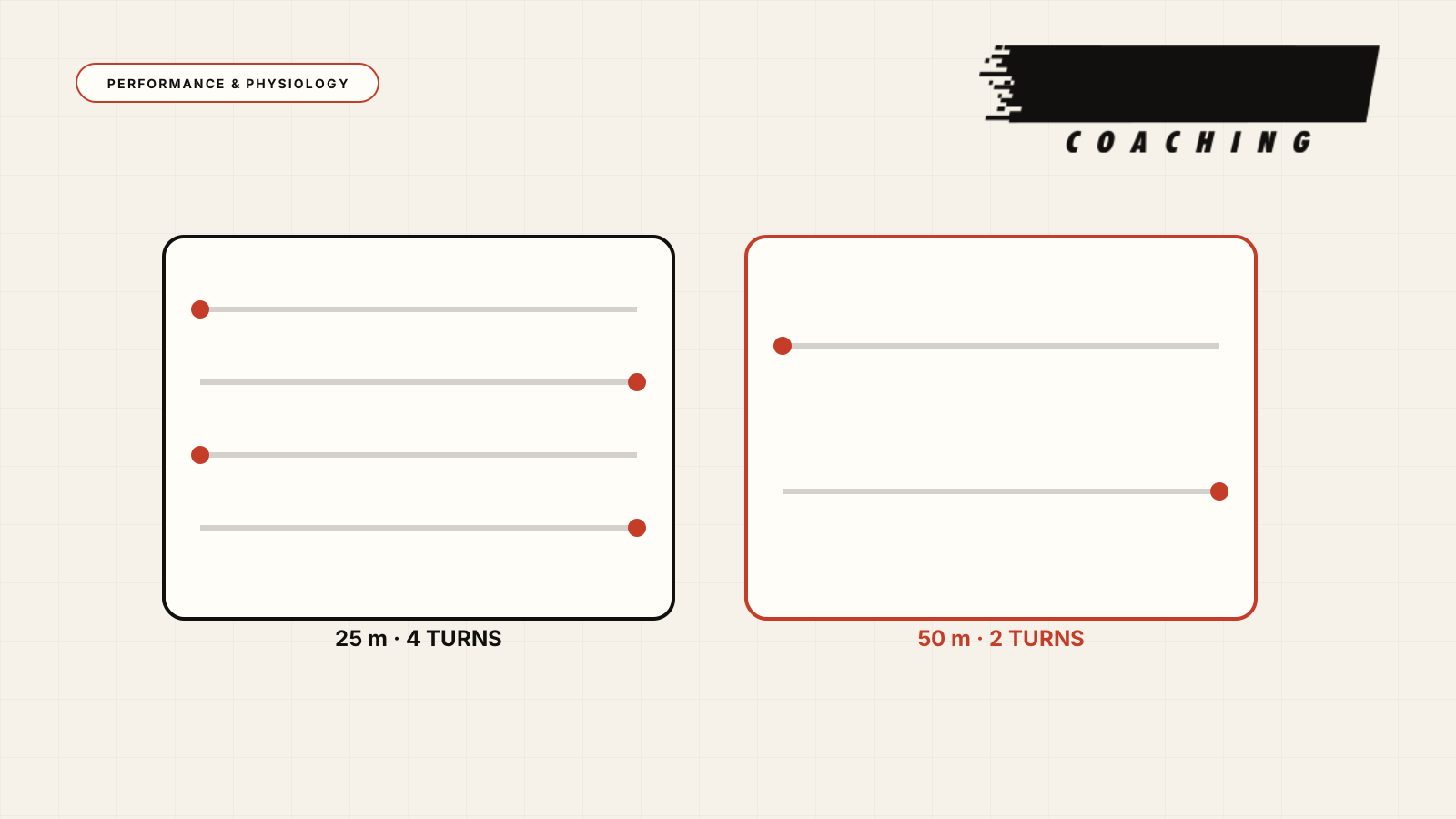
Pace in a 25 m pool is usually faster than in a 50 m pool, mainly because of extra turns. Learn why the difference varies between swimmers and how to use the Swim Course Converter effectively.

6 min read
Race Fueling: how much carbohydrate you need and how to train your gut
Nutrition & Fueling

Race Fueling: how much carbohydrate you need and how to train your gut

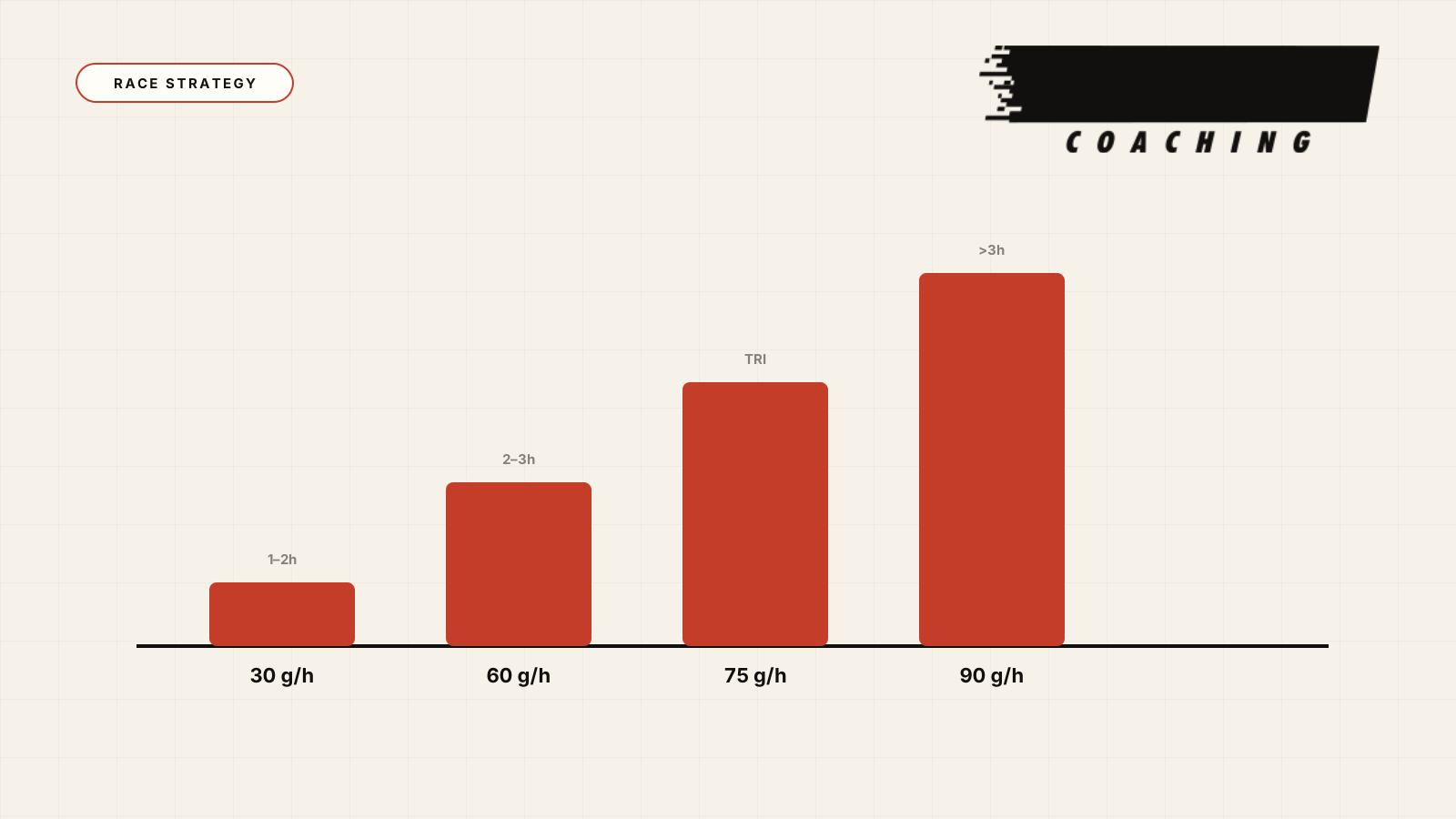
Race fuelling is not about replacing every calorie you burn. Learn how carbohydrate intake changes with duration, why higher targets need a different mix of carbohydrate sources and how to test your plan before race day.

7 min read
Negative splits: when they work and how to plan your splits
Intensity & Race Strategy

Negative splits: when they work and how to plan your splits

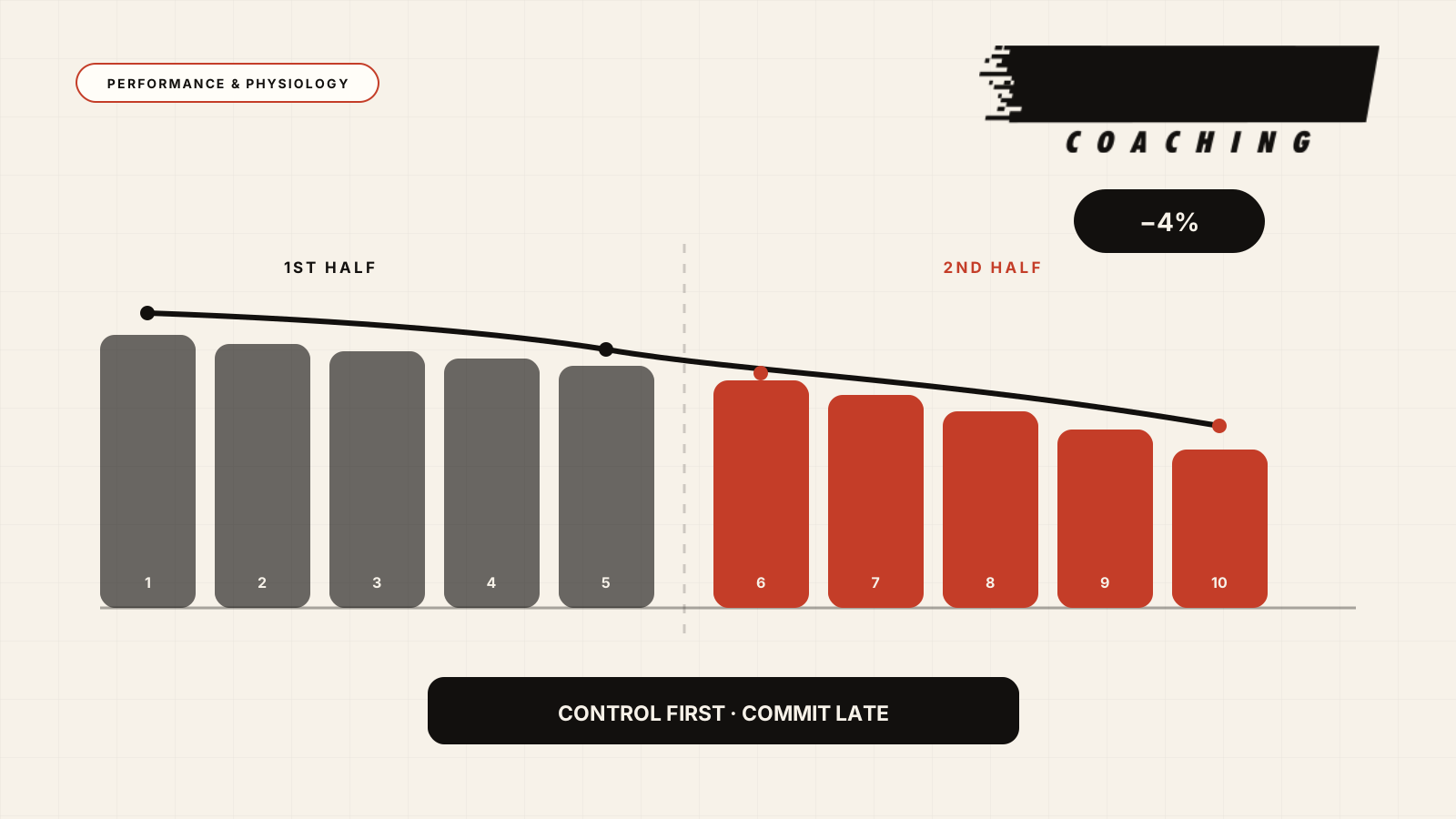
A negative split means completing the second half of your race faster than the first. It is not always the fastest strategy, though. Learn when it helps, how it varies by distance and how to use the Split Calculator effectively.

7 min read
Swim pace per 100 m: how to turn your target time into accurate, useful splits
Intensity & Race Strategy

Swim pace per 100 m: how to turn your target time into accurate, useful splits

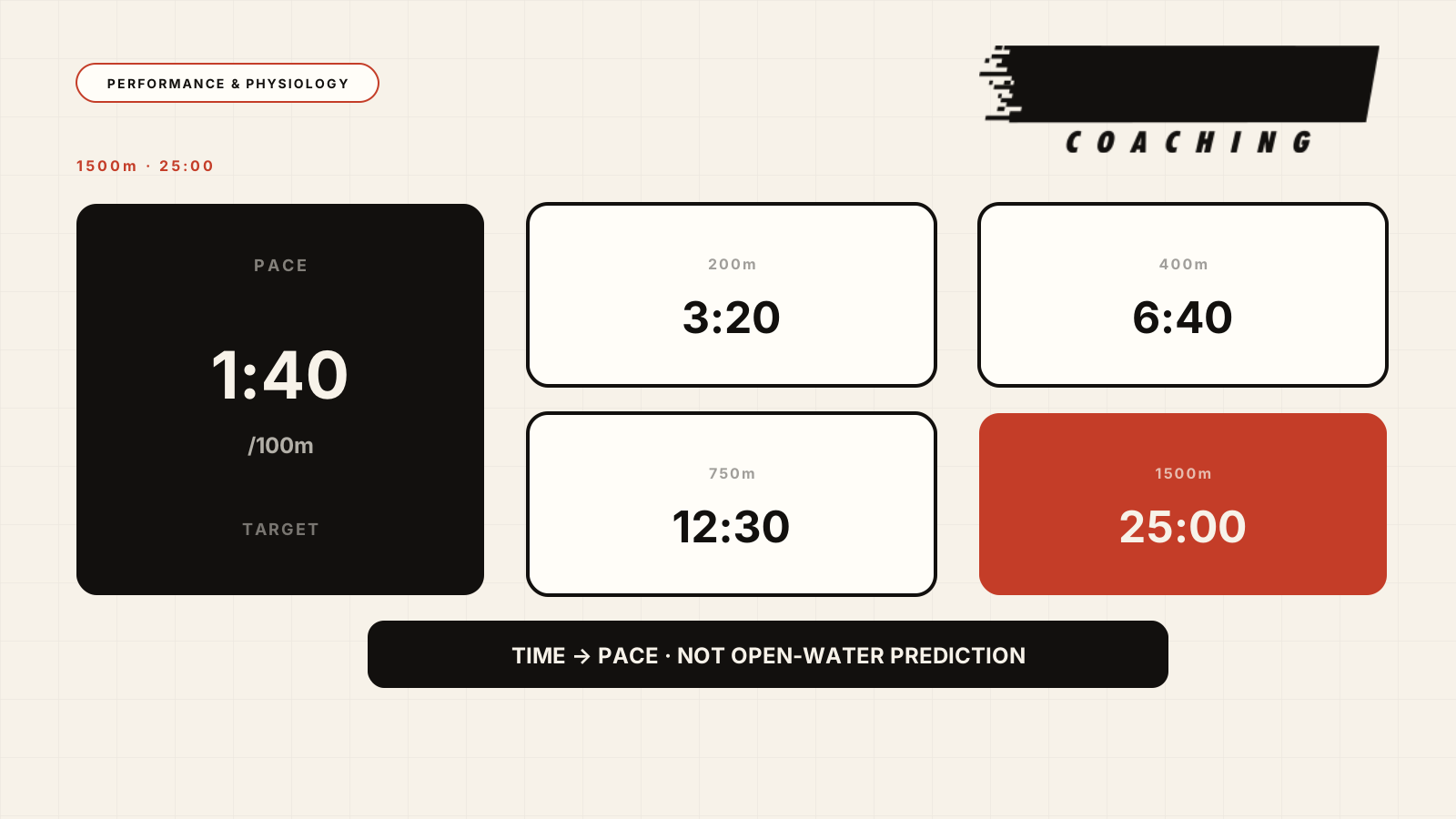
1500 m in 25:00 means 1:40/100 m. Learn how to turn a target time into useful training splits and why the same pace does not automatically transfer from a 25 m pool to a 50 m pool or open water.

7 min read
Critical Swim Speed (CSS): what it measures and how to use it in training
Zones & Physiology

Critical Swim Speed (CSS): what it measures and how to use it in training

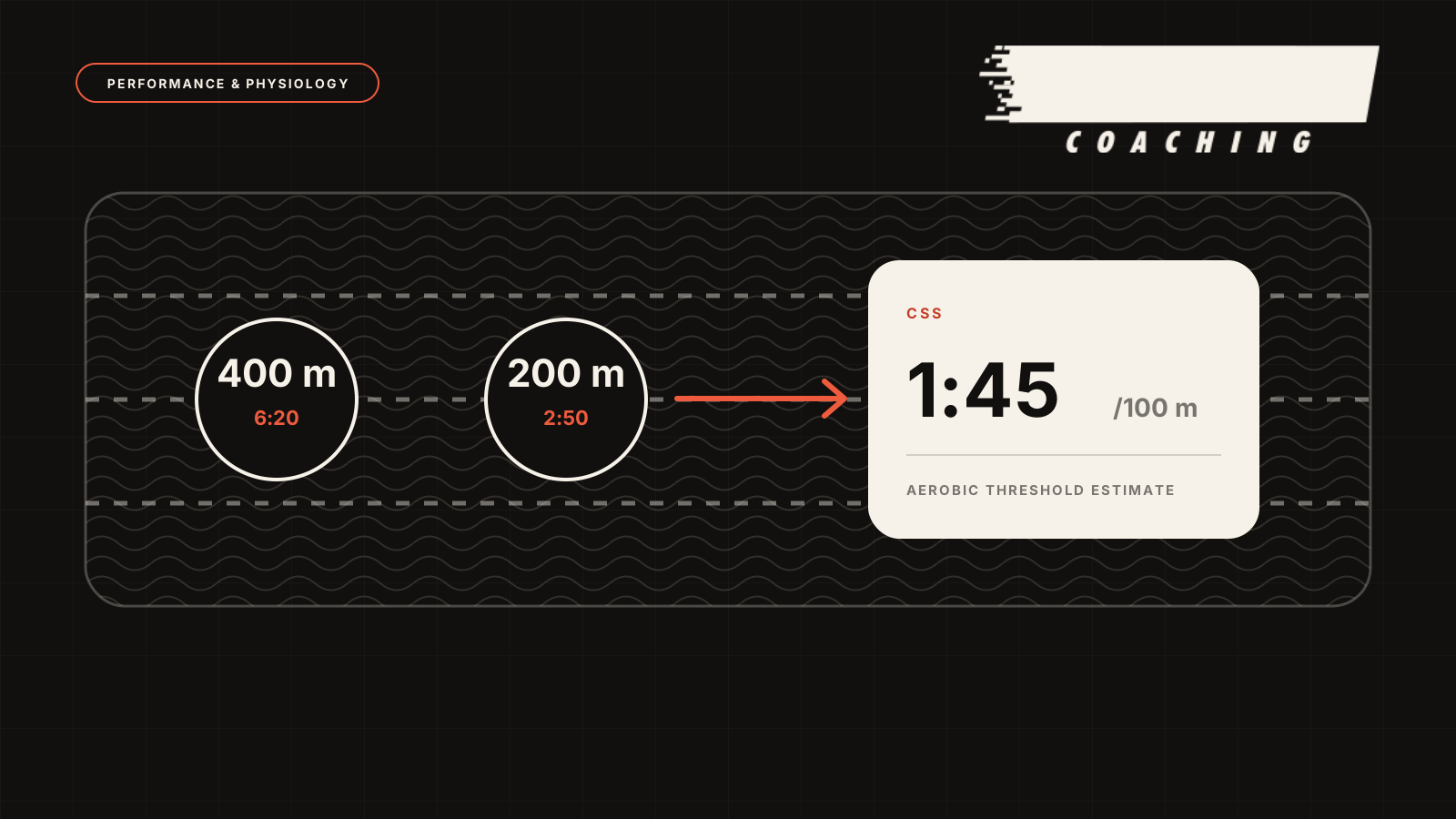
Critical Swim Speed is calculated from two maximal efforts over different distances and gives you a practical reference pace for swim training. Learn how to perform the test, what CSS and D′ represent and why the result is not automatically your threshold or race pace.

8 min read
Triathlon Finish Time: how to estimate a realistic triathlon finish time
Intensity & Race Strategy

Triathlon Finish Time: how to estimate a realistic triathlon finish time

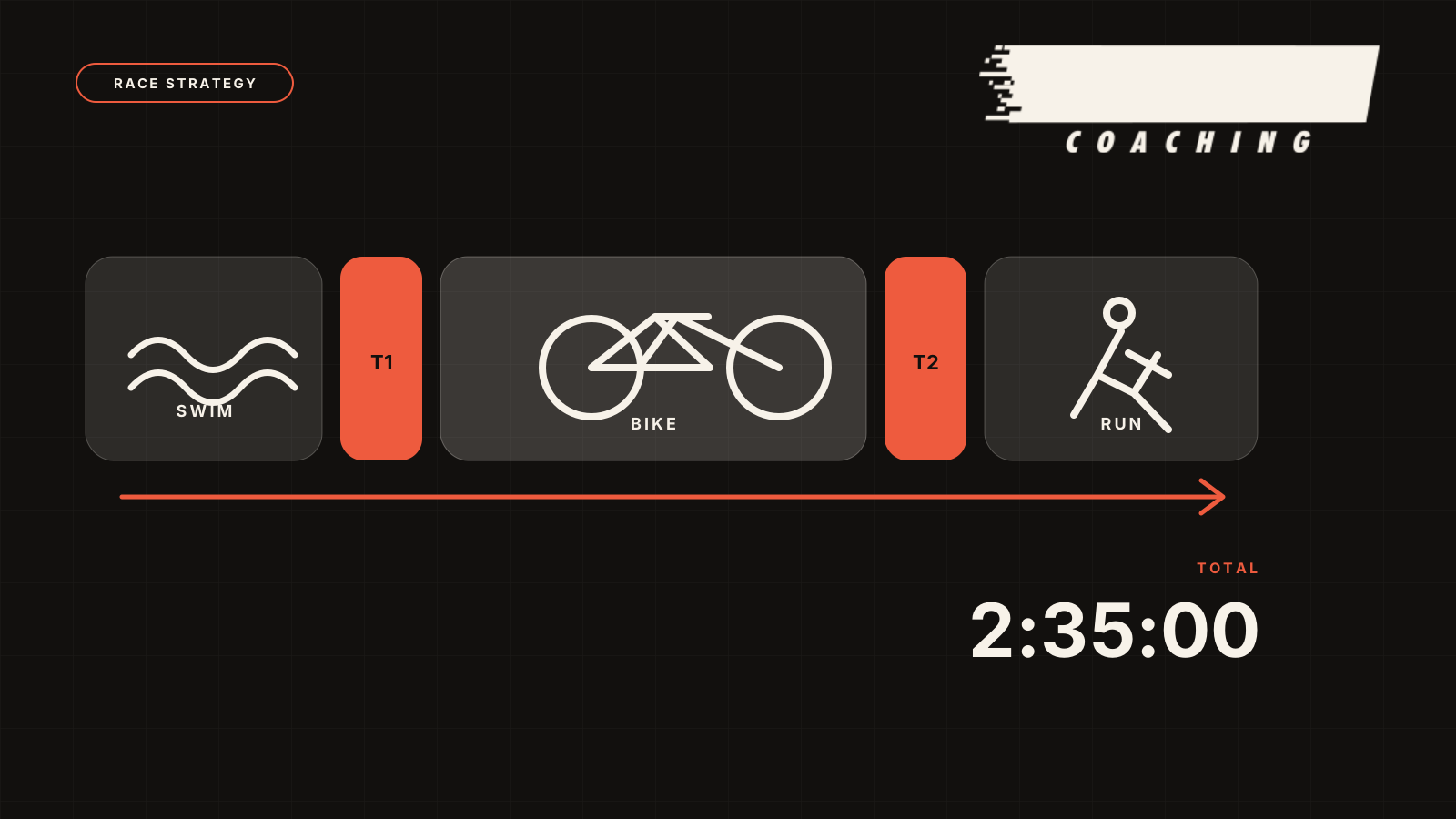
The Triathlon Finish Time Planner adds your swim, T1, bike, T2 and run durations. To make that number a realistic finish-time target, your inputs must reflect the course, conditions, preparation and accumulated race fatigue.

9 min read
Next step

Explore 1:1 Coaching

Reading the articles helps you understand why. Turning that understanding into a training programme takes someone who can look at your own data, history and goals.

Explore 1:1 Coaching