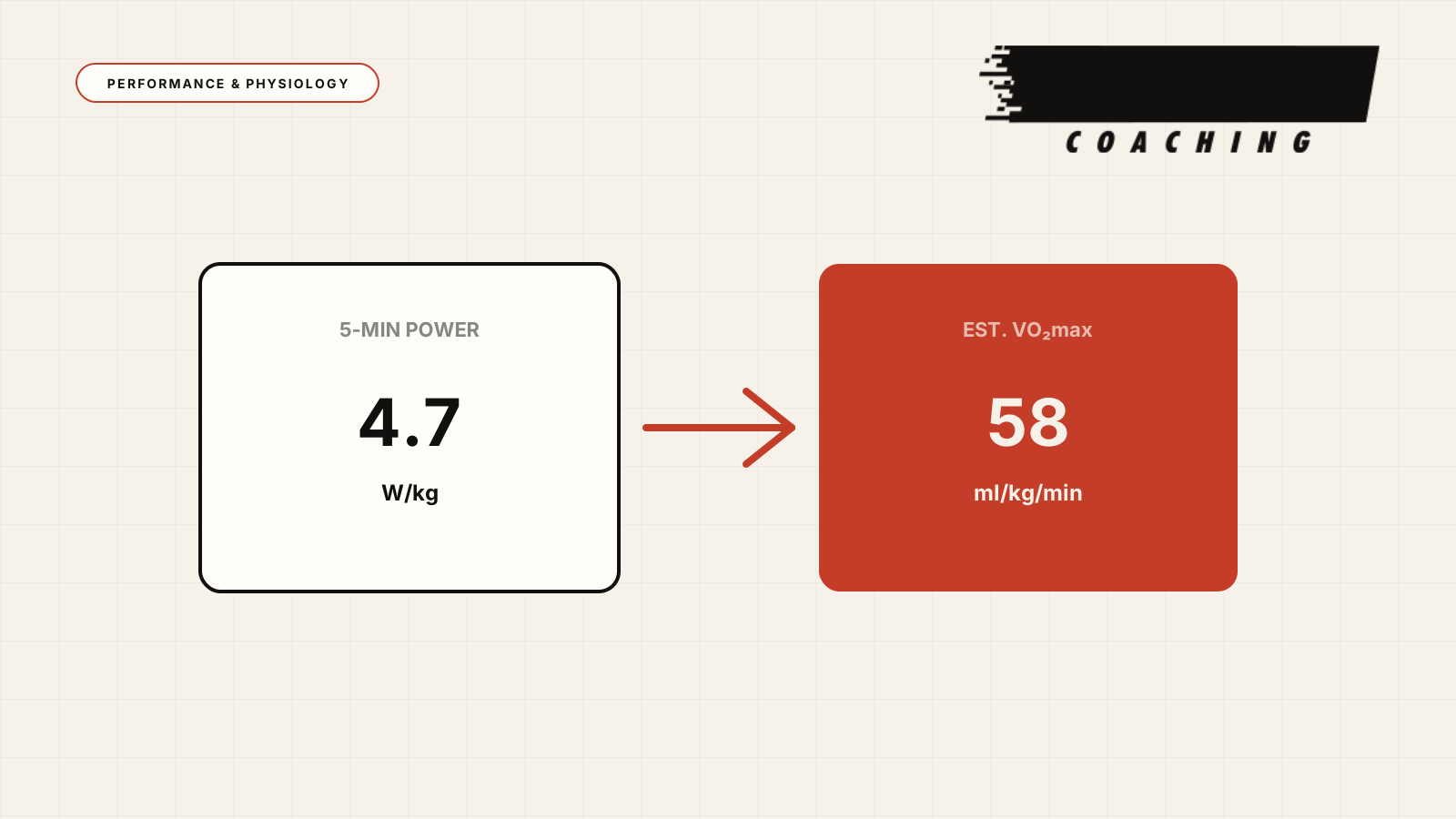
Suppose a 70 kg cyclist completes a maximal 5-minute effort averaging 330 W. Their relative power is 4.71 W/kg, and the Cycling VO₂max Calculator estimates VO₂max at 58.4 ml/kg/min or 4.09 L/min.
These values look like respiratory gas analysis results, but they are not. The calculator does not measure oxygen consumption. It uses 5-minute power and body mass to predict VO₂max through an equation developed from a particular group of cyclists.
The result can help assess performance and monitor training. To interpret it correctly, first distinguish an actual measurement from a mathematical estimate.
What VO₂max is
VO₂max is the maximum rate at which the body can take in, transport and use oxygen during intense exercise.
It is usually expressed in two ways:
- In
L/min, as absolute oxygen consumption. - In
ml/kg/min, relative to body mass.
VO₂max is an important part of aerobic capacity, but does not describe your entire cycling performance or physiological profile. Athletes with similar VO₂max can differ in FTP or Critical Power, mechanical efficiency and their ability to sustain a high fraction of aerobic capacity for a long time.
VO₂max indicates the height of your aerobic “ceiling”. By itself, it does not show how close to that ceiling you can race, how long you can sustain the intensity or how efficiently you turn available energy into watts.
Measurement and estimation are different
Respiratory gas analysis records gas exchange during an appropriate incremental exercise protocol. VO₂ is calculated from the air the athlete actually breathes in and out.
The calculator knows only:
- average power over the entire 5-minute effort,
- the athlete’s body mass.
It does not know actual oxygen consumption, mechanical efficiency, anaerobic contribution or whether the effort was well paced and free from residual fatigue. Its absolute L/min value is calculated from estimated relative VO₂max and weight; it is not an independent measurement.
The result is therefore a training-assessment tool, not a clinical measurement or examination.
Why use 5-minute power?
A maximal five-minute effort has a large aerobic contribution and can bring the athlete close to maximal oxygen uptake. It is also short enough to perform on the road or on a trainer with a power meter.
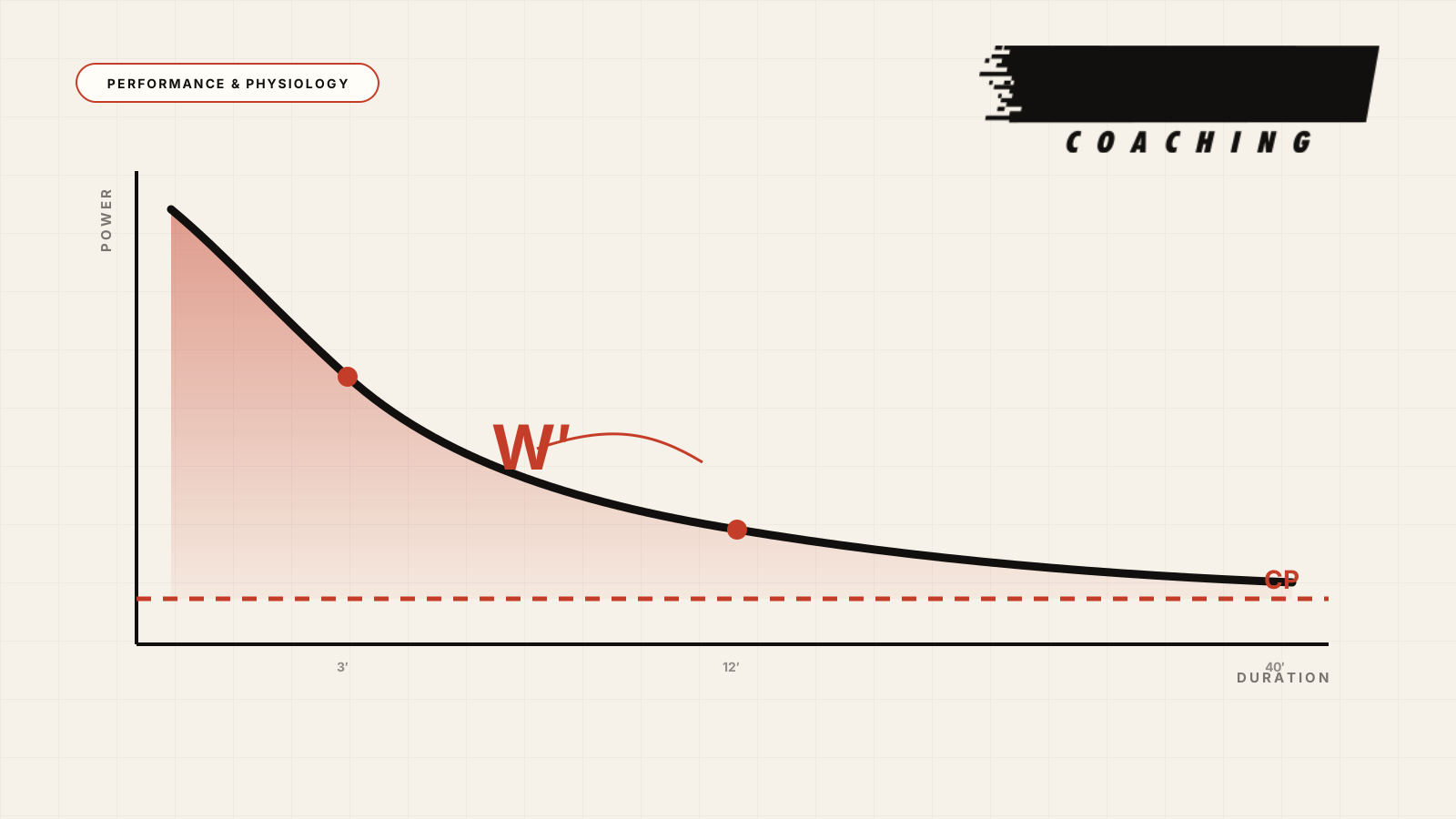
However, 5-minute power is not a “purely aerobic” effort. Anaerobic capacity, W′, technique, pacing and familiarity with intense efforts all affect average power. An athlete with substantial work capacity above Critical Power may achieve high 5-minute power without a proportionally higher VO₂max than another athlete.
Five-minute power is therefore a performance indicator related to VO₂max, not VO₂max itself.
The model’s equation
The equation comes from a study by Sitko et al. involving 46 cyclists. Participants completed respiratory gas analysis and, 72 hours later, a test including a maximal five-minute effort. Relative five-minute power was the best single predictor of VO₂max from that test.
The equation is:
VO₂max (ml/kg/min) = 16,6 + 8,87 × 5-minute power (W/kg)
In the opening example:
330 W ÷ 70 kg = 4,71 W/kg
16,6 + 8,87 × 4,71 ≈ 58,4 ml/kg/min
The model reported a 95% interval for R² of approximately 0.61–0.77. This indicates a strong group-level relationship, not a perfect prediction for each athlete.
An R² near 0.70 does not mean your personal value is “70% correct”. It describes how well the model explains differences in the study sample. It does not give your individual error margin; your actual laboratory value may be lower or higher.
What can affect the result?
The same 5-minute W/kg does not necessarily correspond to the same VO₂max for every athlete. The result can be affected by:
- mechanical efficiency,
- anaerobic contribution and W′,
- pacing,
- fatigue and recovery before testing,
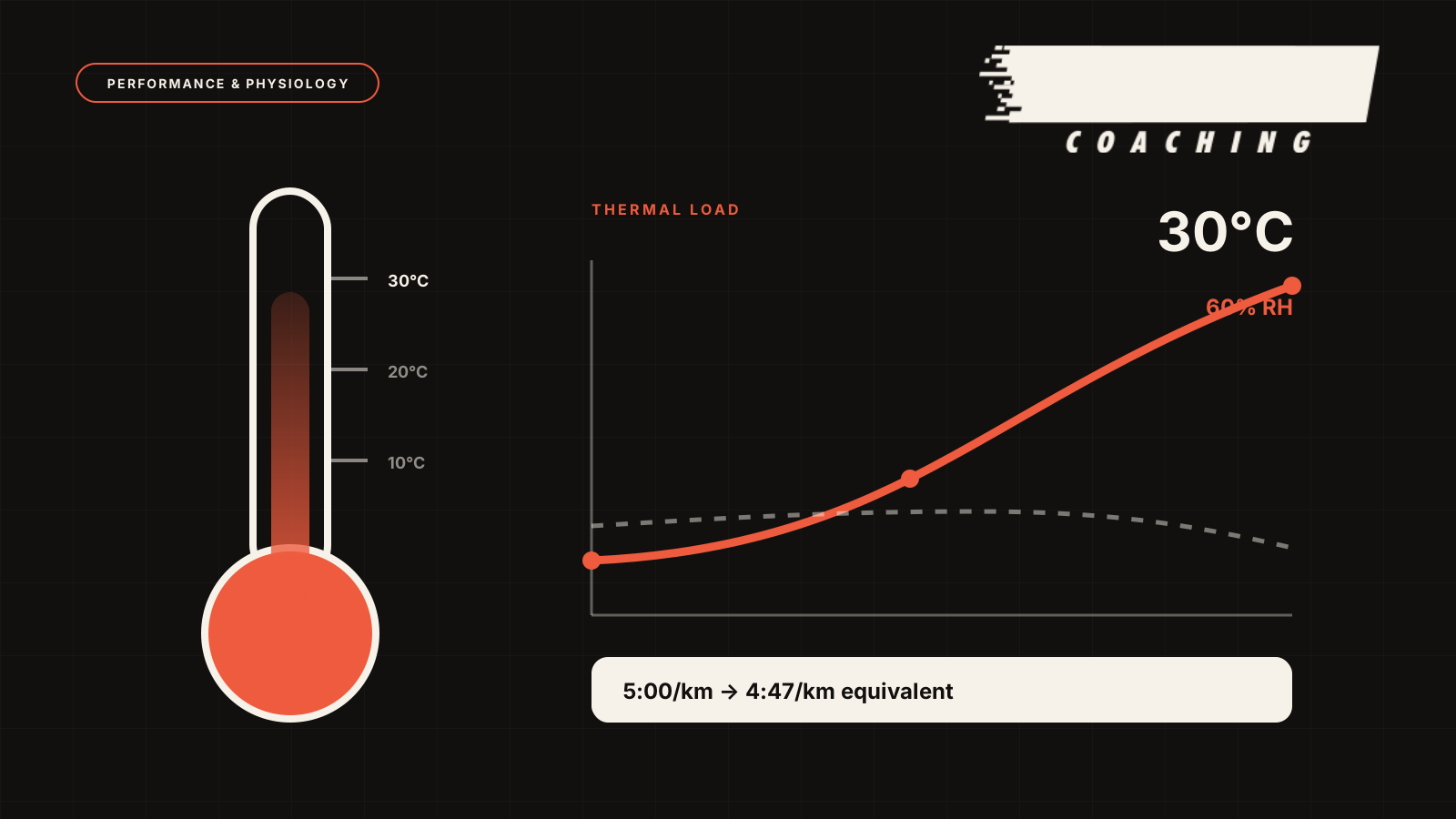
- temperature and cooling, especially indoors,
- power-meter accuracy and calibration,
- the body mass used in the calculation.
Because the equation uses W/kg, lower weight with unchanged 5-minute power increases estimated relative VO₂max. This does not prove that absolute oxygen uptake and transport capacity improved. It shows that relative power—and therefore the model’s prediction—increased.
Changing power meter, trainer, bike or environment can also make a power difference appear as a VO₂max change without a corresponding physiological change.
How to perform the 5-minute test correctly
Aim for the highest average power you can sustain for the full five minutes. The best first minute or highest instantaneous power is not the objective.
To make the result useful:
- Test rested, with adequate carbohydrate intake and no substantial residual fatigue.
- Use the same power meter and follow the manufacturer’s calibration or zero-offset instructions.
- Use a consistent, familiar warm-up without creating extra fatigue before the effort.
- Outdoors, choose a continuous climb or safe stretch without descents, junctions or places where you must stop pedalling.
- On a trainer, ensure adequate cooling and use a setting that lets you adjust power freely during the effort.
- Start strongly but under control. Sprinting early and losing power in the second half makes poor pacing a greater influence on the result.
- Use
Average Powerfor the entire 5:00, not Normalized Power, peak power or a shorter selected lap.
For retests, keep the same warm-up, measurement device, similar riding position, cooling and conditions. Do not enter your best three-, four- or six-minute power. The equation and calculator were developed exclusively for five-minute efforts.
How to use the estimate in training
The result helps track 5-minute power and build a picture of your aerobic profile. It is most useful when the test is repeated consistently and assessed alongside other data.
Even then, a higher estimate does not by itself prove that actual VO₂max increased. Pacing, anaerobic contribution, test familiarity or power measurement may have improved. Better 5-minute power is still a real performance improvement, but the calculator alone cannot establish its physiological explanation.
Do not use the result to automatically prescribe VO₂max interval watts. Appropriate power depends on repetition duration, recovery, total volume, Critical Power or FTP, and the session’s purpose.
Assess the estimate alongside:
- FTP or Critical Power and W′,
- your ability to repeat high-intensity efforts,
- heart rate, RPE and power progression during intervals,
- longer-duration performances and fatigue resistance.
For a triathlete, 5-minute power is far removed from sustainable bike-leg power. It describes another part of your power profile and should be assessed alongside your ability to maintain controlled cycling intensity that protects the subsequent run.
When respiratory gas analysis is needed
Laboratory testing is more valuable when you need an actual VO₂max measurement, want to assess respiratory and metabolic exercise responses or require more precise physiological monitoring.
If you experience an unexplained performance decline, breathlessness, pain, dizziness or another symptom, the calculator is not the right assessment tool. Assessment by an appropriate healthcare professional is needed.
How to use the Cycling VO₂max Calculator
- Under
Average Power, enter average power for the entire maximal 5-minute effort. - Under
Body Mass, enter your weight at the time of the test.
The calculator displays:
- estimated relative VO₂max in
ml/kg/min, - the corresponding calculated absolute value in
L/min, - relative effort power in
W/kg.
Treat the result as an estimate and place more weight on the overall picture of your training and performance than on one number.
Key takeaways
- VO₂max is measured through respiratory gas analysis. The calculator estimates it from 5-minute W/kg.
- The equation requires a maximal effort lasting exactly five minutes and should not be used with other durations.
- Anaerobic capacity, pacing, fatigue, weight and power measurement can change the result.
- The estimate is neither a personal laboratory measurement nor an automatic VO₂max interval target.
- Compare retests using the same protocol, power meter and similar conditions.
- Assess training and race performance by combining the result with FTP or Critical Power, heart rate, RPE and fatigue resistance.
Sources and further reading
- Sitko S, Cirer-Sastre R, Corbi F, López-Laval I. Five-Minute Power-Based Test to Predict Maximal Oxygen Consumption in Road Cycling. International Journal of Sports Physiology and Performance. 2022;17(1):9–15.
- Coyle EF, Coggan AR, Hopper MK, Walters TJ. Determinants of endurance in well-trained cyclists. Journal of Applied Physiology. 1988;64(6):2622–2630.