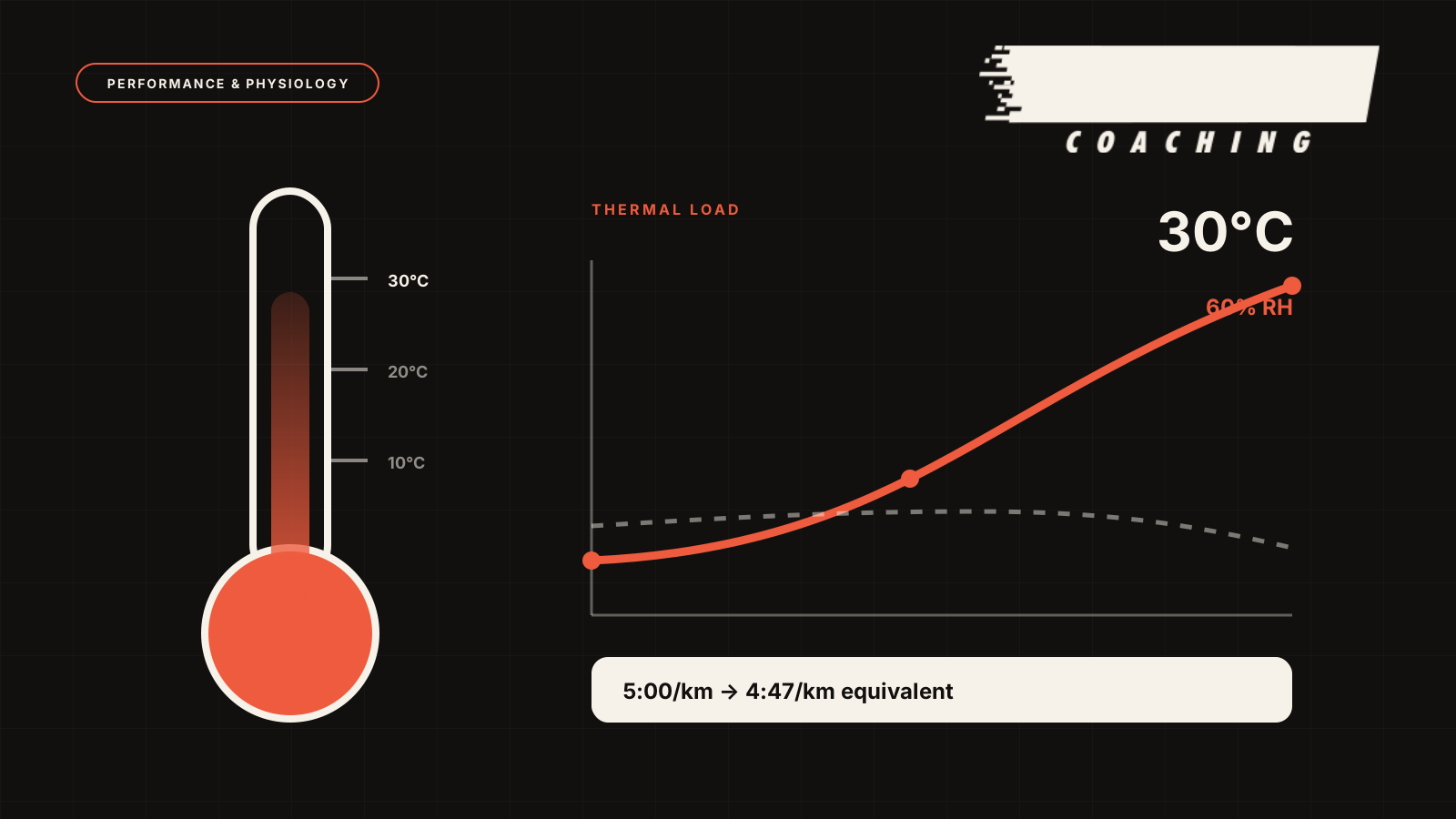
Suppose you ran at 5:00/km in 30°C and 60% relative humidity. The Heat-Adjusted Pace Calculator estimates that this effort corresponds to around 4:47/km in ideal weather.
This does not mean you “definitely ran” at 4:47/km or that the calculator knows how well you have adapted to and cope with heat. It means its statistical model associates the same effort with lower speed as temperature and humidity increase.
The estimate helps assess a hot-weather session or adjust a pre-race pace target. To turn it into a sound training decision and race strategy, understand what the model calculates, what it leaves out and when uncertainty is greater.
The calculator provides an estimate, not a certain prediction
This implementation adapts the statistical model of the Running Writings Heat-Adjusted Pace Calculator. It is based on 3,891 marathon performances from 754 races and examines speed changes across temperature and humidity combinations.
This tells us three important things:
- The result describes the average relationship in the data, not your personal response.
- The model is more relevant to marathons and other long, continuous endurance efforts than to short races or interval sessions.
- Slower recreational marathon runners are not adequately represented. The model’s creator notes that the original dataset extends to finish times of around 3:30.
For a four- or five-hour marathon runner, longer heat exposure and potentially different acclimatisation increase uncertainty. The calculator’s adjusted pace is an initial estimate, not a personal race target you must follow.
Heat changes the cost of the same pace
Only part of the energy used in running becomes movement. Most becomes heat that the body must dissipate.
To do this, the body increases blood flow to the skin and produces sweat. Evaporating sweat removes heat. High humidity makes evaporation harder, so the body must work harder to maintain the same speed.
Environmental and exercise heat load differs from the heat strain each athlete actually experiences. Two runners together at the same pace and in the same conditions can have different heart rates, sweat rates and perceived exertion (RPE).
As effort continues, heart rate can rise despite constant pace. This cardiac drift helps explain why an opening pace can later become unsustainable. Heart rate remains useful, but should be considered with RPE, breathing and how the effort develops.
Temperature alone does not describe the conditions
A temperature of 28°C with low humidity, shade and wind does not impose the same strain as 28°C with high humidity, still air and direct sunlight.
The calculator offers two weather options:
Temp + RH: enterAir TemperatureandRelative Humidity. This is the model’s most direct mode.Heat Index: enter your weather app’s official Heat Index value. Do not use Humidex, RealFeel or Feels Like, which use different methods.
The US National Weather Service Heat Index is designed for shade and light wind. It does not fully account for direct sunlight or changing wind cooling while running. Two races with the same Heat Index may therefore impose different actual heat loads.
WBGT combines temperature, humidity, wind and solar radiation and helps assess environmental risk in sport. It is not an option in this calculator and should not be entered in the Heat Index field.
Distance and session structure change the heat penalty
The same environment affects a 5K, half marathon and marathon differently. In a short effort, you can temporarily store more heat and finish before the strain of a multi-hour race accumulates.
Session structure also matters. Forty continuous minutes near half-marathon pace create a different heat load from 10×4 minutes at the same pace with walking recovery or easy jogging. Breaks temporarily reduce heat production and allow more time to dissipate it.
Since the calculator does not use distance, duration or recovery, it cannot account for this difference. Its estimate is more useful for long, continuous efforts. For a short interval or 5K race, it may overestimate the pace adjustment actually needed.
How to use the calculator’s two modes
The Heat-Adjusted Pace Calculator works in two ways:
Heat pace → Cool
Use this after a hot-weather session or race. Enter your actual pace under Pace in the heat and add the weather conditions. Ideal-weather Pace estimates the equivalent pace in ideal weather.
Cool effort → Heat pace
Use this before a long, continuous session or race. Under Cool-weather Effort, enter a pace reflecting your current ability, then add the expected conditions. Heat-adjusted Pace estimates the pace that may correspond to a similar effort in the heat.
The model adjusts speed rather than adding a fixed number of seconds per kilometre. Because pace is the inverse of speed, forward and reverse conversions can differ by a second after rounding. This is expected, not a calculator error.
Turn the estimate into a race plan
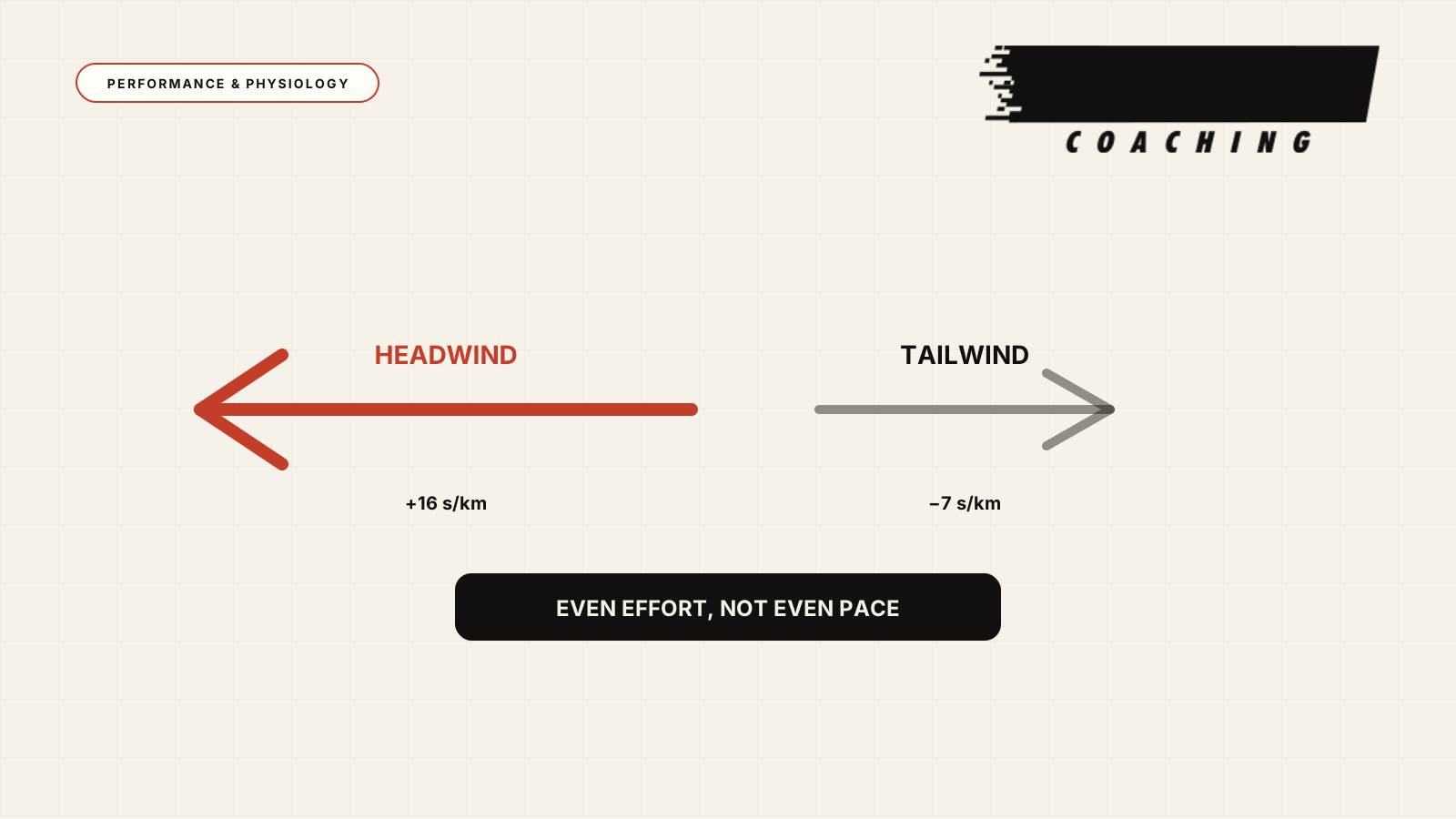
In heat, do not try to preserve your original pace target. Preserve an intensity you can sustain to the finish.
A practical plan needs:
- A recent ability estimate in good conditions. Use current pace, not an old PB that no longer reflects fitness.
- A heat-adjusted pace range. Treat the result as a general estimate rather than one mandatory target.
- A controlled start. Do not try to “bank” expected heat-related losses in the first third.
- Reassessment points. Check whether breathing, RPE, heart rate and technique change faster than expected.
- Plan B. If temperature rises, the course has more sun or effort becomes excessive early on, slow down before you are forced into a sudden slowdown.
A well-acclimatised runner may be less affected, so the calculator may overestimate their required adjustment. Someone who trained mainly in cool weather may be affected more. Your experience in similar sessions matters more than the displayed pace.
Acclimatisation and cooling help; they do not cancel the heat
The most important preparation for a hot race is repeated, progressive exposure to similar heat load. Relevant recommendations suggest at least one week and ideally more than two for fuller acclimatisation.
This does not mean suddenly turning every session into heat training. Start with low-intensity sessions and progressively extend exposure. Heat adds training load even when your watch shows a slower pace.
Hydration, light clothing, shade, cold drinks and available cooling strategies can reduce some strain. They require an individual plan and practice in training. They cannot turn a hot day into ideal weather or justify automatically returning to your original pace target.
A performance model is not a safety model
The calculator estimates pace changes. It does not calculate heat-exhaustion or heatstroke risk, or know whether you are ill, dehydrated, unacclimatised or taking medication that affects thermoregulation.
If you feel severely weak or faint, stop and move somewhere cool. Confusion, disorientation, unusual behaviour, difficulty speaking, loss of coordination, collapse or loss of consciousness are emergency signs requiring immediate medical help.
In extreme heat, the right decision may be to reduce intensity substantially, change training time or abandon the pace target. No heat-adjusted pace calculator takes priority over your safety.
Key takeaways
- Temperature and humidity increase the cost of the same pace, but effects vary substantially between athletes.
- The calculator mainly reflects marathon performances and long, continuous efforts. Uncertainty is greater for short distances and slower recreational runners.
Temp + RHdirectly uses temperature and relative humidity. ForHeat Index, use that specific weather-app value, not RealFeel, Humidex or WBGT.Heat pace → Coolhelps assess a completed hot-weather effort.Cool effort → Heat pacehelps adjust a future target.- Turn the estimate into a pace range, controlled start and clear reassessment points using RPE, breathing and heart rate.
- Acclimatisation and cooling help but do not remove heat’s effect.
- The calculator estimates performance, not safety. Signs of heat exhaustion or heatstroke require immediate assessment.
Use the Heat-Adjusted Pace Calculator as an initial estimate, then adapt your plan to duration, course, sun, wind, acclimatisation and your training observations.
Sources and further reading
- Davis JJ. Heat and Humidity Pace Calculator for Runners — methodology and limitations. Running Writings. 2025.
- Davis JJ. Calculating the Effects of Heat and Humidity on Marathon Performance. Running Writings. 2025.
- Mantzios K et al. Effects of Weather Parameters on Endurance Running Performance: Discipline-specific Analysis of 1258 Races. Medicine & Science in Sports & Exercise. 2022.
- Périard JD, Eijsvogels TMH, Daanen HAM. Exercise under Heat Stress: Thermoregulation, Hydration, Performance Implications, and Mitigation Strategies. Physiological Reviews. 2021.
- Rahimi GRM et al. Physiological Responses to Heat Acclimation: A Systematic Review and Meta-Analysis of Randomized Controlled Trials. Journal of Sports Science and Medicine. 2019.
- Ely MR et al. Impact of Weather on Marathon-Running Performance. Medicine & Science in Sports & Exercise. 2007.
- US National Weather Service. Heat Forecast Tools: Heat Index and WBGT.
- CDC/NIOSH. Heat-related Illnesses: Symptoms and First Aid. 2026.