Running 10 kilometres in 40 minutes requires an average of 4:00 per kilometre. Simple division gives that number correctly. It is not a prediction—and certainly not a race plan.
The real question is different: can you sustain that pace continuously on this course, in the day’s weather and with the preparation you have completed?
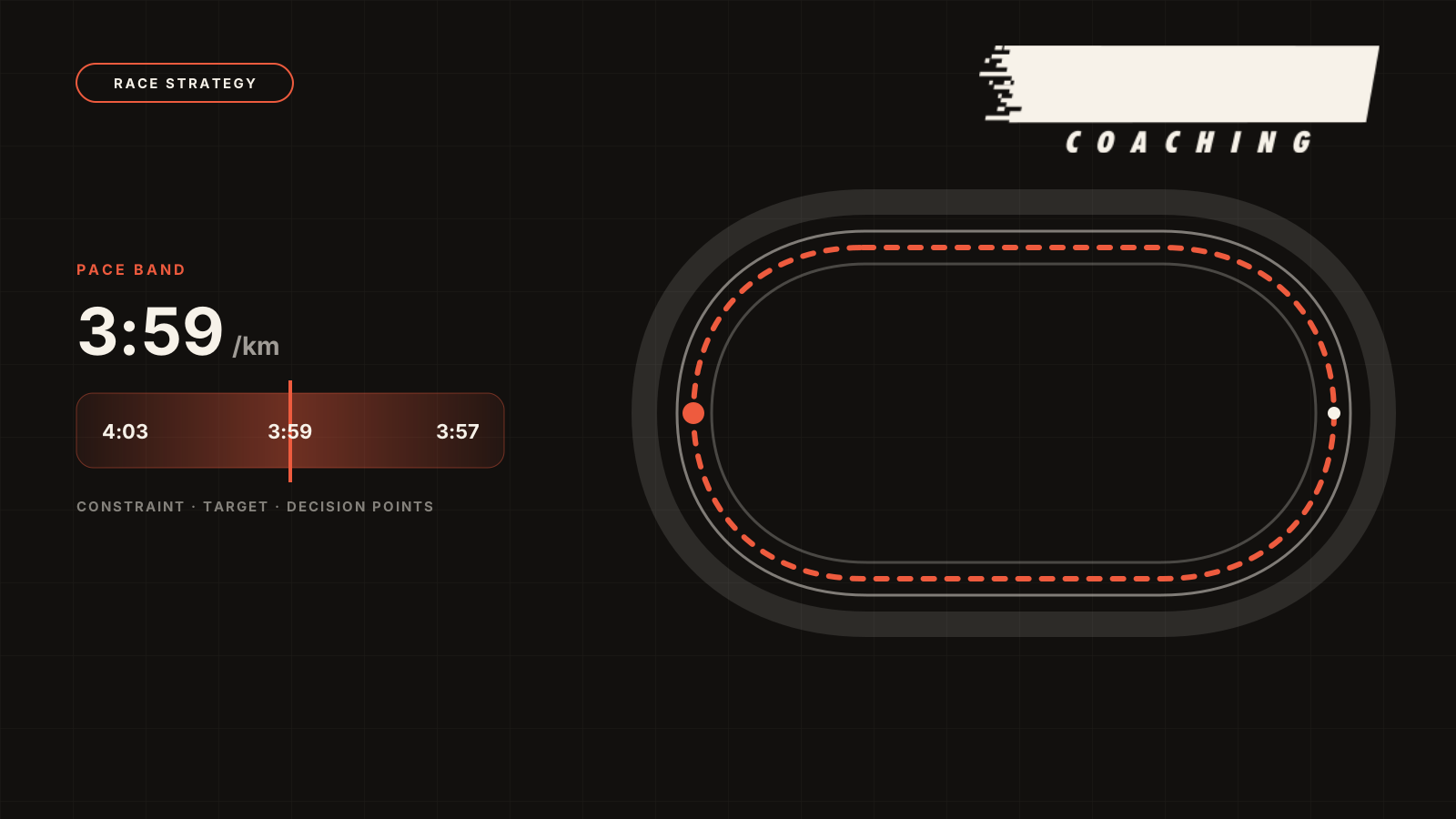
Realistic race pace is not a “magic” number. It is a central target, an acceptable range and clear rules for what to do when the race does not unfold exactly as planned.
A target finish time is not yet your race pace
Target time describes the ideal result you want. Race pace describes how you will attempt to achieve it.
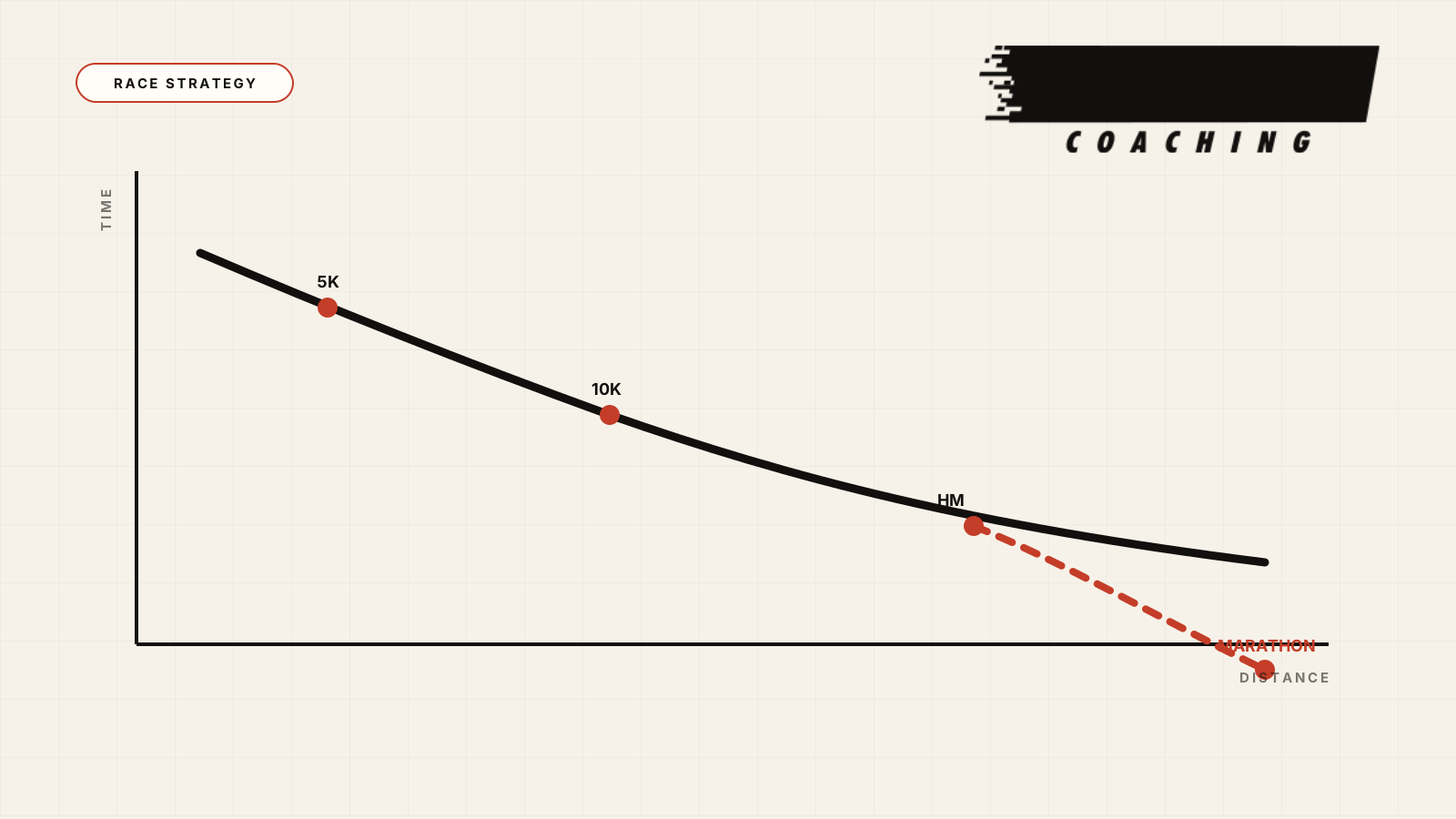
There is an important difference. Two runners may share a recent 5K time but differ in their ability to retain a high proportion of speed as duration and distance grow. One may have greater top-end speed, the other greater endurance. The same 5K time therefore does not imply the same half-marathon or marathon result.
Even for one athlete, the same pace does not always have the same cost. Climbs, headwinds and heat increase the effort needed to show that number on the watch. A race plan should therefore include pace and perceived effort (RPE).
Always start with recent data
The best starting point for assessing realistic race pace is a recent, genuinely hard race or time trial of similar duration. The closer the previous effort is to the target in duration, course and conditions, the more useful it is.
The usual order of priority is:
- A recent race or valid time trial of similar duration.
- Two recent performances at different distances to clarify the speed–endurance relationship.
- Preparation consistency: weekly volume, long runs, key sessions and interruptions.
- The course and expected race-day conditions.
A watch can estimate VO₂max or a potential finish time, but this is supplementary. It does not know how demanding the source session was, your endurance at the target duration, fuelling strategy or response to accumulating fatigue.
The Riegel equation
Most race predictors use some form of the Riegel equation:
T₂ = T₁ × (D₂ / D₁)^k
T₁ is a completed race’s finish time, D₁ its distance, D₂ the new distance and k an exponent describing speed decline as duration increases. The common 1.06 value is a general assumption, never a personal endurance measurement. The output—the predicted finish time for your target race—is T₂.
The model is relatively reliable between nearby distances, such as 5K and 10K. Reliability decreases as the gap grows. In a study of 2,303 recreational runners, the classic Riegel equation was reasonably reliable up to the half marathon. For the marathon, it predicted times at least 10 minutes faster than actual results for half the participants.
Riegel therefore offers an initial estimate. Between nearby distances, with training that supports the target, it can be reasonably accurate. Predicting a marathon from 5 or 10 kilometres substantially increases the error margin.
Training supports a target; it does not guarantee it
Completing 5×1000 m at 4:00/km with two minutes of easy jogging between repetitions shows you can accumulate 20 minutes at target pace in five repetitions with recovery. It does not prove you can sustain that pace continuously for 20 or 40 minutes.
No single session predicts a race result. To assess a specific session, consider:
- total time or distance near target effort,
- recovery duration and ease,
- whether pace, breathing and technique stayed controlled to the end,
- whether the load suited the session’s purpose and your level,
- whether more than one specific session showed a similar pattern,
- whether you returned to normal training without unusual fatigue or muscular strain.
The aim is not simply to “complete” one session. Look for a repeated pattern of increasingly controlled pace: as time at that pace grows, the body adapts and sustains it more comfortably.
Top-end speed is not enough for long races
Between 5 and 10 kilometres, in either direction, a recent result can give a reasonably reliable finish-time estimate. The half marathon and especially the marathon depend much more on long-term consistency, fatigue resistance, long runs, hydration and fuelling.
A fast 5K or 10K shows the necessary basic speed. It does not establish that your legs, muscular and energy systems, and stomach are ready for a multi-hour race. Inadequate preparation, frequent long interruptions, too few long runs or untested fuelling can leave the prediction far from reality.
This matters even more in triathlon: a standalone 10 km or half-marathon time cannot transfer unchanged to the run leg. Bike intensity, total duration, temperature and fuelling all affect run race pace.
Adjust intensity before you are forced to adjust the target
Temperature is among the strongest environmental influences on endurance performance. An analysis of nearly 1.8 million results from six major marathons found a clear association between higher temperature and lower performance across runner levels.
Gradients also change speed’s energy cost. Holding flat-ground pace uphill can raise effort disproportionately. Trying to recover all the preceding climb’s lost time downhill can increase muscular load and cost you later.
Some practical guidelines are simple:
- Uphill, in heat or into a headwind, slow down to control intensity and effort.
- On more favourable sections, return progressively towards the central target without chasing every lost second.
- If conditions differ substantially from training, revise the plan before starting.
From prediction to Plans A/B/C
Replace one fixed finish-time target with three scenarios:
Plan A—ambitious but evidence-based. Use it when recent performance, preparation consistency, specific sessions and race conditions align.
Plan B—realistic. Choose it when data are positive but uncertainty is greater: the reference performance is older or at a very different distance, the course is harder or preparation was not entirely smooth and complete.
Plan C—effort-based execution. Activate it with heat, strong wind, unexpected fatigue, stomach discomfort or early signs that target pace is unsustainable.
For 40:00 over a flat 10K, 4:00/km remains the central target. The plan need not require every kilometre at exactly 4:00/km. It needs sound management:
- During the first 15–20% of the distance, do not try to “steal seconds”. Stay near target pace and let effort settle.
- Through the middle, check that pace, breathing and technique remain within expectations and do not differ substantially from the opening kilometres.
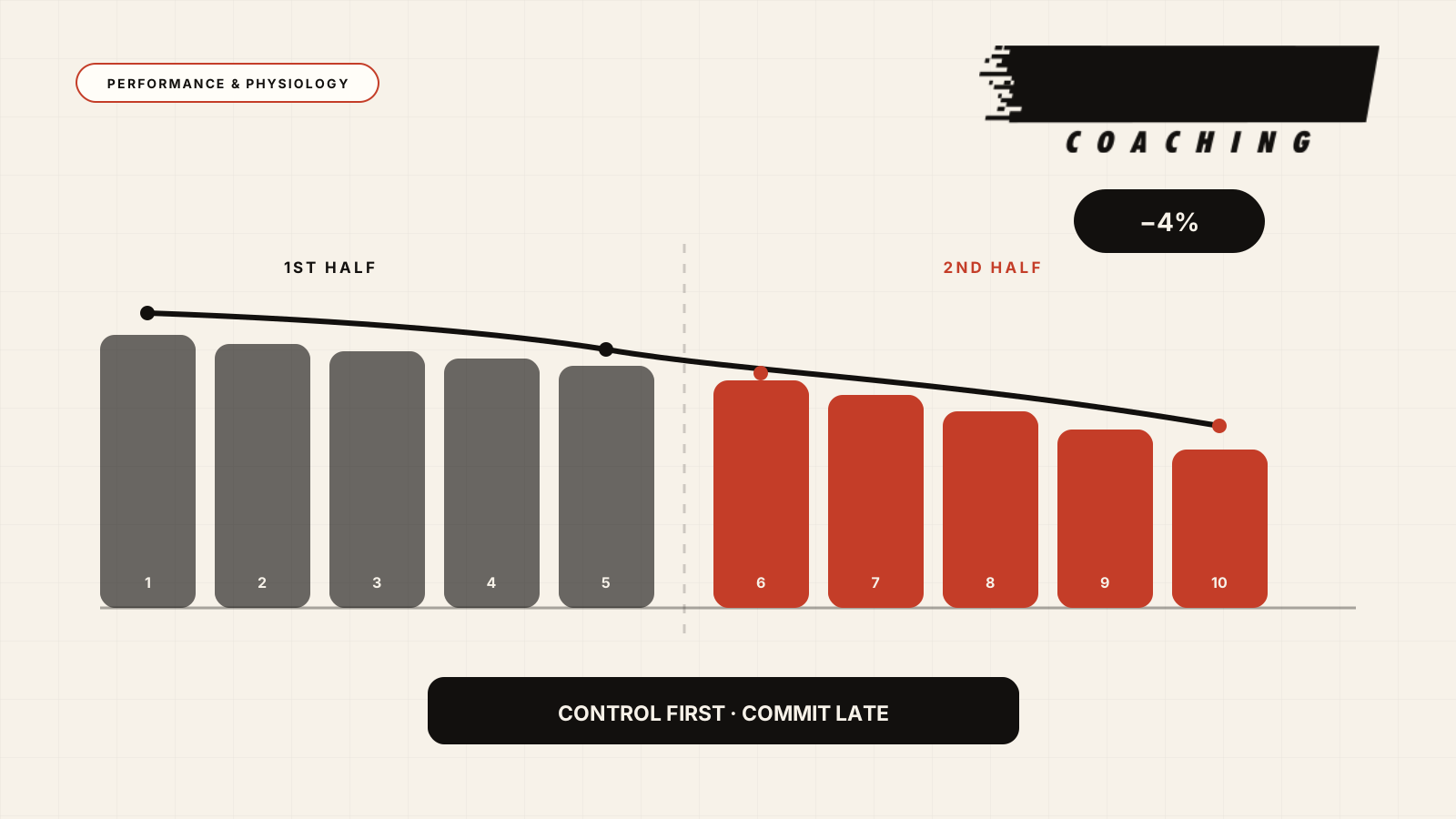
- Over the final 20–25%, if you remain in control, progressively increase pace and intensity.
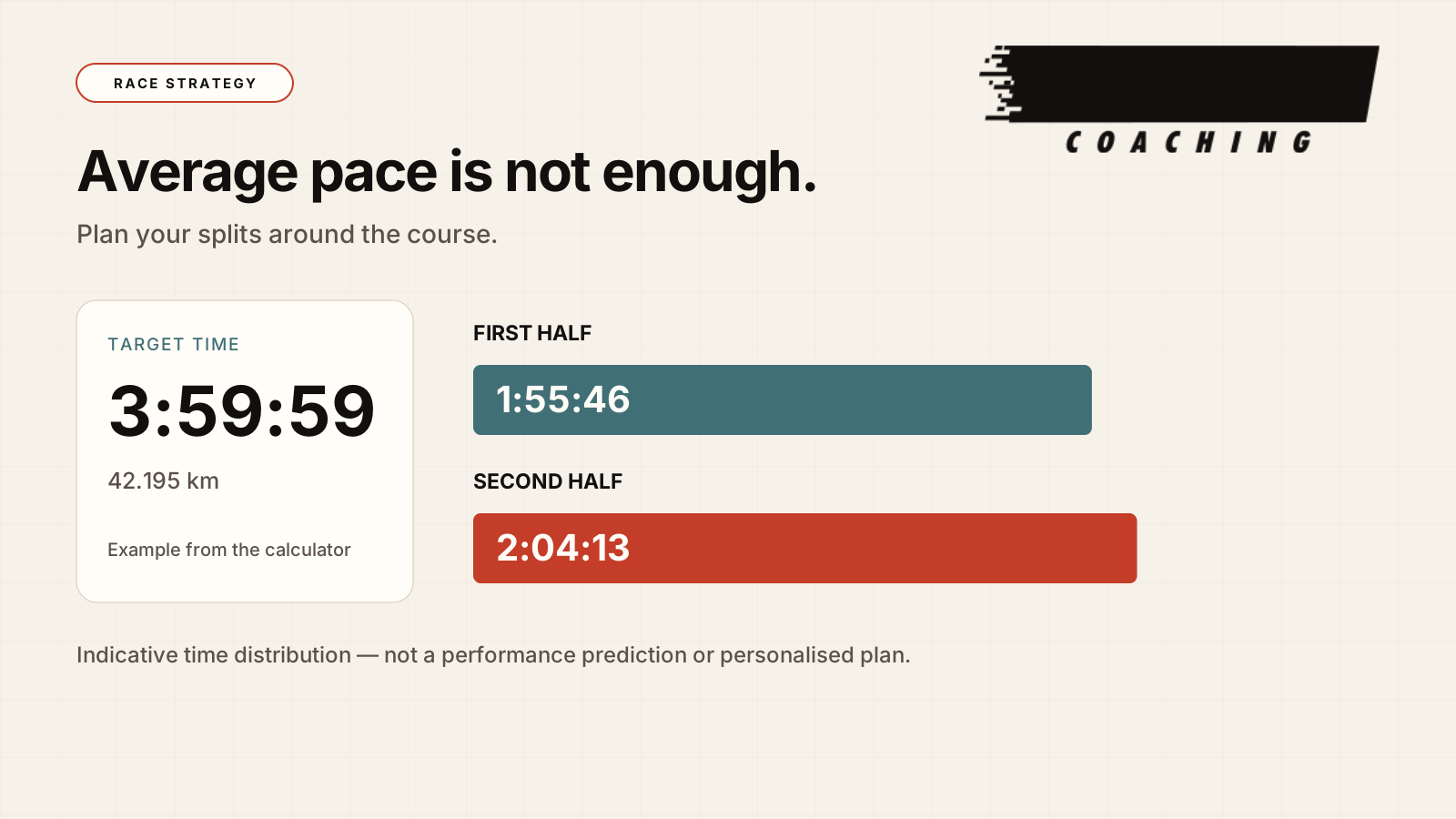
Research in recreational marathon runners links excessively fast starts with greater slowing and worse finish times. This does not mean everyone needs the same plan. The start should protect against the common trap of a pace that feels easy on fresh legs before fatigue develops.
The watch is a tool, not the decision-maker
Certified courses are measured along the shortest possible route. Runners rarely follow it perfectly: they overtake, weave and take wider turns. GPS can also over- or underestimate distance, especially around tall buildings, in forests or on routes with many direction changes.
If your watch records 10.15 kilometres at 4:00/km, total time will be around 40:36. You did not lose 36 seconds; the watch calculated pace from a different distance.
During the race:
- use official splits, course markings and total time as primary references,
- prefer average lap pace to instantaneous pace,
- manually lap at official kilometre markers when practical and correctly marked,
- use heart rate as supplementary information alongside breathing, RPE and technique.
Your device does not know how much endurance you have left. Learn to combine its data with what is happening in your body and how you perceive it.
Checklist: is my target genuinely realistic?
Before finalising race pace, ask:
- Do I have a recent result from a race of similar duration?
- Is the projection to the new distance small or large?
- Did more than one specific session show control, rather than mere completion?
- Was preparation sufficiently consistent?
- Have I adjusted for course elevation, wind and race-day temperature?
- For a long race, have I practised fuelling successfully?
- Do I have Plans B and C with clear reassessment points?
The more uncertain answers, the less confidence you should place in an aggressive pace and plan. This reflects mature management of uncertainty, not a lack of ambition.
Key takeaways
- Target time is a hypothesis; race pace is the execution plan.
- A recent race of similar duration matters far more than a predictor output.
- Riegel offers a starting point, never a guarantee—especially when projecting to the marathon.
- No single session proves race readiness.
- Heat, gradients, wind and fuelling directly affect sustainable pace.
- A controlled start protects the race target; an excessively fast one rarely ends well.
- Your watch provides data. Official splits, perceived effort and judgement determine strategy.
Convert race time and distance into average pace with the Race Pace Calculator, then organise splits with the Split Calculator. To predict a finish time from a recent performance at another distance, use the Race Predictor after carefully reading how it works and its limitations.
Sources and further reading
- Riegel PS. Athletic Records and Human Endurance. American Scientist. 1981.
- Vickers AJ, Vertosick EA. An empirical study of race times in recreational endurance runners. BMC Sports Science, Medicine and Rehabilitation. 2016.
- Lima-Silva AE et al. Effect of performance level on pacing strategy during a 10-km running race. European Journal of Applied Physiology. 2010.
- Smyth B. Fast starters and slow finishers: A large-scale data analysis of pacing at the beginning and end of the marathon for recreational runners. Journal of Sports Analytics. 2018.
- Smyth B. How recreational marathon runners hit the wall: A large-scale data analysis of late-race pacing collapse in the marathon. PLOS ONE. 2021.
- El Helou N et al. Impact of Environmental Parameters on Marathon Running Performance. PLOS ONE. 2012.
- Minetti AE et al. Energy cost of walking and running at extreme uphill and downhill slopes. Journal of Applied Physiology. 2002.
- Gilgen-Ammann R et al. Accuracy of Distance Recordings in Eight Positioning-Enabled Sport Watches. JMIR mHealth and uHealth. 2020.
- World Athletics. Competition and Technical Rules — Road Races, course measurement along the shortest possible route.