You have planned 28 km, but your running group is doing 32, and the first few kilometres feel easier than expected. It is tempting to join them, especially as race day approaches and you want another sign that you are ready. Before adding distance or increasing your pace, think about why this session was included in your plan. What exactly are you trying to achieve, and how will you know whether you have achieved it?
What we want to achieve with a long run
The purpose of long runs is to get you used to working at a particular intensity for an extended period. In marathon training, we want you to keep your effort under control as the run progresses, manage fatigue, and get used to practising your fuelling while running. Each long run needs to be planned around these demands.
A study of 26 well-trained male runners with similar 10 km performances found that those who regularly completed long runs maintained their running economy better during a 90-minute running test. By the end of the test, the energy cost of running at the same pace had increased by 3.1% in the group that regularly completed runs lasting at least 90 minutes, compared with 6.0% in the group whose runs all lasted less than 70 minutes. In simple terms, the increase in energy cost was about half as large in the runners who regularly completed long runs. The study also found associations with weekly training volume and did not isolate the effect of long runs as a training intervention. Zanini et al., 2026
A long run gains its value within consistent training. Your other sessions, recovery and daily commitments affect what you can handle. One impressive run is not enough: how you got there and how you continue afterwards also matter.
How long should your long run be?
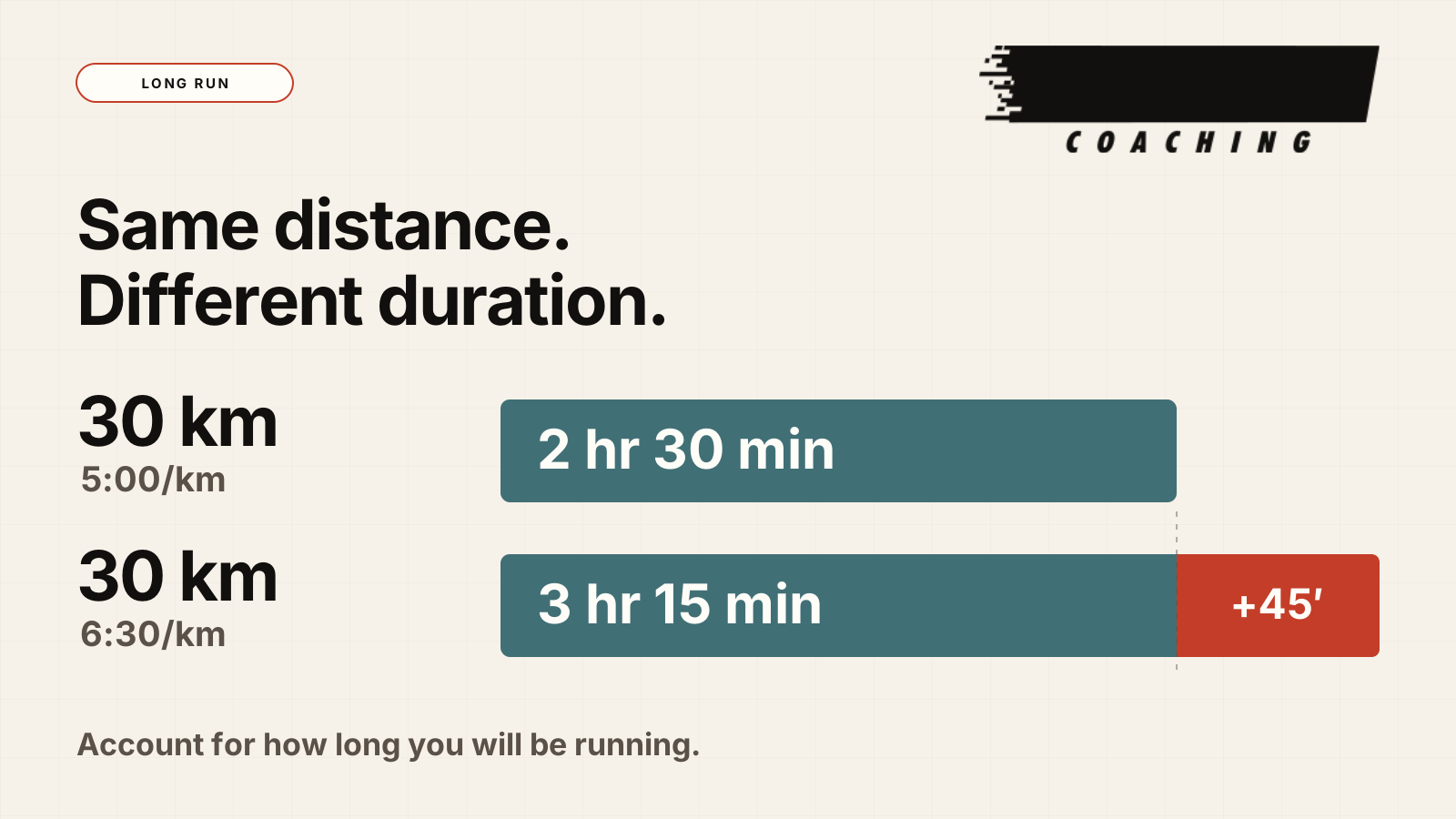
Distance takes on a different meaning when you convert it into time. For a runner covering 30 km at 5:00/km, the run lasts 2 hours and 30 minutes. For someone running at 6:30/km, it lasts 3 hours and 15 minutes. The same distance means another 45 minutes of running for the second runner, with different demands on planning, fuelling and available time.
You also need to consider what came before: the duration and intensity of your previous long runs, whether you completed recent training weeks as planned or had an interruption, and how fatigued you felt during your longest run so far. Planning should always start with your current fitness, how your preparation has progressed, and how many weeks remain until race day.
A 30 km long run can account for two-thirds of a 45 km training week, but less than half of a 70 km week. This example shows how differently training volume can be concentrated into a single day and distributed across a week.
In another study, involving 556 half-marathon runners and 441 marathon runners, weekly training volume and the distance of the longest run were associated with performance. Among the marathon runners, a longest run of less than 25 km was associated with a finish time approximately 13.4 minutes slower than a longest run of 30–35 km, after other factors were accounted for in the statistical analysis. This does not mean that increasing a runner’s long-run distance will improve their time by 13 minutes. The data show an association, but do not identify the ideal long-run distance for each runner. Fokkema et al., 2020
Before choosing between 28, 30 or 32 km, work out how long the distance will take, review your recent training, and look at the rest of your weekly schedule before and after the run. A subsequent long run can repeat the same distance with a different structure or distribution of intensities. Progress does not require more kilometres in every long run. When we increase the distance, there needs to be a specific reason within the overall plan.
What intensity should you run at?
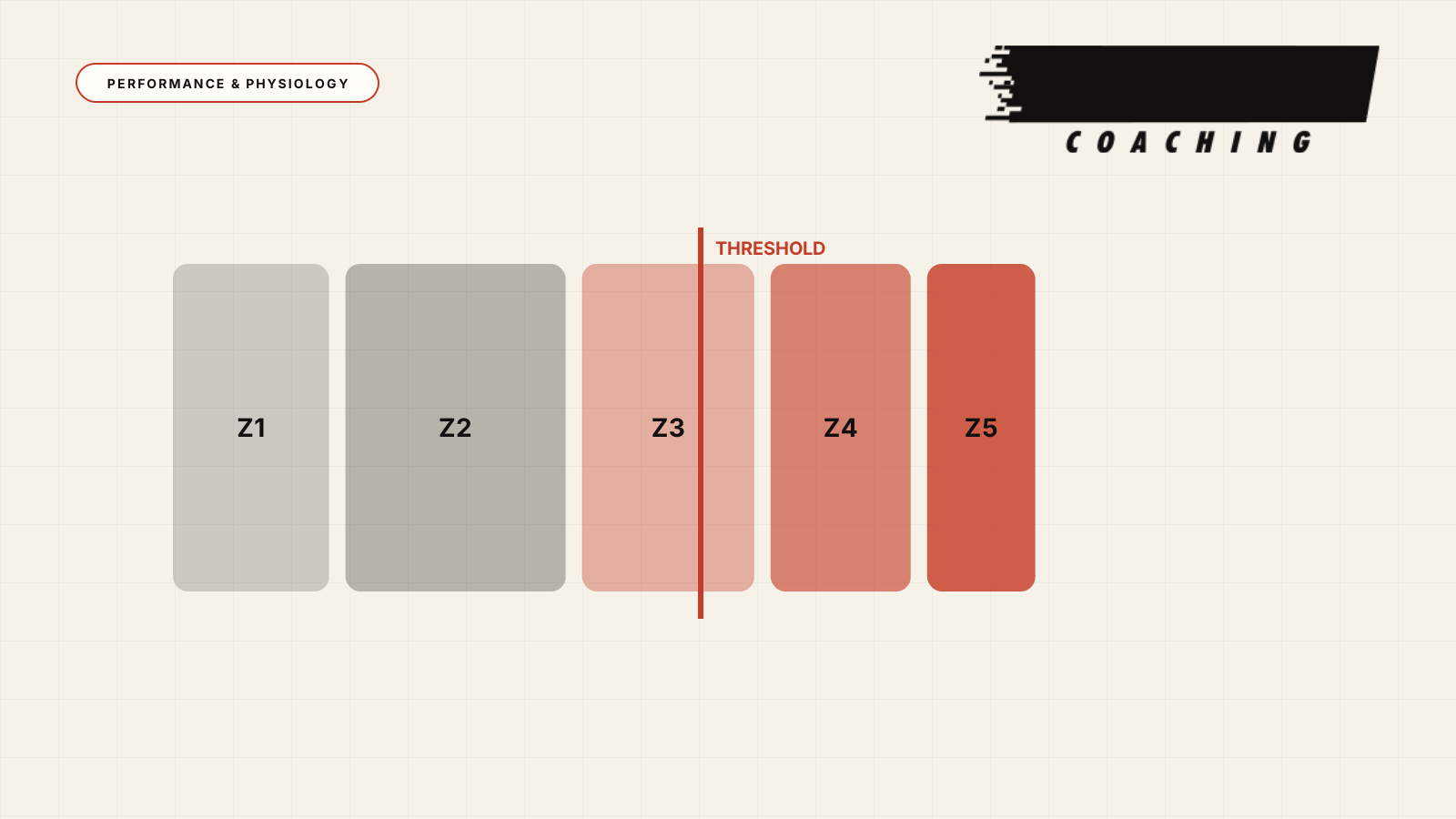
Intensity, like duration, should be decided in advance. An easy long run should be completed at a controlled effort. If the session includes race-pace sections or other intensities, you should know beforehand how long they last and the precise intensity required.
One general approach I follow as a coach is to help my athletes get used to a longer duration at an easy intensity first. For example, 25 km easy. Once the body becomes accustomed to this load, we can gradually start adding higher-intensity sections within those 25 km. For example, 25 km with 2 × 20 minutes at marathon pace.
Here is another example: a 24 km easy run and a 24 km run with the final 6 km at race pace. Both sessions cover the same distance, but have a different emphasis and training stimulus. The first can prepare you for the second, and the second may be selected for a point in your preparation closer to race day. Feeling good at kilometre 18 should not lead you to turn a 24 km easy long run into a 24 km run with the final 6 km at race pace.
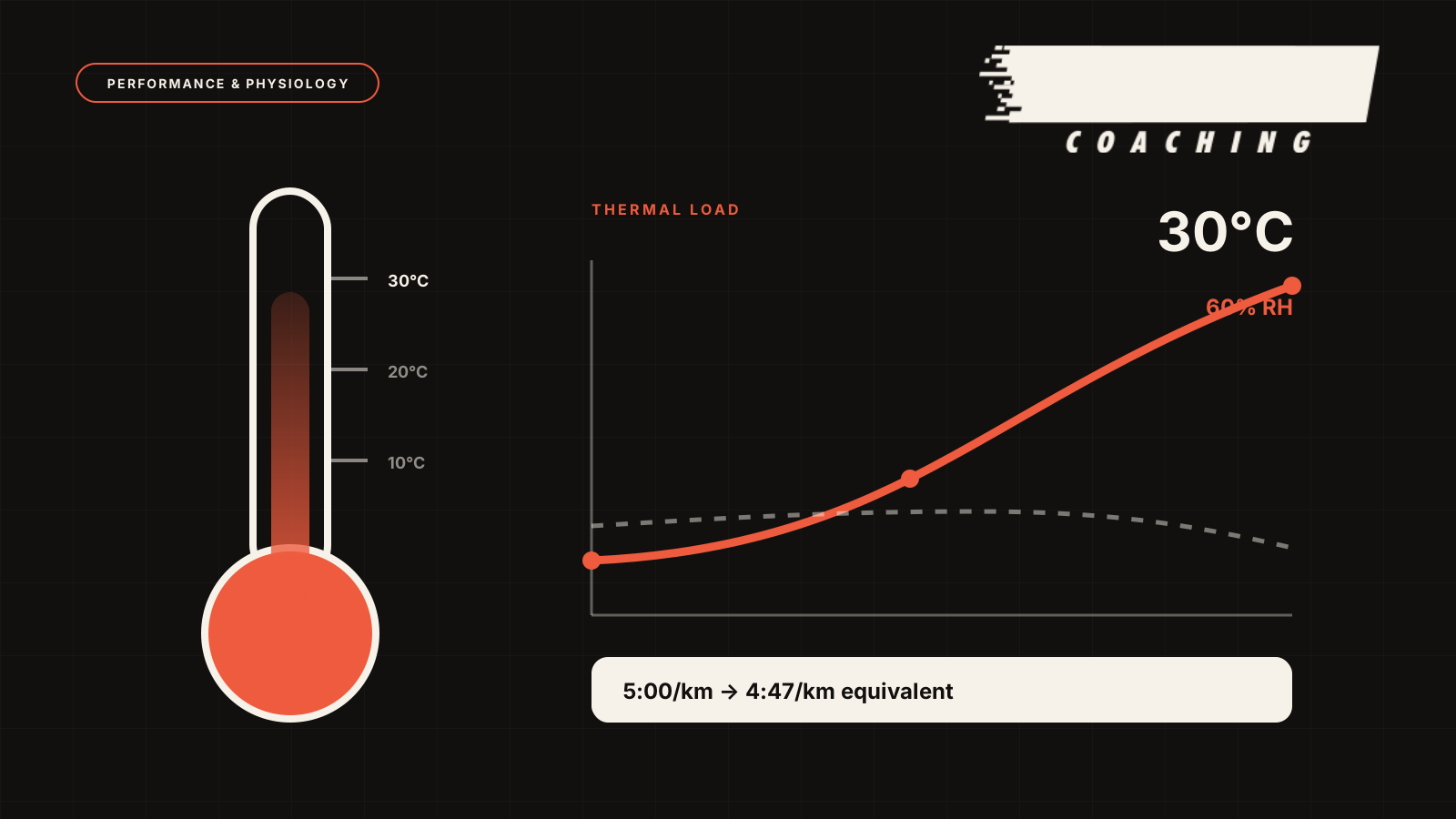
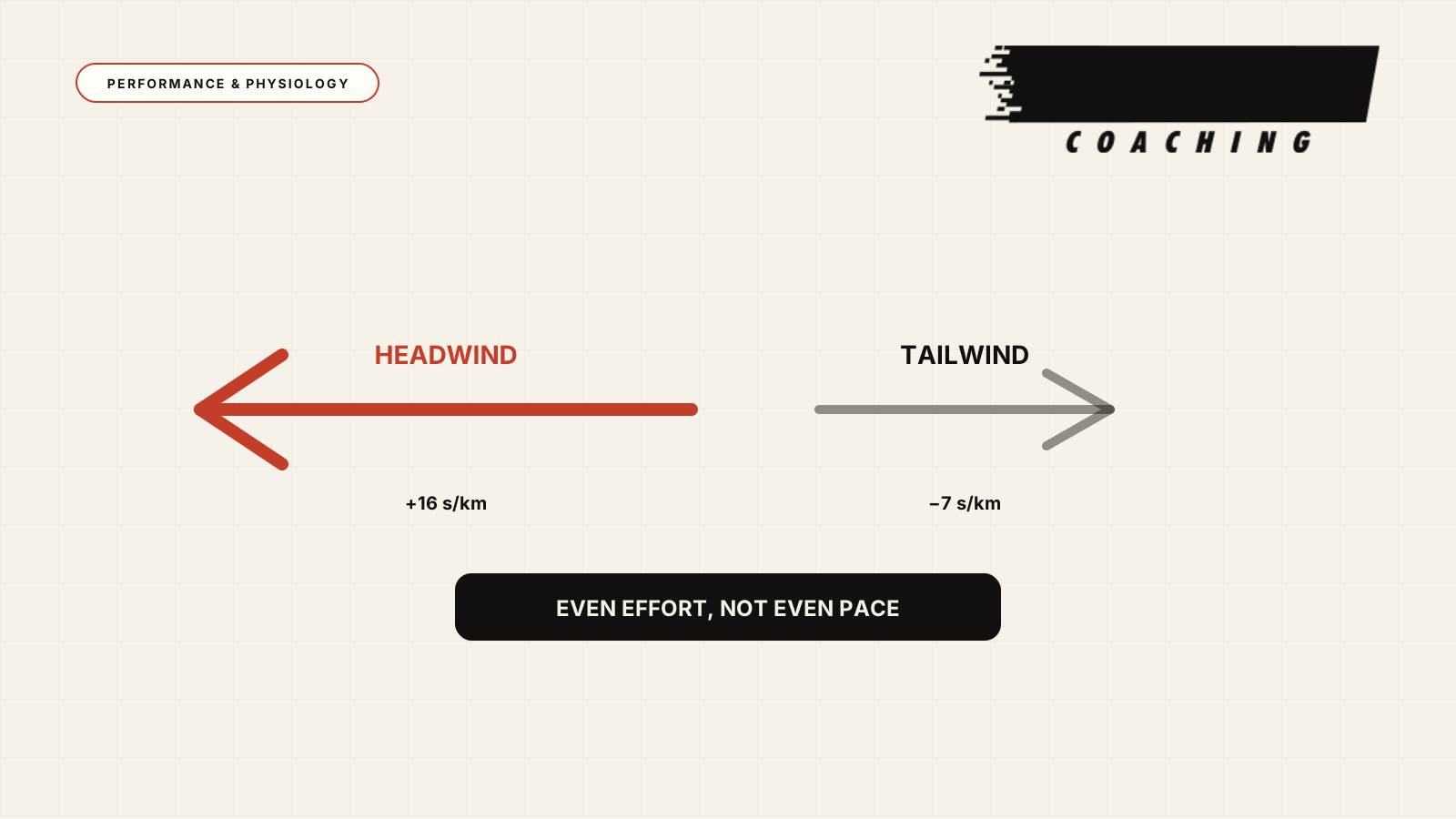
The pace on your watch is only one piece of information. Uphills, a headwind or warmer weather require more effort to maintain the same pace, adding to the demands of the session. Monitor your breathing, perceived intensity and fatigue, and how your heart rate changes alongside the route and weather conditions. Adjust your pace to the conditions so that the intensity and purpose of the run stay in line with your plan.
If you are preparing for the Athens Marathon, think about how you will manage your effort on the climbs and descents. Not every long run needs to rehearse a large part of the race or the entire course. You need to know which training objective you are working on each time.
Your race pace needs to be based on recent data. In the article on realistic race pace, I explain how performance, training consistency and conditions fit together, so you can assess the pace you test in your long run and plan to sustain in the marathon.
What to test before the race
Use your long run to test what you are planning for the race: what breakfast to eat and how far in advance, what fuel to carry, when to consume it, and where you will have access to fluids. Test your shoes, socks, cap and the rest of your kit too. You do not want underarm chafing, a cut on your heel or a belt bouncing under the weight of your gels during the race. Organise these trials before you start, so you can compare the plan with what you actually did afterwards.
Read the label to see how much carbohydrate each product contains: 50 g of gel does not mean 50 g of carbohydrate. I suggest planning and practising your fuelling in grams of carbohydrate per hour. Two gels containing 25 g of carbohydrate each provide 50 g, while two containing 40 g each provide 80 g. Over the same hour, the number of gels is identical, but the intake differs considerably. The right amount needs to be selected and tested according to the duration, intensity and your tolerance.
This practice needs to be repeated over several weeks before your race, rather than rehearsed in a single session. In a small randomised study, two weeks of repeated carbohydrate intake while running reduced gastrointestinal symptoms under the specific study protocol. Trials in training can provide useful information, but do not guarantee that everything will work the same way in your race. Costa et al., 2017 You can read more about this process in the article on race fuelling and gut training.
When you change something in your fuelling or kit, take notes. You may not remember the details several weeks or months later when you need to look back. Avoid making several changes at once. For example, do not change both the product (gel) and the grams per hour in the same session. If a problem arises after several simultaneous changes, it will be much harder to identify which change caused it.
Mistakes that increase the demands and risks of long runs
A common mistake is to increase the distance abruptly because race day is approaching. Going from 24 to 30 km in one week is a 25% increase in a single session. Before choosing a duration or distance, review your recent training history and consider why those extra kilometres or minutes are being added.
In a study of 5,205 runners, researchers compared the distance of each running session with the longest distance that the same runner had covered in a single session during the previous 30 days. Increases of more than 10% were associated with a higher risk of overuse injury. This finding concerns the distance of individual sessions. It does not confirm the familiar weekly 10% rule, nor does it mean that every smaller increase is safe. Frandsen et al., 2025 When planning your next long run, an increase in distance needs to be considered alongside your recent history, intensity and recovery.
Another mistake is adding distance and intensity at the same time because you get carried away with your group or want a faster average pace. The extra load needs to be accounted for within the training week. If you already have a demanding session coming up, a change to Sunday’s long run will also affect the wider training plan.
The same applies to recovery. Food and fluids before training prepare you for the effort, while appropriate nutritional support afterwards helps you recover. Thomas et al., 2016 Sufficient good-quality sleep and rest are also part of recovery. Walsh et al., 2021
How to assess a completed long run
Start with the original objective. If you planned an easy run, consider whether you kept the intensity under control until the end. If there were specific race-pace sections, review how you completed them and how much effort they required. The average pace for the whole session can hide large differences between its beginning and end.
Here is an example of the kind of note I recommend making after a run: “24 km easy in 2 hours and 24 minutes. Over the final 6 km, both the effort required and my heart rate increased noticeably, although my pace stayed close to 6:00/km. I missed the gel planned for 1 hour and 30 minutes. It was warmer in the second half.” Notes like these record what actually happened, so you can look back and assess or compare the session later.
Also note what worked in your fuelling and hydration, and whether your kit caused any discomfort. Over the following days, add how you felt, whether you had muscle soreness, how your sleep and recovery were, and how you felt going into your next sessions.
Finally, note what needs to be adjusted. It might be your start time or breakfast timing, the route, your fuelling arrangements or the intensity you chose. If you work with a coach, this is the information to share so they can understand more and plan your next sessions and long run accordingly.
Confidence before a marathon is built through this process: you train, repeat, observe, record and understand more clearly what you can sustain on race day. A long run completed as planned that gives you clear information is a useful step in your preparation, even if the distance or average pace was not another personal best.
Key takeaways
- Start with the purpose. Before heading out, you should be able to describe what you want to achieve in this session.
- Account for duration too. The same distance can mean a very different amount of time running. Consider it alongside your recent history and the sessions before and after it.
- Prepare for race day. Fuelling, fluids and kit need practical trials and notes, so you know exactly what to do on race day.
- Consider what comes afterwards. Unplanned additions to distance or intensity should always be assessed alongside recovery and your next sessions.
- Review how the run went. Record your effort, fuelling, conditions and how you feel in the following days. These notes will help you plan your next long run and your race.
Tools
The Race Fueling Calculator helps you convert a selected intake target into a total amount of carbohydrate for the duration of the session. Then match the result to your products and test it in practice.
References
- Zanini M, Folland JP, Blagrove RC. Regular Long Runs and Higher Training Volumes Are Associated with Better Running Economy Durability in Performance Matched Well-Trained Male Runners. Medicine & Science in Sports & Exercise. 2026.
- Fokkema T et al. Training for a (half-)marathon: Training volume and longest endurance run related to performance and running injuries. Scandinavian Journal of Medicine & Science in Sports. 2020.
- Costa RJS et al. Gut-training: the impact of two weeks repetitive gut-challenge during exercise on gastrointestinal status, glucose availability, fuel kinetics, and running performance. Applied Physiology, Nutrition, and Metabolism. 2017.
- Frandsen et al. How much running is too much? Identifying high-risk running sessions in a 5200-person cohort study. British Journal of Sports Medicine. 2025.
- Thomas DT, Erdman KA, Burke LM. Nutrition and Athletic Performance: Position of the Academy of Nutrition and Dietetics, Dietitians of Canada, and the American College of Sports Medicine. Journal of the Academy of Nutrition and Dietetics. 2016.
- Walsh NP et al. Sleep and the athlete: narrative review and 2021 expert consensus recommendations. British Journal of Sports Medicine. 2021.