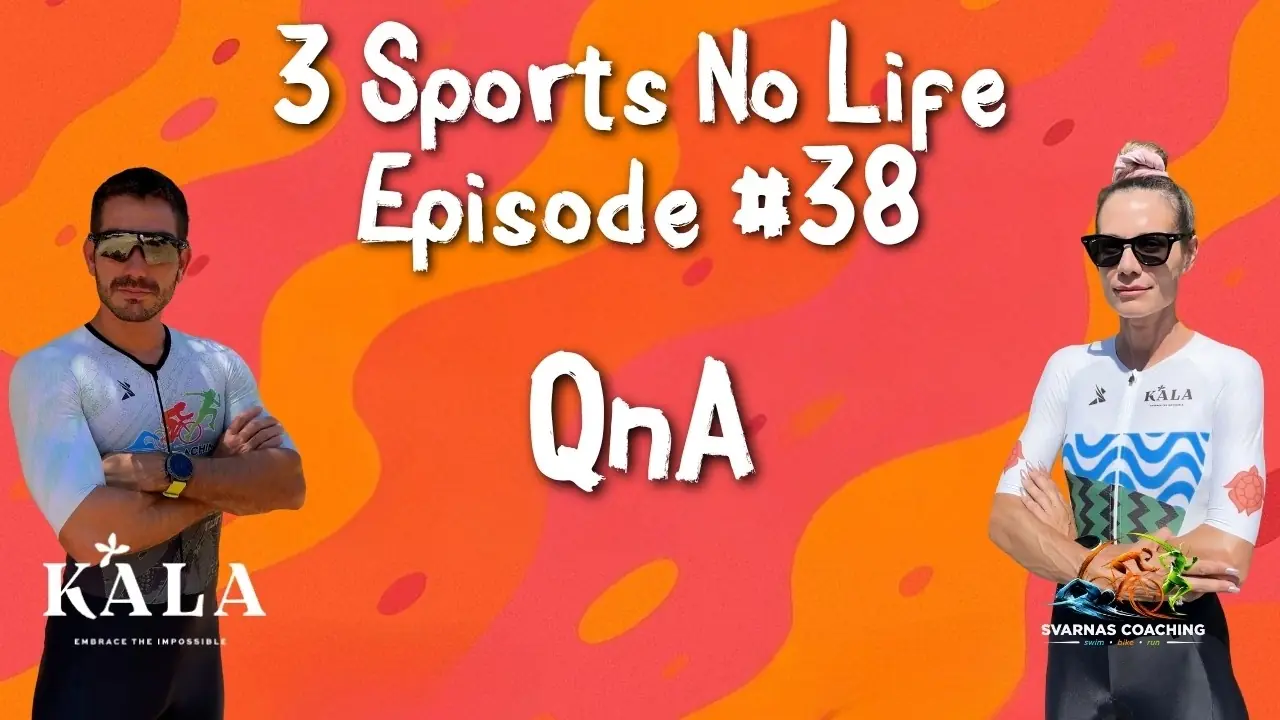
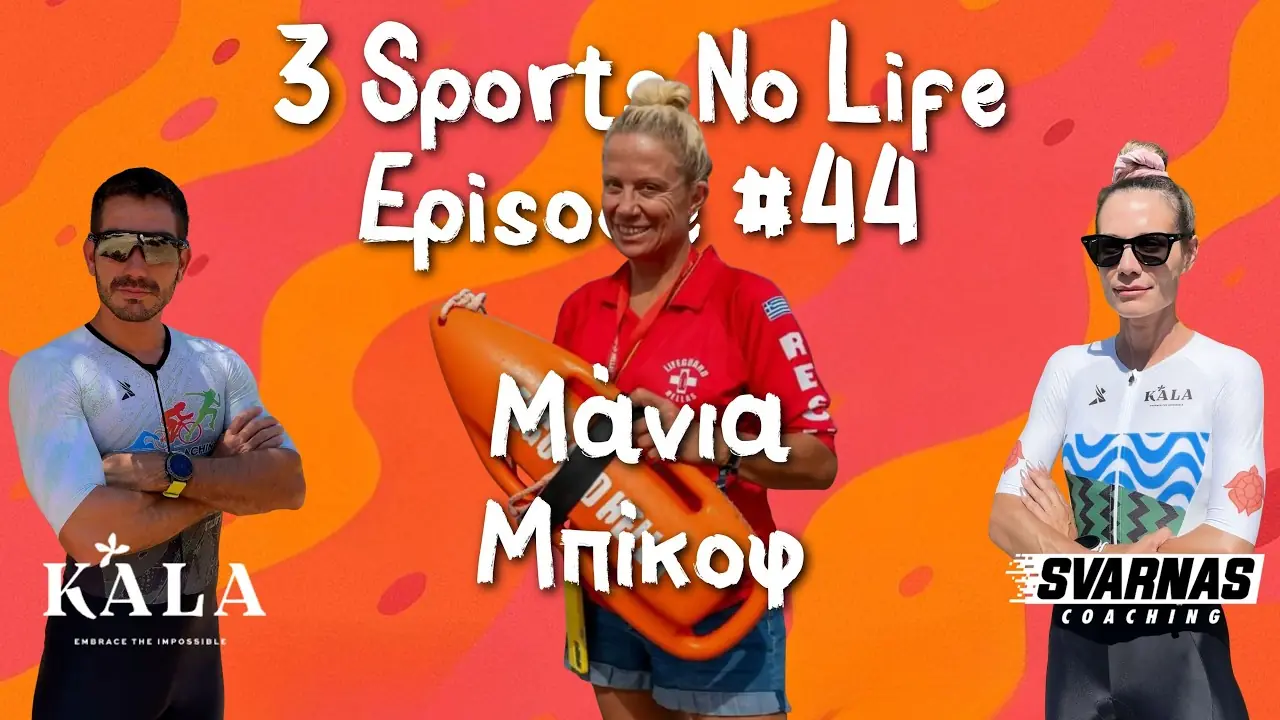
In this episode
Jenny and George begin with Greek racing news and young athlete development. The conversation moves to long-term training, VO₂max and threshold, asking how to pursue a major goal without rushing past preparation.
In the second part, they share first-Ironman and 70.3 experiences: race dates, bike travel, registration, transition bags, the start and post-finish organisation.
Quick navigation
Detailed show notes
Greek racing news
Lake Doxa qualifiers, international participation and the Greek championship schedule open the discussion. Jenny shares her experience of the event, while George comments on the available announcements. This reflects the period when the episode was recorded, not an updated race calendar or an invitation to enter.
Staying in the sport beyond a single goal
How early should a young athlete be pushed for results? Different approaches to athlete development and examples from Roth lead the conversation towards patience. The hosts contrast rushing towards a major performance with gradual progress and the desire to continue beyond the target race.
VO₂max and threshold in training
George and Jenny discuss VO₂max and threshold, varied training intensities and the coach’s role. For further context, the article on Threshold Pace and Critical Velocity distinguishes the terms and explains the limits of estimates from race results. It is not the study mentioned verbally in the episode.
A first Ironman: which date fits your life?
Before entering, the discussion considers the training season, work, family and training conditions. Choosing a race goes beyond whether the course looks fast. For the next planning step, see how to approach a realistic triathlon finish time, including transitions.
Travel, check-in and transition bags
Transporting and assembling the bike, essential tools and preparing bags provide a practical overview of first-timer concerns. Familiarity with the venue gets particular attention: where to leave the bike, where to enter and exit, and how to move between separate transition areas.
From the start to the return to your room
Start waves, helmets and bike mount/dismount lines are reminders that preparation includes rules. The conversation continues beyond the finish arch: collecting equipment, clean clothes, help from loved ones and time to rest complete the experience. The hosts close by sharing moments from their own summer training.
Key takeaways
- Choosing a race also means choosing the preparation months beforehand, not just the start date.
- The first-Ironman discussion emphasises gradual preparation without one timeline for everyone.
- Travel planning and transition familiarity are distinct parts of race preparation.
- Include what happens afterwards: collecting belongings, transport, support and rest.
Related links
The tool adds the times you enter for swimming, T1, cycling, T2 and running. It does not assess Ironman readiness or guarantee performance. The article linked in the text explains its use; this link provides direct access to the tool.