In this episode
A Q&A without a central guest: the hosts wrap up the cancelled Africa trip and move to Instagram questions about transitions, equipment and training.
Health and nutrition references remain personal experiences rather than individualised guidance.
Detailed show notes
Africa out, Lanzarote in
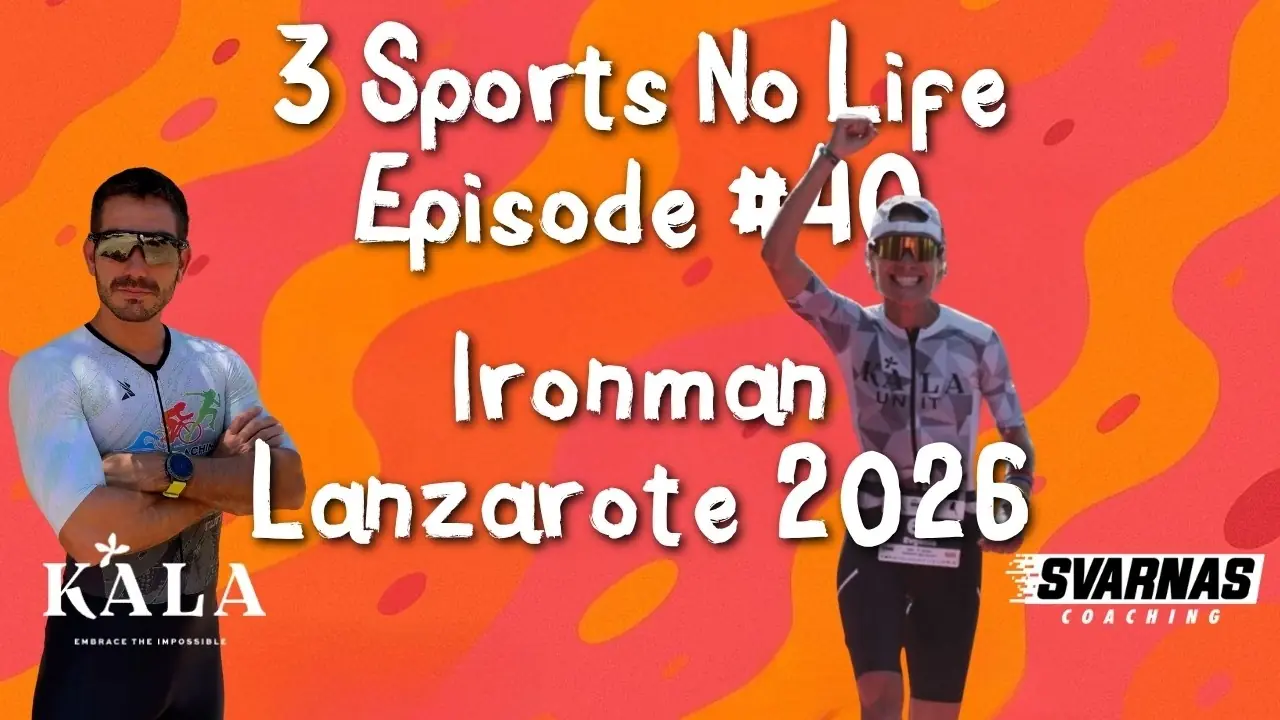
They did not go to Ironman in Africa: flights via Doha were cancelled and bicycle cargo costs made the trip unworkable. Jenny is chasing a Kona slot and going to Lanzarote despite elevation she initially wanted to avoid. George says he probably will not do a major Ironman-distance race in 2026. They will meet at TRIMAN.
They comment on Greece’s first 70.3 of the season and XTERRA/cross triathlon. The discussion stays with the racing picture and lessons from the event.
Transition: quick, not rushed
Jenny practises wetsuit and shoe handling in daily life and uses visualisation. George places greater value on transitions as distance shortens, especially in draft-legal racing. He suggests two rehearsals in a brick, with flying mounts only when they can be done safely.
Set-up includes bottles, shoes attached to the bike with elastic bands and morning tyre-pressure checks. Gels go in a bottle rather than wrappers on the bars, except caffeine gels. For T2, a cap with glasses and a flask. They walk the transition route. Helmet on before leaving the tent. Quick, not panicked.
A first full and equipment
For a first Ironman-distance event, they suggest a relatively flat course, favourable weather and easy logistics, not Lanzarote. George mentions Italy, Austria and Copenhagen; Jenny Barcelona for a full and Spain for a half. Do not trust “flat” marketing without checking elevation. Walking distance from the hotel matters as much as the course.
For equipment, George does not start with a new bike: the body is the biggest aerodynamic obstacle. First wheels, bars and bike fit, then a helmet and components transferable to the next frame. He considers watts per euro and sees oversized pulleys as poor value for performance.
Injuries, intensity and weight
Jenny says the magic of a first 140.6 lies in the hours and stimulus for body and mind; later races change quality, not difficulty. She counts 12 finishes with the same enthusiasm. They stop training when in pain; if she cannot run, she swims. They want a physiotherapist with a plan, rather than only “stop”.
VO2 max and threshold both have a place: the ceiling develops faster, threshold more slowly and steadily. For middle and long distance, if threshold is far below VO2, they discuss raising threshold first. On weight, they clearly call for a dietitian; they speak only from experience, without prescribing a target weight.
Key takeaways
- Mental organisation gains more in transition than a flying mount you have not practised safely.
- Choose a first full by weather, elevation and access, not how “extreme” the destination sounds.
- Before changing bikes, assess wheels, position and fit; the body is already the largest aerodynamic obstacle.
- Pain during training is a signal to stop; this episode does not replace a doctor or dietitian.