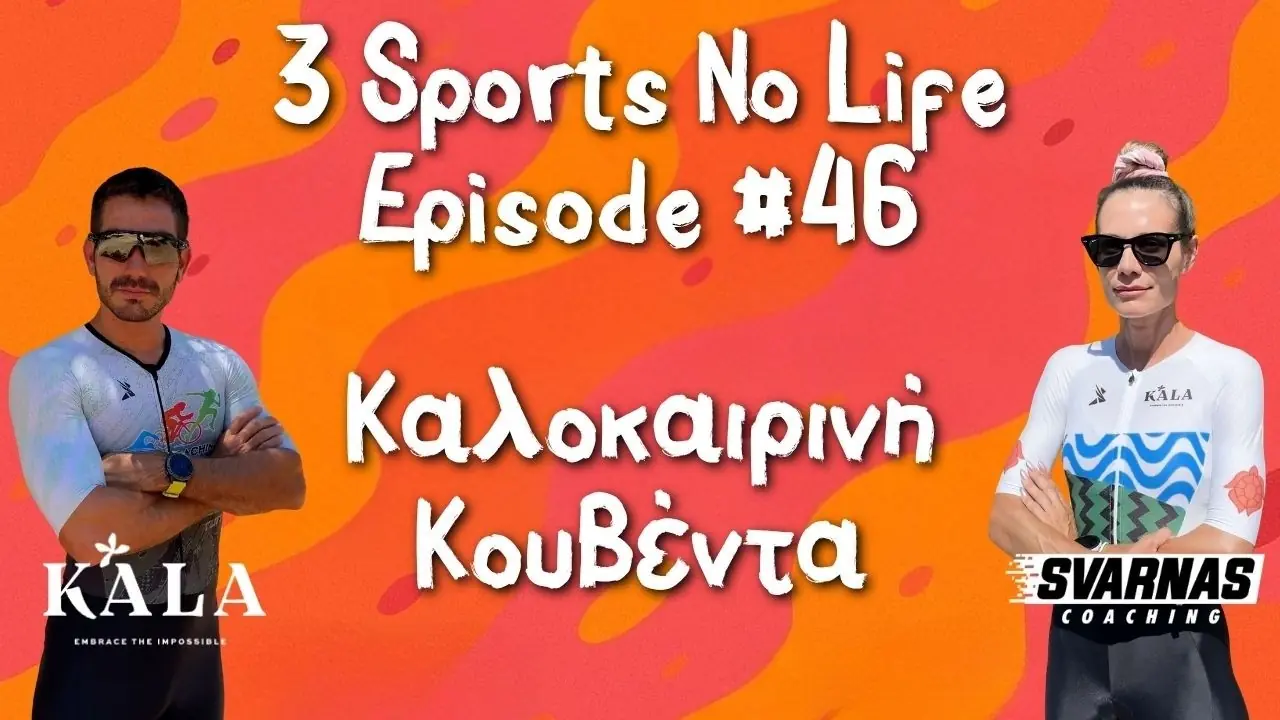
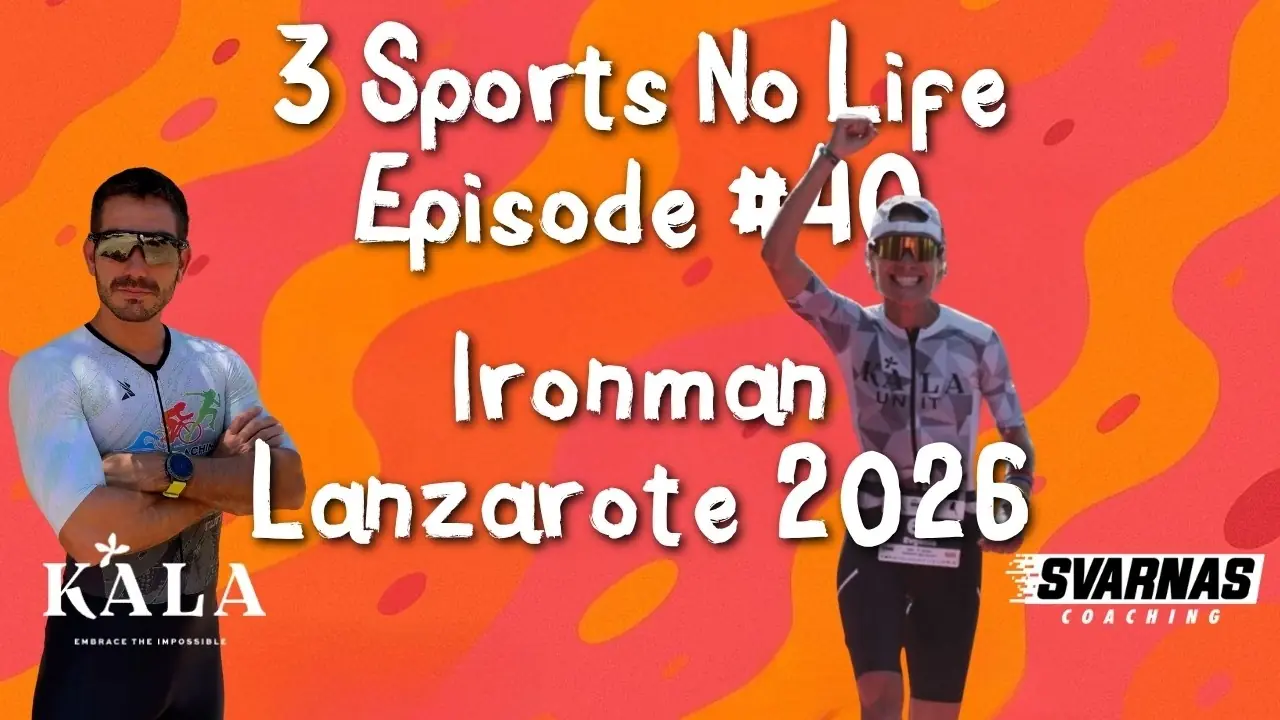
In this episode
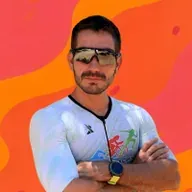
Fotis Vlachos, accountant and entrepreneur behind CycleBox in Nea Smyrni, says he entered triathlon in 2019 without a competitive background.
The discussion covers halves and Ironman distance, PATAGONMAN as an extreme experience, the mental game of long days and combining training with business. It highlights the mindset long distances require and the consistency needed to fit them alongside professional life.
Quick navigation
Detailed show notes
From the gym to 2019
He began as an accountant with his own office at 23. He says he ran the Athens Marathon in 2017 from almost no base, recalling a first finish around 5:15 and a second in 2018 at 4:30. In spring 2018, he entered Ironman Greece without a bike. He bought one in summer–September 2018 and raced in 2019.
He discovered spinning at Holmes in Pangrati. An instructor persuaded him to attend a related seminar. He enjoys both spinning’s intensity and the demands of long days equally.
CycleBox and Pilates
He rented premises in Nea Smyrni in October 2020, closed during the second lockdown and opened in December 2021. He describes approximately 160–180 registered members, 80–90 active monthly, 16 bikes and three hours of almost-full classes, with three other people involved in teaching. He has also formed a triathlon team.
He is preparing a Pilates studio opposite, targeting 1 April: four reformers and eight mat spaces. No website is provided in the episode.
Half, Ironman distance and mindset
He reports 15 halves, five Ironman-distance races and one extreme event. For halves, he highlights Sri Lanka as a trip, where the swim was cancelled because of a crocodile, and Warsaw for its course. At Ironman Klagenfurt, a spoke broke at kilometre 162; he lost around one hour and ten minutes and continued.
Long races, he says, are first a mental game. Solo training is necessary because company is not enough for ten or fifteen hours. His day starts around 7 and ends near 23, with office work, midday training and CycleBox classes from 18 to 21.
PATAGONMAN
He entered through a ballot. Support is compulsory, and the person accompanying the athlete is an essential part of the effort. There are no transition areas or bike aid stations; on the mountain, water and food are available only at 10, 20 and 30 km. He mentions 300 slots and 210 starters, a 10.5 °C sea and jumping from a ferry around 5 am.
The bike covers 180 km with approximately 3,500 m of climbing, followed by a technical trail run. He finished in 16.5 hours, with more hours needed to return to the hotel. He considers this his most powerful finish.
Goals and the next generation
He is considering TRIMAN and Warsaw 70.3, with Emilia Romagna in Italy on the calendar; he still needs a full this year. He is in the federation’s first cohort of coaches and calls for municipal and pool support for youth programmes. Jenny mentions a children’s camp in Loutraki on 1–3 May; this is not presented as a registration invitation.
Key takeaways
- The 15 halves, 5 fulls and one extreme are presented as he reports them in the episode, not as catalogue statistics.
- In long races, the mind comes first; solo training builds what company cannot provide.
- PATAGONMAN is described through its ballot, compulsory support and a day exceeding 16 hours, not as a typical Ironman.
- CycleBox is described as a studio and community in Nea Smyrni, without a public website in the package.