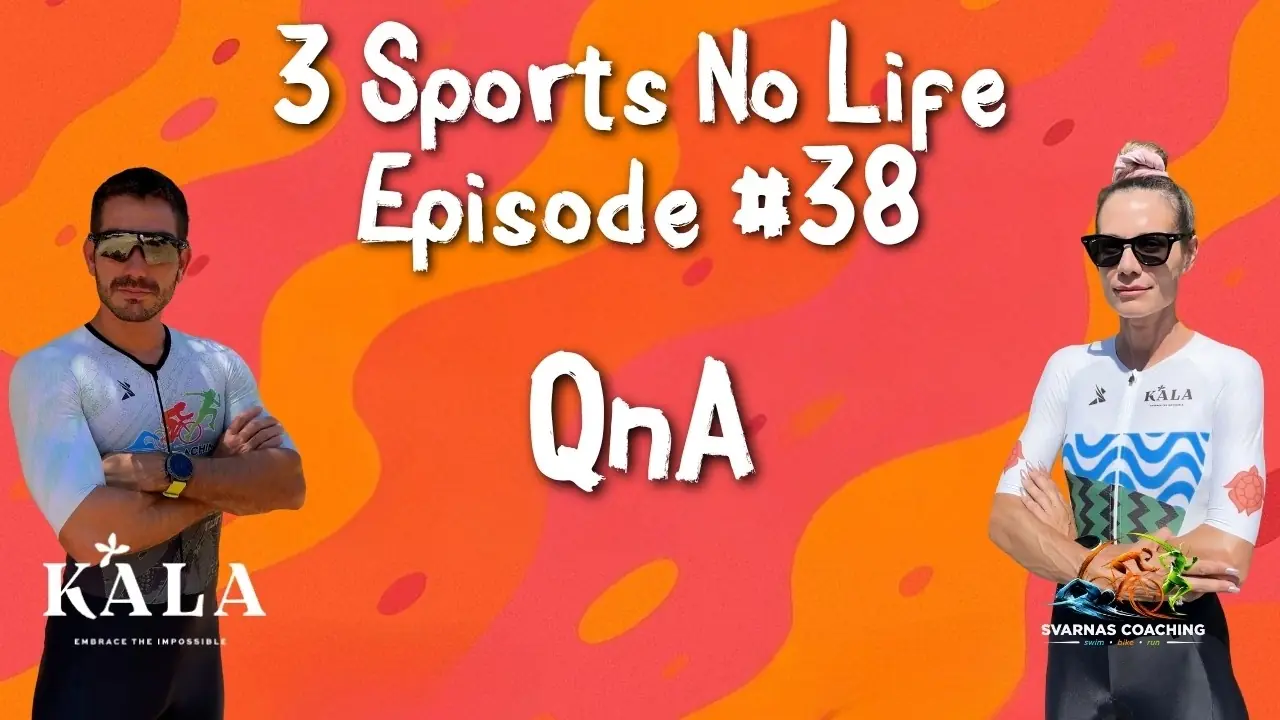
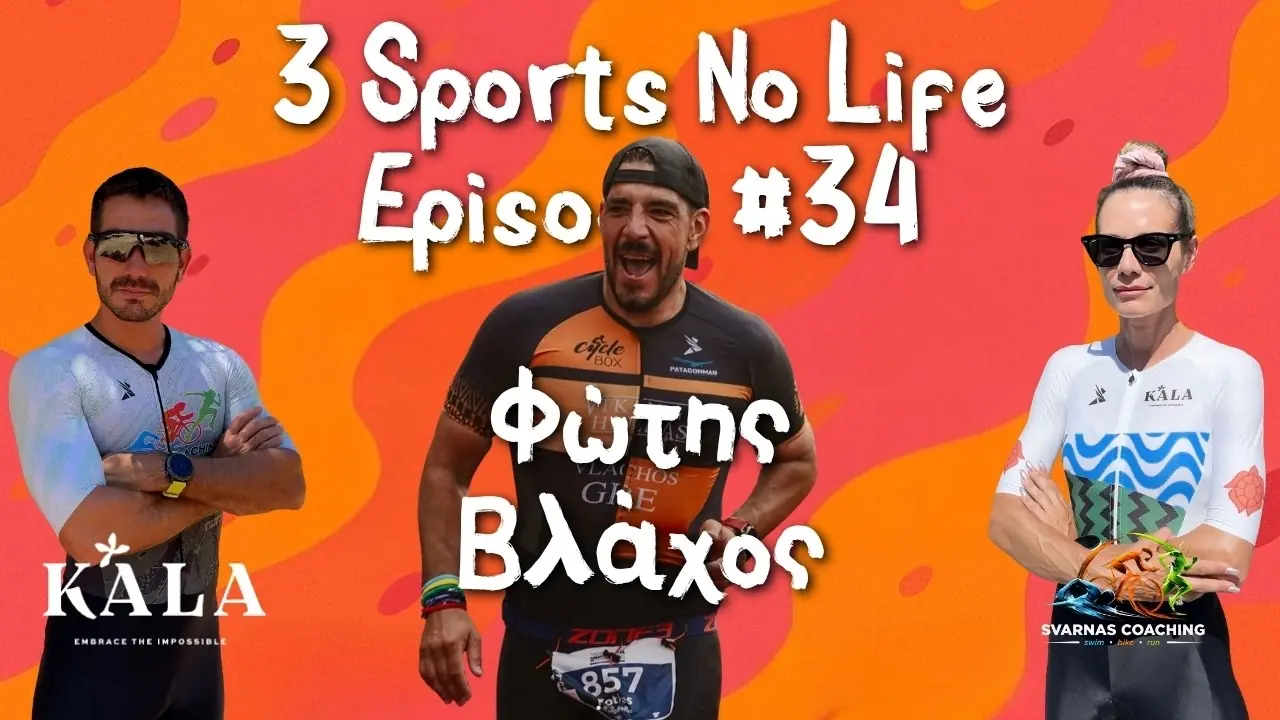
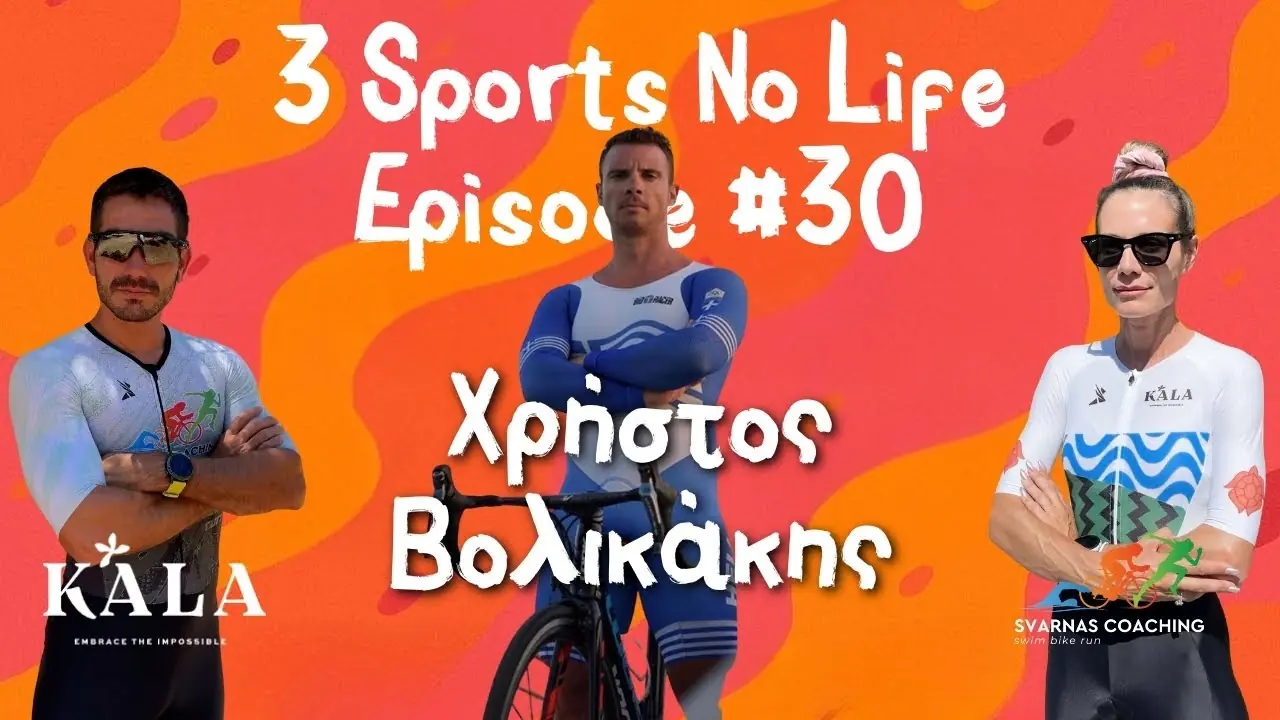
In this episode
Jenny Boulmeti speaks as a host, not a guest. She corrects George’s mention of fourth overall: she was third overall and first in her age group at Ironman Lanzarote.
Africa was cancelled because of war and logistics; Lanzarote became an available option after her build. The conversation focuses on the island, cycling through wind and elevation, the run and changes to training over the past year.
Detailed show notes
Why Lanzarote instead of Africa
They had booked Africa, but reservations were cancelled because of war and cost. They looked for a race with a similar climate and Lanzarote became available. They travelled via Madrid to the island with Sotiris and friends who joined later. The island reminded her of Hawaii; Sotiris connected it with Kona preparation.
The website lists substantial elevation. Jenny mentions around 2,600 m on the bike and 350 m on the run, close to the Athens Marathon with a bike ride beforehand. Daytime temperature on the island was around 24 °C, cooler at night; race-day heat still mattered.
Swimming, wind and descents
Her swim was around 1:01–1:02, similar to her other Ironmans; she has 1:00 in Mallorca. Two loops close to the buoys, shallow water and no fear of the depths. Many athletes entered within ten minutes; she went to the front for clear water and to avoid congestion on the bike, but there was still contact at the first buoy.
On the bike, she used high/low Ironman intensity according to gradient rather than one fixed number. She expected 6.5 hours and finished faster, with the final 8 km downhill. Wind on the descents made her brake for safety; she reached 75–90 km/h. She did not change wheels: 60/60 for her, 80/80 for Sotiris. The organiser’s bottles did not fit the rear cage; she discarded her own and was left with two instead of four. Carbohydrates came from bottles and gels.
A marathon that made her want another
She got off the bike eager to run. Loops of 10.5 + 10.5 km and shorter ones; the first covered half the run. Headwinds and small climbs. She never felt she was counting down to the end. After finishing, she wanted another Ironman-distance race, unlike after Kona. Sotiris, who finished earlier, was waiting at the line.
George Mitropapas earned a Kona slot. Sotiris was tenth in his category; they clarify 55–59 for George and 50–54 for Sotiris. Age-group standards have risen.
Intensity instead of 30 hours
She now writes programmes for herself and Sotiris through the unit. After a plateau lasting years, they added plenty of intensity rather than huge volume: peak weeks near 20 hours and most blocks around 15, previously 30–35. Swimming rose from approximately 5 km a week to 15, with four sessions, negative splits and progressive efforts. Cycling included hills from March to May without the triathlon bike, heavy gearing at around 70 rpm on climbs, 55 in heavy sets and approximately 82 in the Ironman. Running broke a slow-pace plateau: race-pace long runs, 60–70 km weekly and big bricks of five hours cycling plus 25 km running.
Two weeks earlier, she raced a half in Katerini, reporting a 4:18 PB with 4:15 pace over the 21 km. Next is the Kona World Championship. Copenhagen with Sotiris is also in the back of her mind, something she has not mentioned publicly elsewhere.
Key takeaways
- On descents with crosswinds, safety comes before a disc wheel or speed.
- Fifteen hours with intensity can bring progress where 30–35-hour blocks had reached a plateau.
- A half close to a full takes a toll, but gave her a pace she did not believe she had.
- Even an experienced athlete relearns pacing: negative splits in the water, appropriate running zones and torque work on the bike.