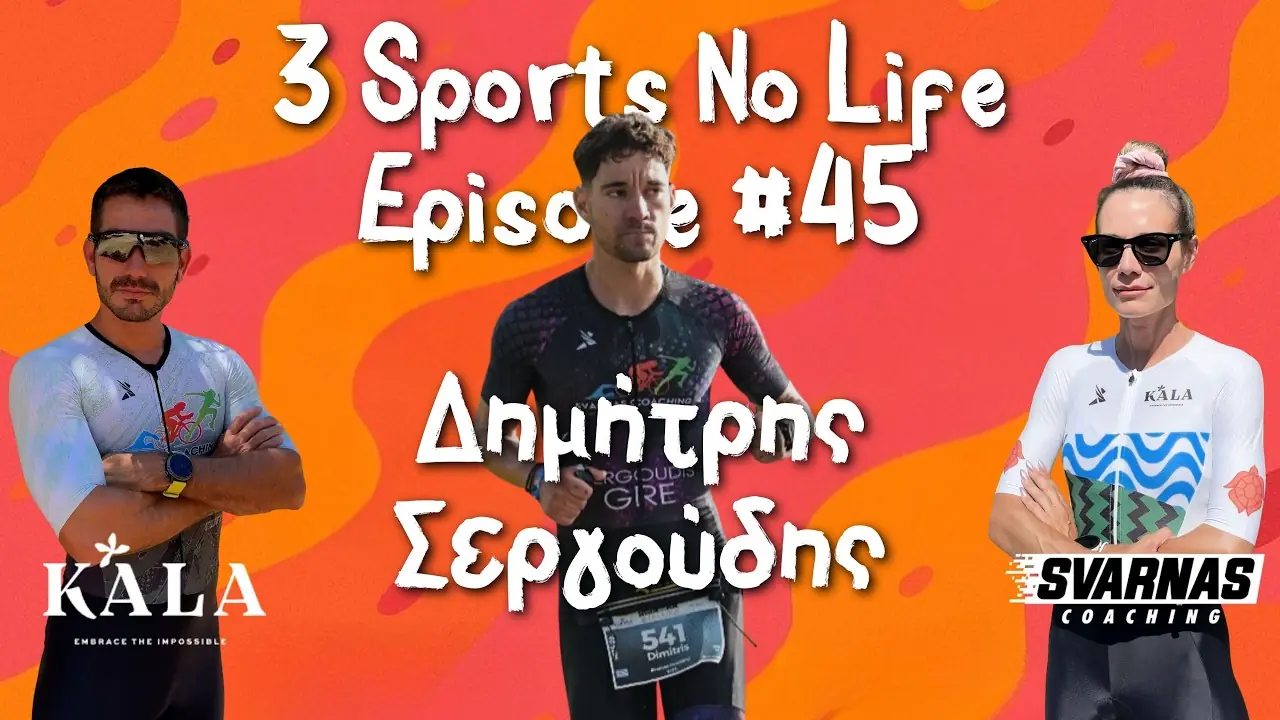
In this episode
Panagiotis Dimopoulos recounts swimming until 18, marathons and entering triathlon in 2014 with a focus on sprint.
The second half concerns coaching: how Triathlon Academy works, mistakes he sees among age-groupers and why he is not planning Ironman distance.
Detailed show notes
Swimming, studies and marathons
He swam consistently until 18, mainly 50 and 100 freestyle. He discusses his performances as a young swimmer and his subsequent pool career. He stopped to study physical education.
He ran three marathons: Athens in around 3:37, Prague and Paris in around 3:17 with an injury. A friend suggested triathlon in 2014.
Sprint racing on limited hours
His first nationals were a sprint in Loutraki: initially fifth, then third after two athletes ahead were disqualified. Cycling was weak in his first two years. He now trains 8–10 hours weekly, 12 when things align, with four two-kilometre swims.
In Istanbul’s draft-legal sprint, he won the 35–39 age group. He has two young children and a full-time job. Sprint suits him; he has raced up to 70.3, not Ironman distance, and does not plan it because of preparation hours. A later goal is sub-4 for 70.3.
Triathlon Academy
The academy is around three years old. Five group sessions weekly, an initial questionnaire and varied intensities. He says discipline matters more than talent. He has guided athletes from sprint to Ironman distance without racing the latter himself.
A common age-group mistake is adding volume or pace beyond the plan. When time is limited, he suggests 15–20 minutes of strength instead of leaving the gap unused. His advice for beginners is to assess costs first—bike, coach and pool—then commit consistently.
Racing and character
He names Panagiotis Polizos as a rival and friend: Dimopoulos is stronger at sprint, the other as distance grows. At AlmiraMan 70.3, he recalls a photo finish with Tasos Moustakis after gastroenteritis.
Sprint remains his favourite distance; swimming his first love. He says he won sprint races at the STOE nationals in the past two years, without presenting himself as the sole national champion.
Key takeaways
- A swimming background remains an advantage, but cycling and available hours shape triathlon.
- With 8–10 hours and children at home, sprint is realistic; Ironman distance is not automatically so.
- At the academy, discipline and varied intensity matter more than athletes’ self-added extras.
- Before joining a team, consider the budget for equipment, pool access and coaching.