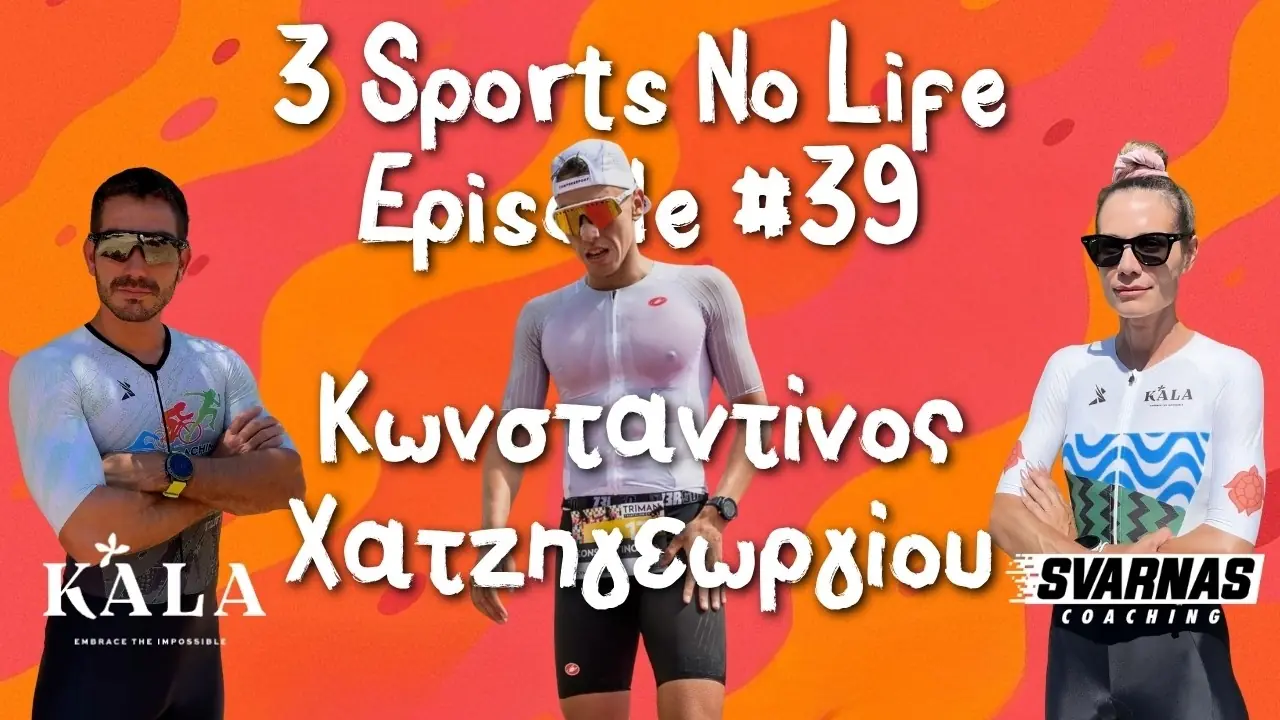
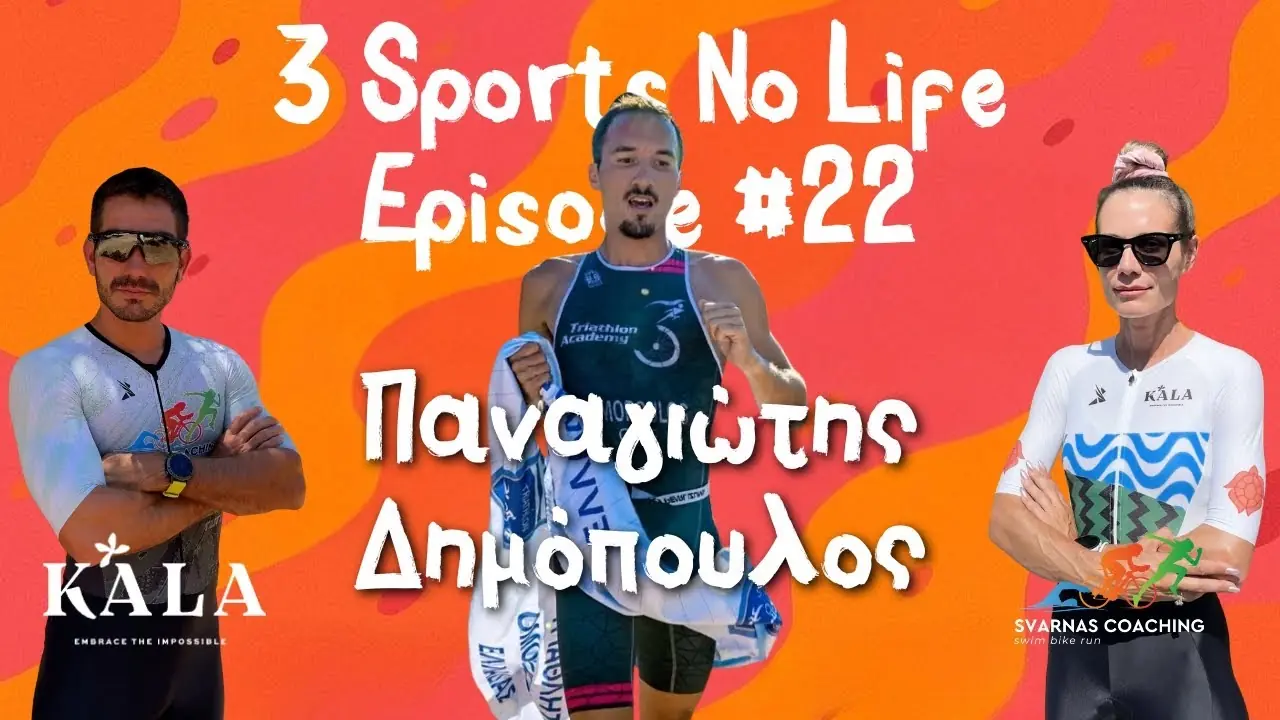
In this episode
Apostolos Chrysafelis began cycling in 1995, joined the national team and left the bike for approximately twelve years after tiring of the federation and elite competition. He returned through running, tried duathlon and became Greek champion in 2018. His first triathlon was XTERRA, reflecting his mountain-bike background.
The conversation covers XTERRA Worlds and the European Tour, ultras and marathons, swimming technique, coaching children aged 9–16 and balancing home life with his wife Yvoni. It closes with the idea that becoming a triathlete requires more than being an athlete: you must want to become a learner.
Quick navigation
- 00:00 — Cycling, a 12-year break and returning
- 07:23 — Duathlon in 2018 and a first brick
- 13:09 — XTERRA, Worlds and European Tour
- 24:01 — Ultras, marathons and swimming
- 36:48 — Half distance, volume and injury concerns for a full
- 46:28 — Coaching children and academies
- 01:02:22 — Becoming a learner and race details
- 01:12:36 — Family, sporting lessons and closing remarks
Detailed show notes
A cyclist who walked away from cycling
He received his first racing licence in 1995, cycling in Nea Filadelfeia. He joined the national team and continued into his first year of mechanical engineering studies. After a national-team training session, he left cycling for around twelve years: worn down by federations rather than training hours. In between, he went to the gym and ran a little.
Duathlon, then XTERRA
He brought cycling back alongside running. He recalls a duathlon in Glyfada at 17–18: first on the bike, struggling on the run. In 2018, he became Greek duathlon champion. His first triathlon was XTERRA: he left the water behind and closed the gap in the mountains. He prefers mountain biking to TT.
He raced the XTERRA World Championship in Maui in 2018 and in Molveno this year. In 2019, he did around ten European Tour races and finished third in the 35–39 category. Beyond the XTERRA brand, he does not see a mature off-road triathlon scene in Greece.
Running volume and learning to swim
During his duathlon period, he piled on marathons and ultras: he mentions 160–170 km weeks, 100 km at Mont Blanc and Paranesti, and races on Olympus. He discusses a 2:55 marathon. He says the most common amateur mistake is writing their own running programme.
Swimming is not his strength. His first minutes in the pool frightened him. With a Cyprus 70.3 in mind, he added drills and kick sets. For a half, he trains 14–16 hours, around ten of them cycling outdoors. Ironman distance worries him because of the run training, rather than the race itself.
Coaching children requires being there
He coaches triathletes, runners and cyclists. Over the past year, he has focused on children aged 9–16: a camp in Arachova with swimming in Itea, and being there at weekends rather than sending a remote programme. He wants triathlon to remain play.
He provides age-group athletes with programmes and position adjustments. He enjoys coaching Olympic distance, although most ask him for 70.3 and Ironman distance.
Becoming a learner again
Becoming a triathlete means accepting that you must learn from the beginning. He balances being an athlete, coach and parent with support from Yvoni, an active swimmer, and their two young children. The lesson is to avoid excess without merely going through the motions. In Maui in 2018, the waves made him think he could not swim; then he told himself he had not travelled to the other side of the world to miss the experience.
Key takeaways
- Triathlon asks you to become a learner again, even after representing a national team in one of its three sports.
- In XTERRA, mountain technique can turn around a race lost in the water, but needs race planning and risks beyond the comfort zone.
- High running volume without understanding is a mistake that can lead to injury.
- Children need an on-site coach, not a remote programme, and room to see triathlon as play.
- Balancing home and training means taking turns, not having a perfect weekly plan.