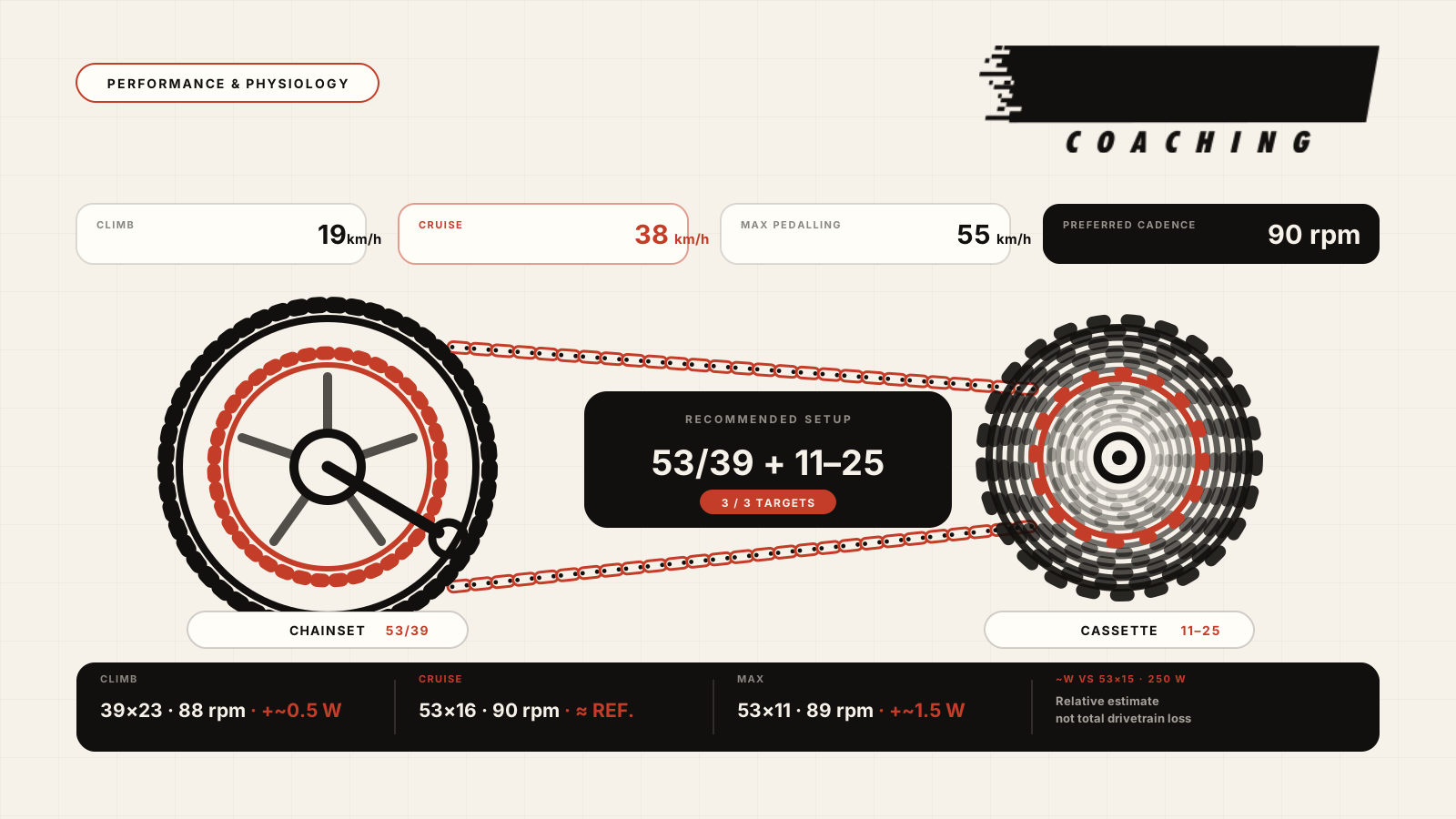
Climb
19 km/h
39×23
88 rpm
Within preferred cadence
Find the chainring and cassette combination that best covers your climbing speed, main race speed and maximum pedalling speed at your chosen cadence. Alternatively, check whether your existing gearing covers those targets.
Select the brand and component series you can use. If unsure, select Any to compare all listed component families.
Calculated circumference — 2130 mm
Covers 3 of the 3 targets
Recommended setup. 53/39 + 11–25. Covers 3 of the 3 targets.
19 km/h
39×23
88 rpm
Within preferred cadence
38 km/h
53×16
90 rpm
Within preferred cadence
55 km/h
53×11
89 rpm
Within preferred cadence
Calculated range: 14.0–67.7 km/h, from the easiest and hardest gears at the selected cadence limits.
Easiest gear at minimum climbing cadence: approximately 14.0 km/h. Hardest gear at maximum pedalling cadence: approximately 67.7 km/h. The shaded area shows the calculated range of the easiest and hardest gears at your chosen cadence limits. It does not predict the speed you can sustain.
Cadence (rpm) at 38 km/h
Scroll horizontally to see all gears.
| Chainring | 11 | 12 | 13 | 14 | 15 | 16 | 17 | 19 | 21 | 23 | 25 |
|---|---|---|---|---|---|---|---|---|---|---|---|
| 53 | |||||||||||
| 39 |
Relative gearing-loss estimate for Cruise — 53×16
Relative estimate: approximately the same loss as 53×15, at 250 W
The ~W figure is a simplified comparative estimate. It compares the selected gear with the 53×15 reference gear at the same rider power and chain condition.
This simplified, relative estimate is based on CeramicSpeed’s published loss trends for cross-chaining and chainring size in a 2×11 drivetrain. Estimates for other setups are approximate adaptations of those data. It is not a laboratory measurement of the specific drivetrain or an estimate of total transmission loss.
This combination is among recognised, commonly used gearing setups. Before buying new components, confirm compatibility with your mechanic.
Select Recommend a setup for a gearing recommendation or Check my setup to assess your existing gearing.
In Recommend a setup, select Course and set climbing speed, main race speed, the maximum speed at which you want to pedal and your preferred cadence. Then choose drivetrain, brand and component series.
In Check my setup, first enter the components on your bike, then your race targets.
Course presets use general starting values that you can adjust. Open Advanced cadence and wheel settings only if you want to change automatic cadence limits, wheel circumference or reference power for the relative watt estimate.
The calculator checks whether a set of gear ratios can cover the speeds and cadence limits you expect in your race.
It does not calculate required power or predict the speed you can sustain based on gradient, wind, aerodynamics, weight, fatigue or physiology.
The ~W figure is a relative, approximate estimate of losses associated with the selected gear’s geometry. It is not a measurement of total drivetrain loss.
Before buying components, confirm the full setup’s compatibility with your mechanic.
The calculator shows whether the available gears cover the speeds and cadence limits you have set for your race.
Through 1:1 Coaching, we can adapt gearing, cadence and pacing to the course, your physiology and your race strategy.
Speed in each gear is calculated from wheel circumference, front chainring and rear sprocket tooth counts, and cadence.
Recommend a setup compares only the catalogue combinations included in the tool.
It first assesses how many of the three targets are covered within the selected cadence limits, excluding gears with extreme cross-chaining. If full coverage is unavailable, it favours the combination with the smallest relative deviation from the targets.
When results are equivalent, Course, chainline, cassette steps and the combination’s catalogue availability are taken into account.
Check my setup assesses the chainring and cassette tooth counts you enter.
For setups recognised in the tool’s catalogue, it may suggest the smallest single-component change that covers all three targets.
Custom setups are calculated only from cassette and chainring tooth counts; mechanical compatibility and availability are not verified.
The ~W figure compares each selected gear with the 53×15 reference gear at the same rider power and chain condition.
It is a simplified, relative estimate based on CeramicSpeed’s published loss trends for cross-chaining and chainring size in a 2×11 drivetrain. Estimates for other setups are approximate adaptations of those data.
It is neither a laboratory measurement of the specific drivetrain nor an estimate of total transmission loss.
Catalogue options and compatibility notes are based on the sources below. A combination’s inclusion does not guarantee local availability or full compatibility with every bike.
Before buying components, confirm the specific combination’s compatibility with your mechanic.
Last updated: 25 August 2026