GAP Calculator
GAP (Grade-Adjusted Pace) estimates the equivalent flat-ground pace for an uphill or downhill pace — or, in reverse, the expected pace on a given gradient at the same effort.
5:00/km on a +5% uphill
Flat-ground GAP 3:55/km
How to use it
Hill pace → Flat effort converts an uphill or downhill pace to its flat-ground equivalent. Flat effort → Hill pace starts with flat-ground pace and estimates pace at the same effort on a given gradient. Enter gradient as Grade % or through elevation change and horizontal distance.
What you need to know
The calculation is based on metabolic-cost models from treadmill running. It does not account for technical terrain, surface, altitude, wind, traction or individual ability. On steep descents or climbs, it may overestimate or underestimate gains or losses.
Read the related article
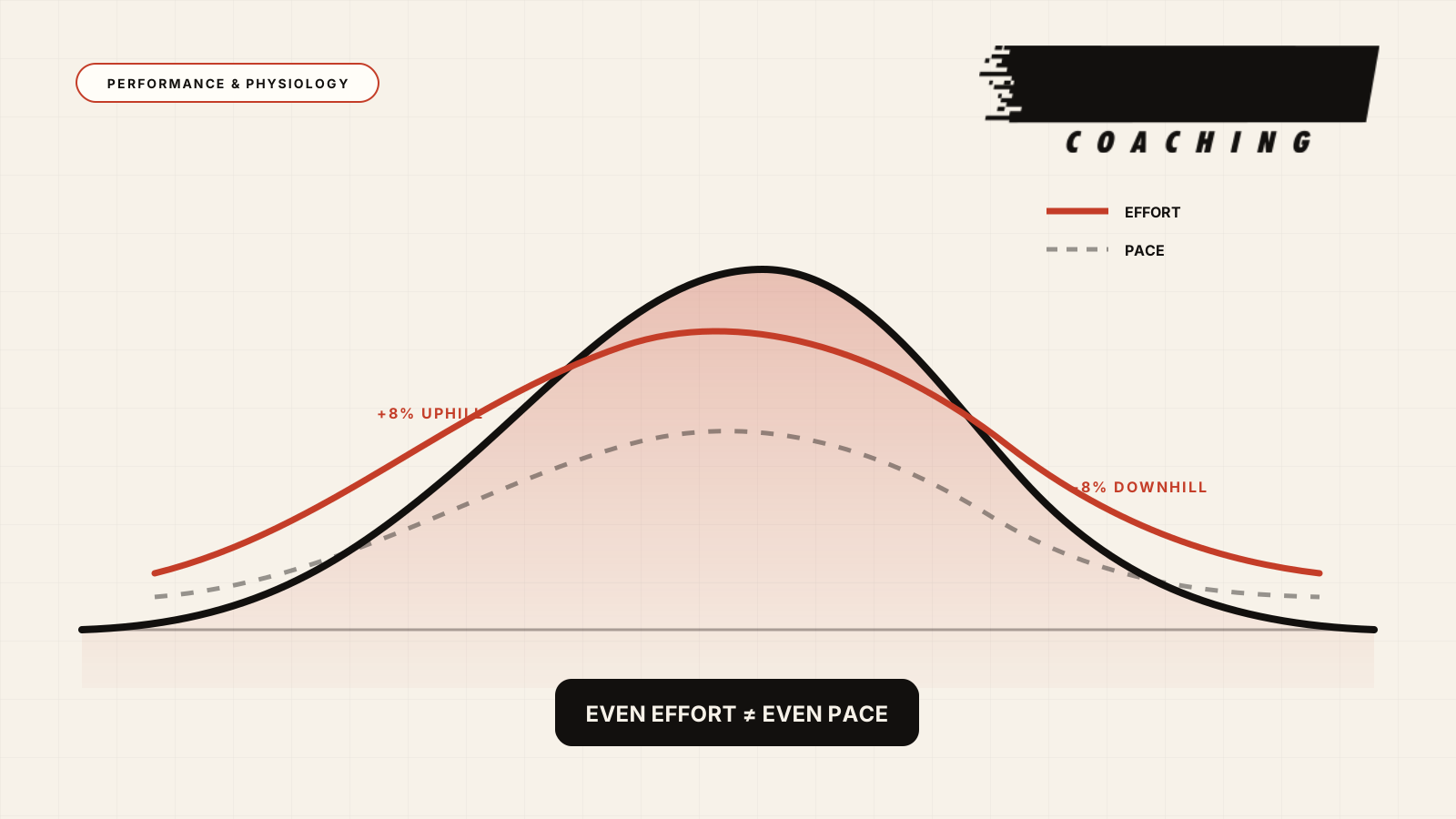
Pacing a hilly course takes preparation.
On a course with repeated gradients, good pacing means managing effort rather than blindly chasing a watch reading. Together, we can plan your next race splits around the course and prepare you for its demands.
Methodology & Sources
The calculator uses an additive metabolic-cost model: flat-ground energy cost according to Black et al., plus the additional gradient cost from the polynomial model of Minetti et al. It converts pace on a gradient to equivalent flat-ground pace, and reverses the calculation from flat-ground effort to expected pace on a gradient. Results are rounded to the nearest second.
Last updated: 6 August 2026