Critical Swim Speed Calculator
Calculate Critical Swim Speed (CSS) as pace/100 m from two maximal pool efforts over different distances.
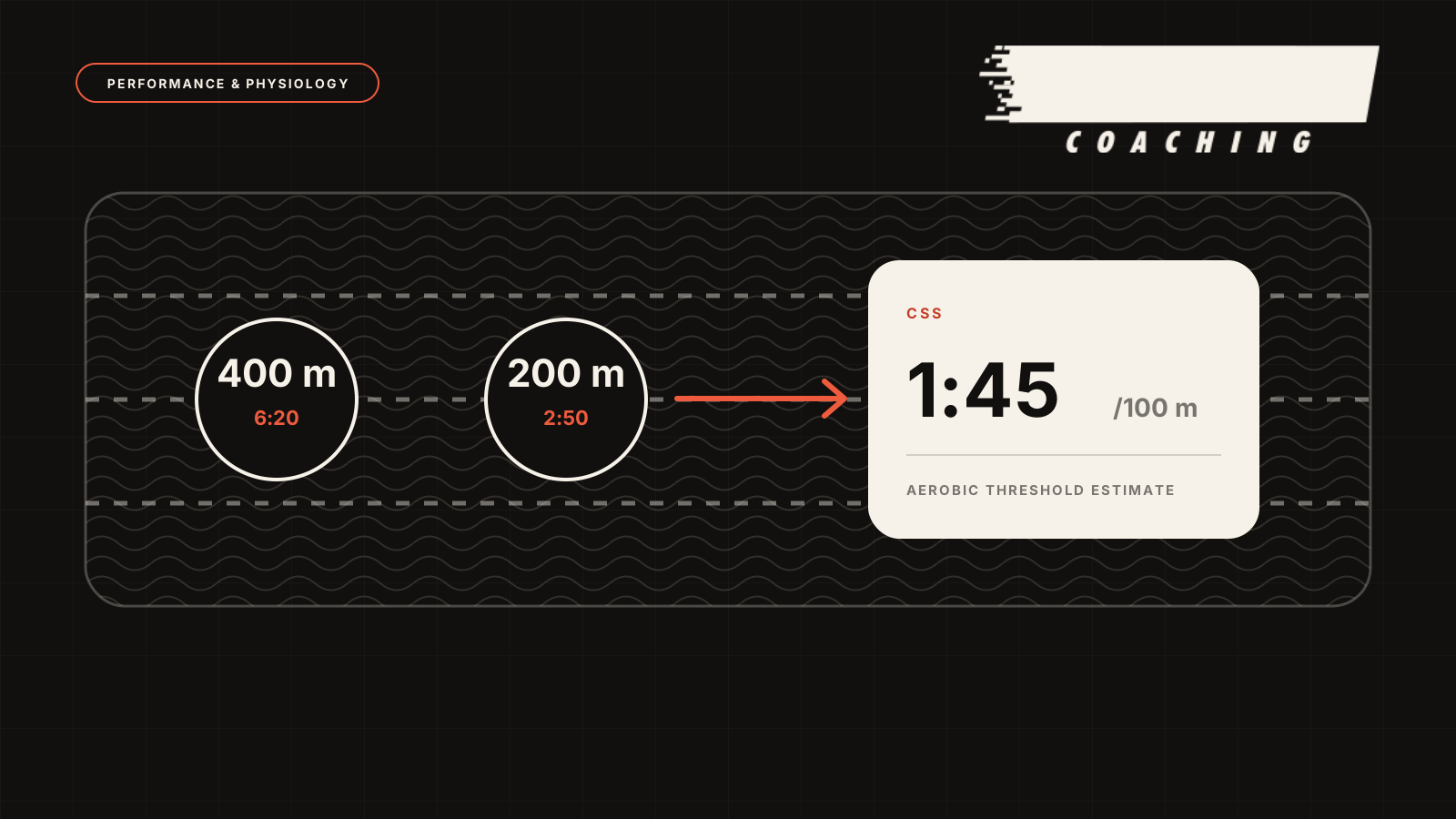
For the recommended protocol, swim 400 m first, take 10–15 minutes of easy recovery, then swim 200 m.
400 m 6:20 · 200 m 2:50 · 1:45 /100m
- Speed
- 0.952 m/s
- D′
- 38.1 m
| Distance | Time |
|---|---|
| 200 m | 2:50 |
| 400 m | 6:20 |
| 800 m | 13:20 |
| 1500 m | 25:35 |
CSS 1:45 /100m
How to use it
Select your protocol and enter the total time for each effort. For the recommended 200+400 protocol, swim 400 m first, then 200 m, with 10–15 minutes of rest and easy swimming between them. Both efforts should be maximal, with pacing as even as possible. Use the same pool and start type. Repeat tests in the same conditions so results are comparable.
What you need to know
Results are affected by protocol distances, pacing, fatigue, stroke, pool length and start type. Results from different protocols or conditions are not directly comparable.
Use CSS to guide your training
CSS is a useful reference point, but it is not a training plan. Using it well depends on interval duration, recovery, total load and your race goal. Together, we can use your data to organise swimming sessions with a clear purpose and appropriate progression.
Methodology & Sources
CSS uses the two-parameter distance–time model: CSS = (D₂ − D₁) / (T₂ − T₁). The result is converted to pace/100 m without intermediate rounding. D′ is the distance intercept of the same model: D′ = D − CSS × t. It is a model parameter, not a training target. The recommended practical protocol is 200+400. The 400+800 protocol reduces the relative influence of the shorter effort but requires greater endurance, sound pacing and sufficient recovery.
Last updated: 15 June 2026